



Was ist Ethereum? Ein vollständiger Leitfaden zu ETH und Smart Contracts
 26 Min. Lesezeit
- Ethereum
- Technologie
Bitcoin hat bewiesen, dass Geld ohne Bank funktionieren kann. Ethereum stellte die weiter gefasste Frage: Was ließe sich sonst noch auf diese Weise organisieren? Zehn Jahre später ist das Netzwerk die Abwicklungsebene für den Großteil der Werte, die auf öffentlichen Blockchains bewegt werden.
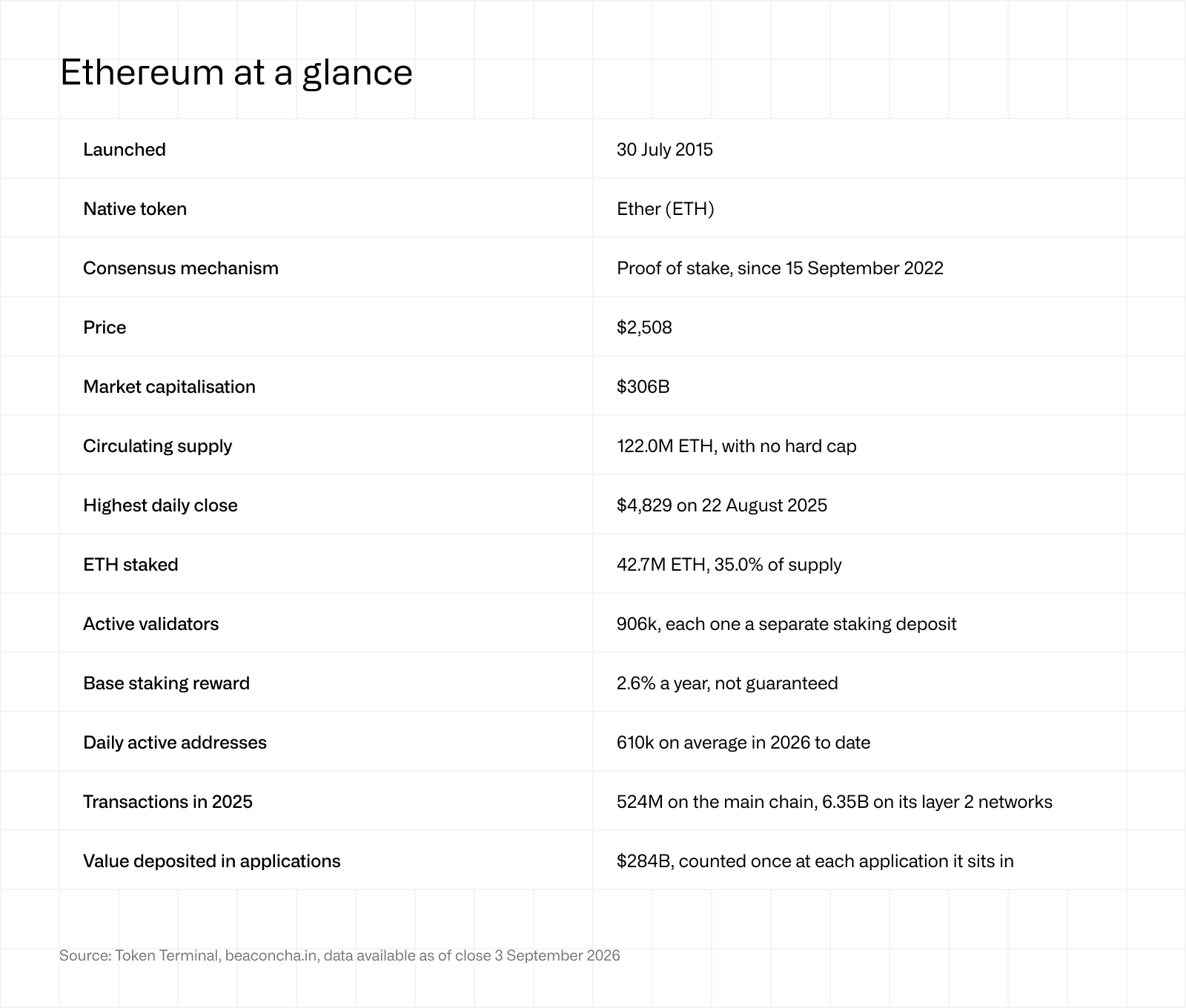
Ethereum ist eine Blockchain, eine gemeinsam genutzte Datenbank, die Tausende unabhängiger Rechner synchron halten, ohne dass ein einzelnes Unternehmen die Kontrolle hat. Das Netzwerk startete im Juli 2015, sein nativer Token heißt Ether (Ticker: ETH).
Bitcoin erfüllt eine Aufgabe außerordentlich gut, nämlich Werte zu bewegen und zu speichern. Ethereum wurde dagegen gebaut, um Software auszuführen. Jeder kann von überall ein Programm auf Ethereum veröffentlichen, und es läuft exakt so, wie es geschrieben wurde, solange das Netzwerk existiert. Kein Unternehmen kann es verändern oder abschalten. Diese Programme heißen Smart Contracts, und sie unterscheiden Ethereum von jeder Blockchain, die es zuvor gab.
Bitcoin wird häufig als digitales Gold bezeichnet, Ethereum kommt eher digitalem Öl nahe: nicht der Wertspeicher selbst, sondern der Treibstoff, mit dem ein umfassenderes Finanzsystem betrieben wird. Zum 3. September 2026 notiert ETH bei 2.508 USD; die Marktkapitalisierung liegt bei 306 Mrd. USD. Damit ist ETH nach Bitcoin der zweitgrößte digitale Vermögenswert und erreicht knapp ein Fünftel der Größe von Bitcoin.1
Das Wichtigste in Kürze
Ethereum ist die führende Smart-Contract-Plattform. Auf das Netzwerk entfallen 58,7 % des gemeinsamen Marktwerts der zwölf größten Smart-Contract-Blockchains sowie gut drei Fünftel aller Gelder, die in Anwendungen der dezentralen Finanzwelt hinterlegt sind, also in Verleih-, Kredit- und Handelsdiensten, die ohne dazwischengeschaltete Bank arbeiten.1
Ethereum wechselte im September 2022 vom Arbeitsnachweis (Proof of Work), bei dem Rechner im Wettbewerb Strom verbrauchen, zum Anteilsnachweis (Proof of Stake), bei dem die Teilnehmer stattdessen eigene ETH als Sicherheitsleistung hinterlegen. Bitcoin nutzt weiterhin Proof of Work. Das ist der mit Abstand wichtigste technische Unterschied zwischen beiden.
42,7 Mio. ETH und damit 35,0 % aller existierenden Ether sind gestakt, also als Sicherheitsleistung gesperrt, im Gegenzug für eine Vergütung, die derzeit bei 2,6 % pro Jahr liegt. Staking-Erträge sind nicht garantiert und können schwanken.2
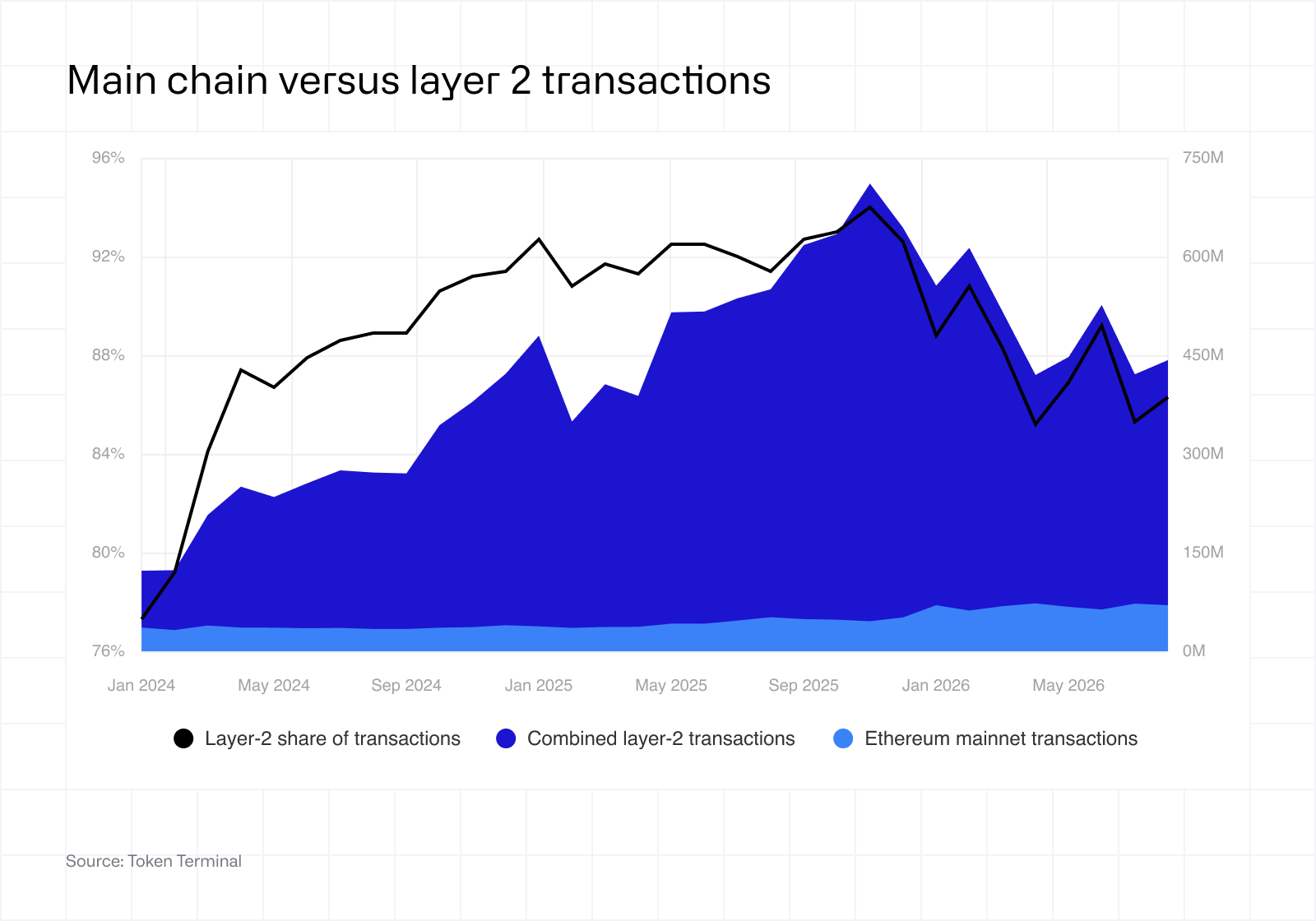
Der Großteil der Ethereum-Aktivität hat die Hauptkette verlassen und findet auf Layer-2-Netzwerken statt, also auf eigenständigen, deutlich günstigeren Netzwerken, die Transaktionen bündeln und eine Zusammenfassung an Ethereum zurückmelden. Im bisherigen Jahresverlauf 2026 entfielen darauf knapp neun von zehn Transaktionen im Ethereum-Ökosystem.1
Regulierten Zugang zu ETH einschließlich Staking-Erträgen erhalten Sie über das CoinShares Ethereum Staking ETP (ETHE), ein Exchange Traded Product (ETP), das über ein gewöhnliches Wertpapierdepot gekauft wird und 0,00 % Verwaltungsgebühren berechnet.3
Wie Ethereum funktioniert
Proof of Stake
Jede Blockchain braucht ein Verfahren, mit dem sich einander fremde Teilnehmer darauf einigen können, welche Transaktionen echt sind, ohne einander vertrauen zu müssen. Dieses Verfahren heißt Konsensmechanismus.
Bitcoin nutzt Proof of Work: Spezialisierte Rechner verbrauchen um die Wette Strom, um ein Rätsel zu lösen, und wer gewinnt, fügt den nächsten Stapel Transaktionen hinzu. Ethereum verwendete dasselbe Verfahren bis September 2022 und ersetzte es dann in einem Upgrade, das als The Merge bekannt ist.
Ethereum nutzt heute Proof of Stake. Statt Strom einzusetzen, setzen die Teilnehmer eigene ETH als Einlage aufs Spiel. Das Netzwerk wählt nach dem Zufallsprinzip einen von ihnen aus, der den nächsten Stapel Transaktionen vorschlägt, einen sogenannten Block, und die übrigen prüfen die Arbeit nach. Wer sich ehrlich verhält, wird vergütet. Wer sich unehrlich verhält, dem vernichtet das Netzwerk einen Teil der Einlage, eine Strafe, die Slashing genannt wird.
Die Energieersparnis war dramatisch. Das Crypto Carbon Ratings Institute ermittelte, dass der Stromverbrauch von Ethereum über Nacht um mehr als 99,98 % zurückging, von rund 23 Mio. Megawattstunden pro Jahr auf etwas mehr als 2.600. Eine Megawattstunde entspricht ungefähr dem, was ein europäischer Haushalt in einem Monat verbraucht. Ethereum verbrauchte also zuvor so viel Strom wie ein mittelgroßes Land und danach etwa so viel wie eine Kleinstadt.4
Validatoren und die Einlage von 32 ETH
Ein Validator ist eine einzelne Einheit gestakter Einlage, die diese Prüfarbeit leistet. Wer selbst einen betreiben will, benötigt 32 ETH, zum heutigen Kurs rund 80.000 USD, und dazu einen Rechner, der dauerhaft online bleibt.
Derzeit gibt es 906.000 aktive Validatoren.2 Diese Zahl entspricht nicht der Zahl der Staker, und sie ist im Jahr 2026 deutlich gefallen statt gestiegen. Grund dafür ist ein Upgrade aus dem Jahr 2025 namens Pectra, das einem einzelnen Validator erlaubt, bis zu 2.048 ETH zu halten, statt bei 32 gedeckelt zu sein. Große Staker führten Hunderte kleiner Validatoren zu wenigen großen zusammen, sodass die ausgewiesene Validatorenzahl sank, während die Menge gestakter ETH stieg. Die Validatorenzahl ist damit kein guter Maßstab mehr dafür, wie viele Teilnehmer Ethereum absichern.
Staking und Erträge
Staking bezeichnet das Sperren von ETH, um das Netzwerk abzusichern, im Gegenzug für eine Vergütung. Sie müssen dafür keinen eigenen Validator betreiben. Die meisten staken über eine Exchange, über einen Staking-Dienstleister oder über ein reguliertes Anlageprodukt, das dies für sie übernimmt.
Anfang September 2026 sind 42,7 Mio. ETH gestakt, 35,0 % aller existierenden Ether im Wert von 107 Mrd. USD. Die Basisvergütung liegt bei 2,6 % pro Jahr.2
Dieser Satz ist nicht fest. Er sinkt, je mehr ETH gestakt werden, weil derselbe Ertragstopf auf mehr Teilnehmer verteilt wird, und er steigt mit der Netzwerkaktivität, weil Validatoren zusätzlich einen Anteil an den Transaktionsgebühren erhalten. Die Nachfrage nach Staking ist derzeit so hoch, dass neue Einlagen in einer Warteschlange stehen: 2,1 Mio. ETH warten auf den Einstieg, bei einer Wartezeit von 36 Tagen.2 Staking-Erträge sind nicht garantiert und können schwanken.
Gas und Gebühren
Jede Aktion auf Ethereum kostet eine Gebühr, die in ETH gezahlt wird und Gas heißt. Gas misst, wie viel Rechenarbeit eine Aktion erfordert: Eine einfache Überweisung kostet wenig, ein komplexer Handel mehr. Angegeben werden die Gebühren üblicherweise in Gwei, einem Milliardstel ETH.
Mit einer Gas Fee geschehen zwei Dinge. Ein Teil, die sogenannte Base Fee, wird vernichtet und dauerhaft aus dem Umlauf genommen. Der Rest geht als Prioritätsgebühr an den Validator. Eingeführt wurde diese Aufteilung im August 2021 durch eine Protokolländerung namens EIP-1559.
Die Gebühren sind eingebrochen, weil sich die Aktivität auf Layer-2-Netzwerke verlagert hat. Die durchschnittliche Gebühr für die Nutzung der Ethereum-Hauptkette ist binnen eines Jahres um vier Fünftel gefallen, von 1,00 USD je Transaktion im Kalenderjahr 2025 auf 0,20 USD im bisherigen Jahresverlauf 2026. In Geld gerechnet zahlten die Nutzer im gesamten Jahr 2025 526 Mio. USD an Gebühren auf der Hauptkette und im bisherigen Jahresverlauf 2026 113 Mio. USD.1
Schrumpft das Angebot?
Ethereum hat keine feste Obergrenze für das Angebot, anders als Bitcoin mit seiner Grenze von 21 Mio. Neue ETH werden laufend geschaffen, um Validatoren zu vergüten, und über die Base Fee laufend vernichtet.
Seit Beginn der Gebührenvernichtung im August 2021 wurden 4,6 Mio. ETH vernichtet. Im selben Zeitraum wurden jedoch mehr ETH ausgegeben als vernichtet, sodass die Umlaufmenge weiter gewachsen ist, von 117,0 Mio. auf 122,0 Mio.1
Was sich mit The Merge geändert hat, ist die Rate. In den dreizehn Monaten davor wuchs das Angebot selbst nach der Vernichtung um 2,7 % pro Jahr, weil auch die Miner vergütet wurden. In den vier Jahren seither sind es 0,3 % pro Jahr. Ethereum ist nicht verlässlich deflationär, und diese Beschreibung ist falsch. Das Angebot ist nahezu konstant, und das ist eine andere und besser belegbare Aussage.
Was Smart Contracts sind und was sie ermöglichen
Ein Smart Contract ist ein auf der Blockchain gespeichertes Programm, das automatisch ausgeführt wird, sobald seine Bedingungen erfüllt sind. Die gängige Analogie ist ein Verkaufsautomat: Man wirft die richtigen Münzen ein, drückt die richtige Taste, und der Automat gibt die Ware heraus. Niemand muss das genehmigen, und niemand kann es verhindern.
Smart Contracts folgen einer einfachen Wenn-dann-Logik. Wenn diese Zahlung eingeht, dann gib jene Token frei. Einmal veröffentlicht, ist der Code für alle sichtbar und lässt sich nicht stillschweigend ändern. Das ist der Reiz, und das ist zugleich das Risiko: Ein Fehler in einem Smart Contract ist dauerhaft, und wer ihn bemerkt, kann ihn ausnutzen.
Auf dieser Idee bauen vier Bereiche auf, die man kennen sollte. Der erste ist die dezentrale Finanzwelt, meist als DeFi abgekürzt: Verleihen, Kreditaufnahme und Handel ohne dazwischengeschaltete Bank. 284 Mrd. USD liegen in Anwendungen auf Ethereum, gut drei Fünftel des Gesamtwerts über alle Blockchains hinweg. Diese Summe addiert, was jede einzelne Anwendung hält, und ist nicht um Doppelzählungen bereinigt: Eine Einlage in einer Anwendung, die anschließend in einer zweiten als Sicherheit hinterlegt wird, zählt in beiden. Der Wert liegt damit über dem Geldbetrag, der tatsächlich hinterlegt ist.1
Der zweite sind Stablecoins, also Token, die einen stabilen Wert halten sollen, meist einen US-Dollar, und die durch Reserven gedeckt sind. Auf Ethereum sind Stablecoins im Wert von 163 Mrd. USD ausgegeben, mehr als auf allen anderen Blockchains zusammen.1
Der dritte ist die Tokenization: Geldmarktfonds, Anleihen und Private Credit werden als Token auf einer Blockchain begeben statt als Eintrag in einem klassischen Wertpapierregister, sodass sie in Minuten statt in Tagen abgewickelt werden können. Der vierte sind Eigentumsnachweise anderer Art, von NFTs, also Token, die einzeln einzigartig und nicht untereinander austauschbar sind und die für digitale Kunst und Sammlerstücke genutzt werden, bis zu DAOs, also Organisationen, deren Entscheidungen per Abstimmung der Token-Inhaber getroffen und automatisch per Vertrag ausgeführt werden.
Ethereum vs. Bitcoin: Worin liegt der Unterschied?
Bitcoin und Ethereum ergänzen einander, statt zu konkurrieren. Bitcoin ist ein monetärer Vermögenswert mit festem Angebot. Ethereum ist eine Plattform, auf der gebaut wird.
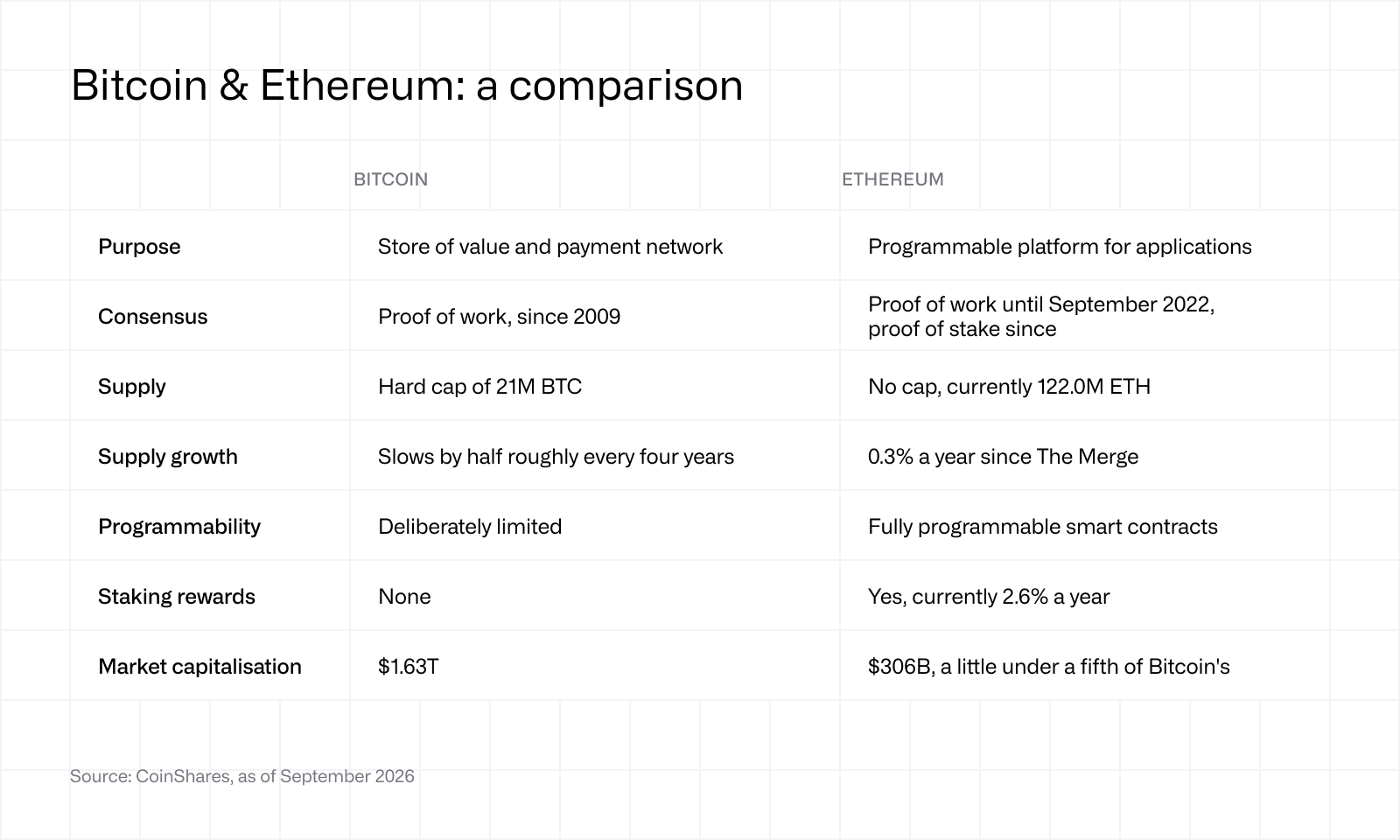
Die Zeile zum Konsens wird am häufigsten falsch wiedergegeben, auch in früheren Fassungen dieses Leitfadens. Um es unmissverständlich zu sagen: Bitcoin nutzt Proof of Work. Ethereum nutzte Proof of Work bis zum 15. September 2022 und seither Proof of Stake. Nicht beide nutzen Proof of Stake.
Praktisch bedeutet das, dass ETH allein durch Halten und Staken einen Ertrag erwirtschaften kann, BTC dagegen nicht. Damit kommt ETH unter den digitalen Vermögenswerten einem ertragbringenden Vermögenswert am nächsten, mit der wichtigen Einschränkung, dass der Ertrag in ETH ausgezahlt wird und damit so viel wert ist, wie ETH wert ist.
Layer 2: Wo die Ethereum-Aktivität tatsächlich stattfindet
Ein Layer 2 ist ein eigenständiges Netzwerk, das Transaktionen günstig und schnell verarbeitet und in regelmäßigen Abständen eine komprimierte Aufzeichnung seiner Tätigkeit an Ethereum zurückmeldet. Ethereum bleibt die Schiedsinstanz und führt das maßgebliche Register. Den Verkehr wickelt der Layer 2 ab.
Die passende Analogie ist ein Kartenzahlungsnetzwerk. Einzelne Einkäufe werden den Tag über in einem schnellen Nebensystem verrechnet, und die Nettoposition wird am Ende mit den Banken abgewickelt. Ethereum ist die Abwicklungsebene. Auf den Layer 2 finden die Einkäufe statt.
Die Verschiebung ist eindeutig. Im Kalenderjahr 2025 verarbeiteten die zehn größten Layer 2 zusammen 6,35 Mrd. Transaktionen gegenüber 524 Mio. auf der Ethereum-Hauptkette. 92,4 % der gesamten Aktivität im Ethereum-Ökosystem fanden damit nicht auf der Ethereum-Hauptkette statt. In den ersten acht Monaten 2026 ist dieser Anteil auf 87,8 % zurückgegangen, weil die Volumina auf der Hauptkette wieder zulegten. Damit entfallen weiterhin knapp neun von zehn Transaktionen auf einen Layer 2.1
Mit deutlichem Abstand am größten ist Base, gestartet von Coinbase. Allein darauf entfielen 2025 rund 3,7 Mrd. Transaktionen, mehr als die Hälfte des gesamten Layer-2-Aufkommens. Arbitrum, OP Mainnet, Starknet, World Chain, Unichain, zkSync, Linea und Scroll machen den Großteil des Rests aus.1
Der Grund sind die Gebühren. Eine Transaktion, die auf der Hauptkette einige Cent kostet, kostet auf einem Layer 2 typischerweise den Bruchteil eines Cents. Möglich wurde das durch ein Upgrade namens Dencun im März 2024, das einen günstigen temporären Datenkanal geschaffen hat, bekannt als Blobs, in den die Layer 2 eigens ihre Aufzeichnungen schreiben können.
Dabei gilt es, einen Zielkonflikt zu verstehen. Layer 2 erben die Sicherheit von Ethereum für die Aufzeichnung, wem was gehört, doch die meisten sind weiterhin auf einen einzigen Betreiber angewiesen, der über die Reihenfolge der Transaktionsverarbeitung entscheidet, und mehrere behalten sich vor, ihren eigenen Code zu ändern. Sie verlangen vom Nutzer damit weiterhin Vertrauen in einen Betreiber, wie es die Hauptkette nicht tut.
Geschichte und Meilensteine
2013 veröffentlichte ein neunzehnjähriger Programmierer namens Vitalik Buterin ein Papier, in dem er argumentierte, das Design von Bitcoin sei zu eng gefasst und dieselbe Idee könne einen Universalrechner tragen und nicht nur eine Währung. Die Entwicklung begann im Folgejahr, 2015 ging das Netzwerk live.
2015. Ethereum startet, nach einem öffentlichen Token-Verkauf und der Gründung der Ethereum Foundation.
2016. Ein Angreifer zieht einen großen Smart Contract namens The DAO leer. Die Community stimmt dafür, den Vorgang rückgängig zu machen, und spaltet die Kette in zwei. Die korrigierte Kette ist das Ethereum von heute, die andere läuft als Ethereum Classic weiter.
2017. Die Enterprise Ethereum Alliance startet mit Mitgliedern wie Accenture, Intel, JP Morgan und Microsoft.
2020. Die Beacon Chain geht im Dezember live und betreibt Proof of Stake parallel, während die Hauptkette weiterhin Proof of Work nutzt.
2021. EIP-1559 führt im August die Gebührenvernichtung ein. Im November markiert ETH ein damaliges Rekordhoch.
2022. The Merge am 15. September. Ethereum gibt Proof of Work auf und stellt vollständig auf Proof of Stake um, was den Energieverbrauch um mehr als 99,98 % senkt.4
2024. Dencun führt im März die Blobs ein und senkt die Layer-2-Kosten um eine Größenordnung. Im Juli starten in den USA börsengehandelte Spot-Ethereum-Produkte.
2025. ETH markiert am 22. August mit 4.829 USD einen Rekord-Tagesschlusskurs.1
2026. Der Anteil gestakter ETH übersteigt erstmals 35,0 % des Angebots. Am 17. März veröffentlichen SEC und CFTC ein gemeinsames Auslegungsschreiben dazu, wann Staking außerhalb des US-Wertpapierrechts liegt.
Was als Nächstes auf der Roadmap steht
Das nächste geplante Upgrade heißt Glamsterdam und soll die Hauptkette Ende 2026 erreichen, nach Generalproben auf Testnetzwerken ab Ende September. Die wichtigsten Änderungen sind technischer Natur und für Nutzer nicht unmittelbar sichtbar: eine Neugestaltung, wie Blöcke gebaut und vorgeschlagen werden, sowie eine deutliche Anhebung der angestrebten Netzwerkkapazität.5
Im Juli 2026 legte Vitalik Buterin zudem einen Plan vor, den er Lean Ethereum nennt, ein Programm über drei bis vier Jahre, das den Großteil des Protokolls umfasst. Ziel ist es, deutlich mehr Kapazität auf die Hauptkette zurückzuholen, langfristig Tausende Transaktionen pro Sekunde direkt auf Ethereum statt nur auf dessen Layer 2. Die Zeit, bis eine Transaktion unumkehrbar wird, soll auf zehn bis zwanzig Sekunden sinken. Kryptografie, die ein künftiger Quantencomputer brechen könnte, soll ersetzt werden. Und Privatsphäre soll fest eingebaut werden, damit eine Transaktion auf Ethereum nicht länger bedeutet, die gesamte eigene Finanzhistorie zu veröffentlichen.
Das sind Ziele, keine Zusagen. Ethereum liefert Upgrades seit Langem verspätet aus, und mehrere führende Entwickler haben öffentlich argumentiert, der Zeitplan sei zu langsam. Verstehen Sie die Roadmap als Richtung, nicht als Termin.
Wie Sie ein Engagement in Ethereum aufbauen
Es gibt drei praktikable Wege.
ETH direkt an einer Exchange kaufen. Sie besitzen den Vermögenswert und können ihn selbst staken, tragen aber die Verantwortung für die sichere Verwahrung, für den Schutz der privaten Schlüssel, die darüber verfügen und sich bei Verlust nicht zurücksetzen lassen, sowie für die steuerliche Meldung.
Ein Exchange Traded Product kaufen. Ein ETP ist ein Wertpapier, das an einer Exchange notiert ist und den Kurs eines Vermögenswerts abbildet. Sie kaufen es über ein gewöhnliches Wertpapierdepot oder Bankkonto, neben Ihren Aktien und Fonds, und müssen weder Wallets noch Schlüssel verwalten. Ein physisch besichertes ETP hält echte ETH bei einer regulierten Verwahrstelle, dem Spezialunternehmen, das den Vermögenswert für die Anleger sicher verwahrt, statt den Kurs über Derivate nachzubilden.
Ein Staking-ETP kaufen. Einige ETPs staken die ETH, die sie halten, und geben den Ertrag an die Anleger weiter. Das ist der einzige Weg, auf dem ein herkömmlicher Anleger den Staking-Ertrag erhält, ohne selbst etwas betreiben zu müssen.
Das CoinShares Ethereum Staking ETP (Ticker ETHE, ISIN GB00BLD4ZM24) ist zu 100 % physisch mit ETH besichert, die bei einer institutionellen Verwahrstelle liegen, berechnet 0,00 % Verwaltungsgebühren und zahlt einen Staking-Ertrag von 1,25 % pro Jahr, der nicht garantiert ist und schwanken kann. Aufgelegt wurde es im Februar 2021, zum 28. August 2026 verwaltete es 403 Mio. USD. Notiert ist es an der Xetra in Deutschland, an der Euronext in Paris und Amsterdam, an der SIX in der Schweiz, an der London Stock Exchange und an der Borsa Italiana, sodass die meisten europäischen Anleger es über einen Broker kaufen können, den sie ohnehin nutzen.3
Die Reserven, die jedes CoinShares ETP besichern, werden veröffentlicht und unabhängig geprüft. Inhaber können damit jederzeit nachvollziehen, dass das Produkt die ETH hält, die es zu halten angibt.3
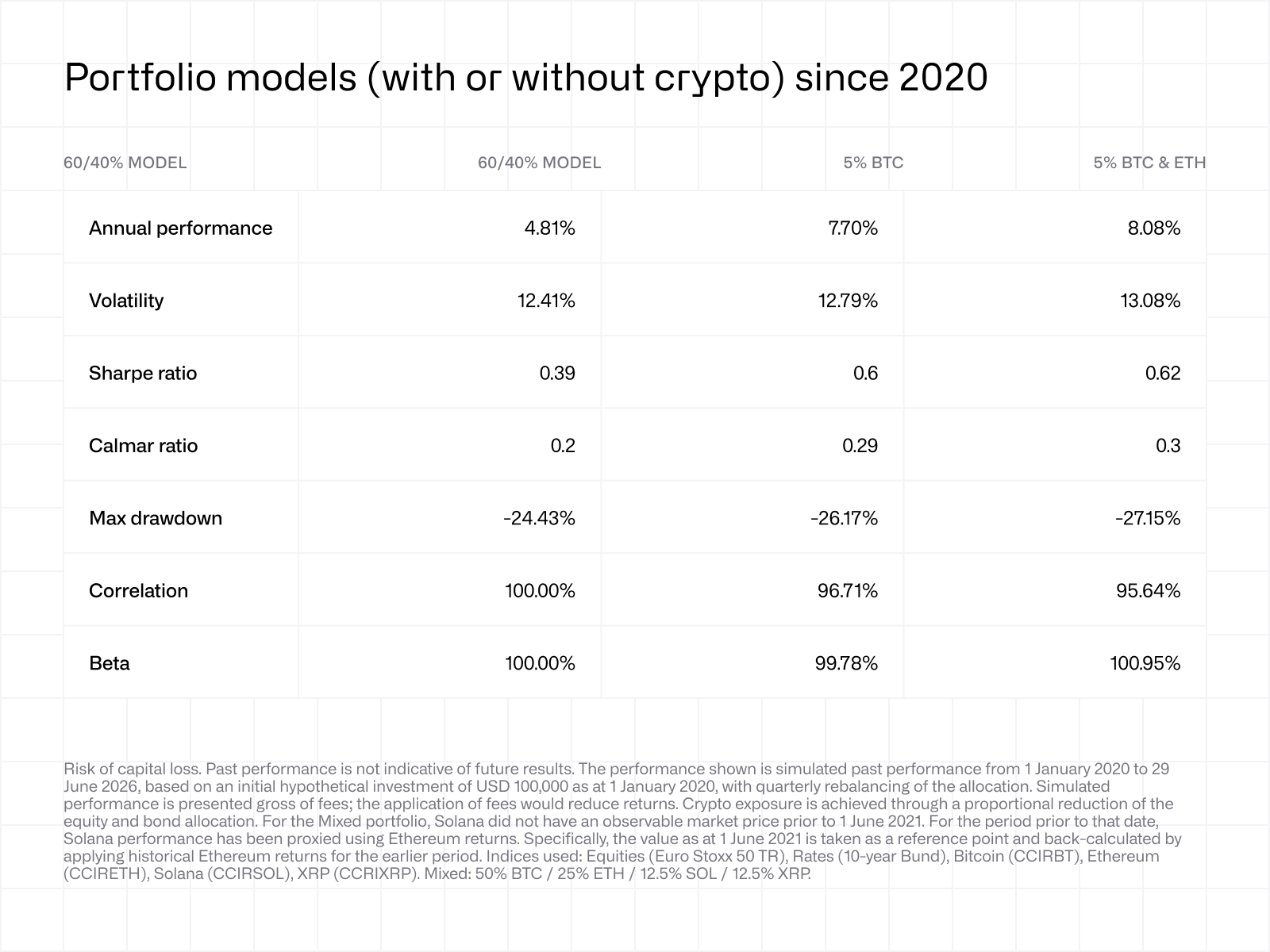
Zur Frage der Gewichtung: Das Portfolio-Allokationsmodell von CoinShares untersucht, was ein kleiner Digital-Asset-Baustein in einem traditionellen Portfolio bewirkt. Dies sind simulierte Ergebnisse und keine tatsächlich erzielte Wertentwicklung. In der Simulation hätte eine Allokation von 5 %, aufgeteilt zwischen Bitcoin und Ether, die annualisierte Wertentwicklung von 4,8 % auf 8,7 % gehoben und die Sharpe Ratio, ein Maß für den Ertrag je Risikoeinheit, von 0,39 auf 0,70. Der stärkste Wertverlust vom Hoch zum Tief wäre zugleich von 24,1 % auf 26,6 % gestiegen. Der Punkt ist nicht, dass die Allokation zum Nulltarif zu haben wäre. Der Punkt ist, dass bei 5 % der zusätzliche Ertrag historisch größer ausfiel als der zusätzliche Wertverlust.
Das Kapital der Anleger ist Risiken ausgesetzt, und sie können einen Teil oder ihre gesamte Anlage verlieren. Krypto-ETPs sind komplexe Produkte und können schwer verständlich sein. Die frühere Wertentwicklung ist kein verlässlicher Indikator für künftige Erträge. Staking-Erträge sind nicht garantiert und können schwanken. Ziehen Sie vor einer Anlage den Prospekt und die entsprechenden Basisinformationsblätter heran.
Die Analyse von CoinShares
Stärken
Die etablierte Position von Ethereum erodiert nicht länger. Ende 2020 entfielen auf das Netzwerk 78,7 % des gemeinsamen Marktwerts der zwölf größten Smart-Contract-Blockchains, bis Ende 2024 sank der Anteil auf 55,9 %. Seither ist der Rückgang gestoppt: Heute liegt der Anteil bei 58,7 %.1 Der lange Abstieg, der die Kommentare jahrelang bestimmt hat, ist ausgelaufen.
Wichtiger noch: Auf Ethereum liegt das Geld. Gut drei Fünftel aller Werte, die über sämtliche Blockchains hinweg in der dezentralen Finanzwelt hinterlegt sind, liegen auf Ethereum, und auf Ethereum sind mehr Stablecoins ausgegeben als auf allen anderen Blockchains zusammen.1 Der Anteil am Kurs ist das eine, der Anteil an den Vermögenswerten, die die Menschen tatsächlich liegen lassen, ist deutlich beständiger. Dahinter steht die größte Entwicklerbasis der Branche, die 2025 mehr neue Entwickler gewonnen hat als jede andere Blockchain.7
Und Staking verschafft ETH einen nativen Ertragsstrom, zu dem Bitcoin kein Gegenstück hat. Er wird in ETH statt in Geld gezahlt und ist nicht garantiert, doch er ist ein realer wirtschaftlicher Unterschied zwischen den beiden größten digitalen Vermögenswerten.
Chancen
Die deutlichste kurzfristige Chance sind regulierte Staking-Produkte. Das gemeinsame Auslegungsschreiben von SEC und CFTC vom 17. März 2026 hält fest, dass Staking außerhalb des US-Wertpapierrechts liegt, wenn der Anbieter als Vertreter des Kunden handelt, keinen Ermessensspielraum über die gestakten Vermögenswerte ausübt und den Ertrag nicht garantiert.6 Damit ist das wichtigste wertpapierrechtliche Hindernis für Staking innerhalb von US-amerikanischen Exchange Traded Products gefallen, und zwar im größten Markt der Welt. Die Änderung reicht weniger weit, als die Kommentare dazu nahelegten: Sie stellt darauf ab, wie ein Produkt strukturiert ist, und klärt nicht den Status von Staking im Allgemeinen. Europäische Staking-ETPs gibt es seit Jahren, die USA ziehen erst jetzt nach, und die Mittelflüsse folgen in der Regel den Produkten.
Die langsamere und größere Chance ist die Tokenization. Geldmarktfonds, Staatsanleihen und Private Credit werden zunehmend auf einer Blockchain begeben statt in einem klassischen Wertpapierregister, und Ethereum ist für die Institute, die das tun, die Standardplattform. Die Adoptionskurve ist lang, doch sie ist diejenige, die Ethereum am plausibelsten in eine Infrastruktur verwandelt, auf die sich das gewöhnliche Finanzwesen stützt. Genau deshalb ist auch die Arbeit an der Kapazität wichtig: Dencun und Fusaka haben beide spürbare Kostensenkungen gebracht, statt erneut verschoben zu werden, und Glamsterdam zielt auf eine deutliche Kapazitätserhöhung auf der Hauptkette selbst.
Schwächen
Die schwierigste Frage an die Investmentthese ist, dass der Erfolg der Layer 2 die Hauptkette kannibalisiert hat. Knapp neun von zehn Transaktionen finden heute auf Netzwerken statt, die Ethereum dafür sehr wenig zahlen. Die Gebühreneinnahmen der Hauptkette fielen von 526 Mio. USD im Jahr 2025 auf 113 Mio. USD in den ersten acht Monaten 2026, und die vernichtete Menge fiel noch stärker.1 Die Skalierung hat funktioniert, und sie hat die Erlöse anderswohin verlagert. Ob Ethereum für die Abwicklung annähernd so viel verlangen kann, wie es einst für die Überlastung verlangt hat, ist offen, und wer ETH kauft, trifft dazu eine Annahme.
Daraus folgt ein zweites Problem: Die Deflationsgeschichte trägt nicht. Das Angebot ist seit Beginn der Vernichtung gewachsen und nicht geschrumpft, und es wächst schneller, je stärker die Vernichtung zurückgeht.1 Jede Argumentation, die darauf beruht, dass ETH mit der Zeit knapper wird, wird von den Daten widerlegt.
Zwei weitere Schwächen sind struktureller statt wirtschaftlicher Natur. Code, der nicht geändert werden kann, ist Code, der nicht gepatcht werden kann. Das Smart-Contract-Risiko ist damit dauerhaft: Angriffe auf Anwendungen, die auf Ethereum aufbauen, haben die Nutzer Milliarden von US-Dollar gekostet, und das Netzwerk selbst macht sie nicht rückgängig. Und Dutzende Layer 2, jeder mit eigenen Gebühren, eigenem Token und eigenem Weg, Geld hinein- und herauszubewegen, sorgen bei Einsteigern für ein wirklich verwirrendes Erlebnis, wie es Bitcoin nicht bietet.
Risiken
Die Konzentration beim Staking ist der Punkt, auf den zu achten ist. Ein Drittel aller ETH ist gestakt, und ein großer Teil davon läuft über eine Handvoll großer Betreiber sowie über Dienste, die einen handelbaren Beleg für gestakte ETH ausgeben. Das ist eher ein Governance- und Zensurthema als ein Diebstahlrisiko, aber es ist real.
Hinzu kommt der Preiswettbewerb: Solana, BNB Chain und andere sind auf ihren eigenen Hauptketten schneller und günstiger und haben spürbare Anteile am Privatkundengeschäft gewonnen. Dazu kommt die regulatorische Einordnung, seit einem Jahrzehnt umstritten, in einigen Rechtsordnungen geklärt und in anderen nicht. Das US-Auslegungsschreiben vom März 2026 hilft, gilt aber nur für Staking-Konstruktionen, die seine Bedingungen erfüllen, es behandelt den Status von ETH selbst nicht, und außerhalb der USA schließt es die Frage nicht. Und schließlich die Konzentration in den Unternehmensbilanzen: Mehrere börsennotierte Unternehmen halten inzwischen ETH-Positionen in Millionenhöhe, finanziert über die Ausgabe von Aktien. Das war bisher eine Nachfragequelle, und es kann zu einer Quelle erzwungenen Angebots werden, wenn ihre Finanzierungsbedingungen drehen.
Worauf es hinausläuft
Ethereum ist weder günstig noch einfach zu halten, und die Layer-2-Frage ist der Grund, warum ein sorgfältiger Anleger zögern würde. Doch die Schwierigkeit und die Investmentthese sind ein und dieselbe Tatsache. Ethereum hat sich billig genug gemacht, um genutzt zu werden, und was darauf jetzt entsteht, wirkt weniger wie Spekulation als vielmehr wie Infrastruktur: unscheinbar, aber unverzichtbar. Stablecoins, die mehr Dollar bewegen als alle anderen Blockchains zusammen, und Fonds und Anleihen, die in Minuten statt in Tagen abgewickelt werden. Wenn die Analogie vom digitalen Öl trägt, zählt der Preis des Treibstoffs mit der Zeit weniger als die Frage, wie viel Maschinerie am Ende damit läuft. Das ist die entscheidende Beobachtung, und sie stellt die Frage nach der Gewichtung, statt sie zu beantworten: Welche Zahl ein Anleger auch wählt, sie sollte klein genug sein, dass ein Irrtum darüber verkraftbar bleibt. Genau darin liegt die Logik des 5-%-Bausteins im obigen Modell.
Häufig gestellte Fragen
Was ist Ethereum, einfach erklärt?
Ethereum ist ein öffentlicher Computer, der niemandem gehört. Es ist eine Blockchain, ein gemeinsames Verzeichnis, das Tausende unabhängiger Rechner synchron halten und das nicht nur Geld bewegen, sondern auch Programme ausführen kann. Sein Token heißt Ether (ETH). Jeder kann darauf ein Programm veröffentlichen, und einmal veröffentlicht, läuft dieses Programm so, wie es geschrieben wurde, und kann von keiner einzelnen Partei abgeschaltet werden.
Ist Ethereum eine gute Geldanlage?
Das hängt vollständig von Ihren Umständen und Ihrer Risikobereitschaft ab, und nichts hiervon ist eine Anlageberatung. Sachlich lässt sich sagen: ETH ist hochvolatil, kennt keine Obergrenze für das Angebot, zahlt derzeit einen Staking-Ertrag von 2,6 % pro Jahr und notiert 48,1 % unter seinem Rekord-Tagesschlusskurs vom August 2025. Das eingesetzte Kapital ist Risiken ausgesetzt.
Wie viel lässt sich mit Ethereum-Staking verdienen?
Die Basisvergütung des Netzwerks liegt derzeit bei 2,6 % pro Jahr und wird in ETH gezahlt.2 Der Satz sinkt, je mehr ETH gestakt werden, und steigt mit der Netzwerkaktivität, verändert sich also laufend. Produkte, die für Sie staken, geben nach Kosten einen Teil davon weiter: Das CoinShares Ethereum Staking ETP zahlt 1,25 % pro Jahr bei 0,00 % Verwaltungsgebühren.3 Staking-Erträge sind nicht garantiert und können schwanken.
Warum ist die Nutzung von Ethereum heute so viel günstiger als früher?
Zwei Upgrades, Dencun im März 2024 und Fusaka im Dezember 2025, haben einen günstigen Datenkanal für Layer-2-Netzwerke geschaffen und anschließend erweitert. Die Layer 2 wickeln heute knapp neun von zehn Ethereum-Transaktionen zu jeweils einem Bruchteil eines Cents ab, und die geringere Überlastung der Hauptkette hat auch deren Gebühren gedrückt, von durchschnittlich 1,00 USD je Transaktion im Jahr 2025 auf 0,20 USD im bisherigen Jahresverlauf 2026.1
Hat Ethereum eine maximale Angebotsmenge?
Nein. Bitcoin ist auf 21 Mio. BTC begrenzt, Ethereum kennt keine vergleichbare Grenze. Neue ETH werden laufend ausgegeben, um Validatoren zu vergüten, und ein Teil jeder Gebühr wird vernichtet. Seit Beginn der Gebührenvernichtung im Jahr 2021 hat die Vernichtung mit der Ausgabe nicht Schritt gehalten, sodass das Angebot gewachsen ist, seit 2022 allerdings um 0,3 % pro Jahr statt um 2,7 % davor.1
Worin besteht der Unterschied zwischen Ethereum und Ether?
Ethereum ist das Netzwerk. Ether, oder ETH, ist der Token, mit dem die Nutzung bezahlt wird und mit dem gestakt wird. Im Alltag sagen die meisten zu beidem „Ethereum“, und Exchanges führen den Token unter dem Ticker ETH.
Quellen
1 Token Terminal, alle Daten zum 3. September 2026.
2 Beaconcha.in, Stand 4. September 2026.
3 Produktseite und Factsheet des CoinShares Ethereum Staking ETP (ETHE), Eckdaten zum 28. August 2026.
4 Crypto Carbon Ratings Institute (CCRI)
5 Ethereum Foundation
6 US Securities and Exchange Commission und Commodity Futures Trading Commission, gemeinsames Auslegungsschreiben zu Staking-Aktivitäten, 17. März 2026. Electric Capital, Developer Report 2025.
Veröffentlicht amSept 14th, 2026