
This website uses cookies
We use cookies to personalise content and ads, to provide social media features and to analyse our traffic. We also share information about your use of our site with our social media, advertising and analytics partners who may combine it with other information that you’ve provided to them or that they’ve collected from your use of their services.
Consent Selection
Details
  • Necessary cookies help make a website usable by enabling basic functions like page navigation and access to secure areas of the website. The website cannot function properly without these cookies.

    • Learn more about this provideropens in a new window
      CookieConsentStores the user's cookie consent state for the current domain
      Maximum Storage Duration: 1 yearType: HTTP Cookie
    • Learn more about this provideropens in a new window
      bcookieUsed in order to detect spam and improve the website's security.
      Maximum Storage Duration: 1 yearType: HTTP Cookie
      li_gcStores the user's cookie consent state for the current domain
      Maximum Storage Duration: 180 daysType: HTTP Cookie
    • Learn more about this provideropens in a new window
      datadomeUsed in context with the website's BotManager. The BotManager detects, categorizes and compiles reports on potential bots trying to access the website.
      Maximum Storage Duration: 1 yearType: HTTP Cookie
    • _pk_testcookie_domainThis cookie determines whether the browser accepts cookies.
      Maximum Storage Duration: 1 dayType: HTTP Cookie
    • __cf_bm [x3]This cookie is used to distinguish between humans and bots. This is beneficial for the website, in order to make valid reports on the use of their website.
      Maximum Storage Duration: 1 dayType: HTTP Cookie
  • Preference cookies enable a website to remember information that changes the way the website behaves or looks, like your preferred language or the region that you are in.
    • Learn more about this provideropens in a new window
      lidcRegisters which server-cluster is serving the visitor. This is used in context with load balancing, in order to optimize user experience.
      Maximum Storage Duration: 1 dayType: HTTP Cookie
  • Statistic cookies help website owners to understand how visitors interact with websites by collecting and reporting information anonymously.
    • Learn more about this provideropens in a new window
      guestRegisters data on visitors' website-behaviour. This is used for internal analysis and website optimization.
      Maximum Storage Duration: 1 monthType: HTTP Cookie
    • Learn more about this provideropens in a new window
      personalization_idThis cookie is set by Twitter - The cookie allows the visitor to share content from the website onto their Twitter profile.
      Maximum Storage Duration: 400 daysType: HTTP Cookie
    • _pk_uidUsed by Piwik Analytics Platform to identify the visitor on repeat visits to the website.
      Maximum Storage Duration: 1 yearType: HTTP Cookie
      _pk_id#Collects statistics on the user's visits to the website, such as the number of visits, average time spent on the website and what pages have been read.
      Maximum Storage Duration: 1 yearType: HTTP Cookie
      _pk_ses#Used by Piwik Analytics Platform to track page requests from the visitor during the session.
      Maximum Storage Duration: 1 dayType: HTTP Cookie
    • FPGSIDRegisters statistical data on users' behaviour on the website. Used for internal analytics by the website operator.
      Maximum Storage Duration: 1 dayType: HTTP Cookie
      FPIDRegisters statistical data on users' behaviour on the website. Used for internal analytics by the website operator.
      Maximum Storage Duration: 400 daysType: HTTP Cookie
      FPLCRegisters a unique ID that is used to generate statistical data on how the visitor uses the website.
      Maximum Storage Duration: 1 dayType: HTTP Cookie
    • _gaRegisters a unique ID that is used to generate statistical data on how the visitor uses the website.
      Maximum Storage Duration: 2 yearsType: HTTP Cookie
      _ga_#Used by Google Analytics to collect data on the number of times a user has visited the website as well as dates for the first and most recent visit.
      Maximum Storage Duration: 2 yearsType: HTTP Cookie
  • Marketing cookies are used to track visitors across websites. The intention is to display ads that are relevant and engaging for the individual user and thereby more valuable for publishers and third party advertisers.
    • Learn more about this provideropens in a new window

      Some of the data collected by this provider is for the purposes of personalization and measuring advertising effectiveness. The provider may use the IP Addresses for ads measurement and ads personalization.

      ads/ga-audiencesUsed by Google AdWords to re-engage visitors that are likely to convert to customers based on the visitor's online behaviour across websites.
      Maximum Storage Duration: SessionType: Pixel Tracker
    • Learn more about this provideropens in a new window
      userRefererDetermines how the user accessed the website. This information is used by the website operator in order to measure the efficiency of their marketing.
      Maximum Storage Duration: 1 monthType: HTTP Cookie
    • Learn more about this provideropens in a new window
      #:session-dataTracks the individual sessions on the website, allowing the website to compile statistical data from multiple visits. This data can also be used to create leads for marketing purposes.
      Maximum Storage Duration: PersistentType: HTML Local Storage
      eng_mtTracks the conversion rate between the user and the advertisement banners on the website - This serves to optimise the relevance of the advertisements on the website.
      Maximum Storage Duration: PersistentType: HTML Local Storage
      t_gidThis cookie assigns a specific visitor ID, when the visitor interacts with ads or content from the website - this allows the website to target the visitor with similar ads or content.
      Maximum Storage Duration: 1 yearType: HTTP Cookie
      t_pt_gidCollects information on user preferences and/or interaction with web-campaign content - This is used on CRM-campaign-platform used by website owners for promoting events or products.
      Maximum Storage Duration: 1 yearType: HTTP Cookie
      taboola global:user-idSets a unique ID for the visitor, that allows third party advertisers to target the visitor with relevant advertisement. This pairing service is provided by third party advertisement hubs, which facilitates real-time bidding for advertisers.
      Maximum Storage Duration: PersistentType: HTML Local Storage
      taboola_session_idThis cookie is used to collect information on a visitor. This information will become an ID string with information on a specific visitor – ID information strings can be used to target groups with similar preferences, or can be used by third-party domains or ad-exchanges.
      Maximum Storage Duration: SessionType: HTTP Cookie
    • Learn more about this provideropens in a new window
      1/i/adsct [x2]Collects data on user behaviour and interaction in order to optimize the website and make advertisement on the website more relevant.
      Maximum Storage Duration: SessionType: Pixel Tracker
      muc_adsCollects data on user behaviour and interaction in order to optimize the website and make advertisement on the website more relevant.
      Maximum Storage Duration: 400 daysType: HTTP Cookie
      guest_idCollects data related to the user's visits to the website, such as the number of visits, average time spent on the website and which pages have been loaded, with the purpose of personalising and improving the Twitter service.
      Maximum Storage Duration: 400 daysType: HTTP Cookie
      guest_id_adsCollects information on user behaviour on multiple websites. This information is used in order to optimize the relevance of advertisement on the website.
      Maximum Storage Duration: 400 daysType: HTTP Cookie
      guest_id_marketingCollects information on user behaviour on multiple websites. This information is used in order to optimize the relevance of advertisement on the website.
      Maximum Storage Duration: 400 daysType: HTTP Cookie
    • _gcl_auUsed by Google AdSense for experimenting with advertisement efficiency across websites using their services.
      Maximum Storage Duration: 3 monthsType: HTTP Cookie
      _gcl_lsTracks the conversion rate between the user and the advertisement banners on the website - This serves to optimise the relevance of the advertisements on the website.
      Maximum Storage Duration: PersistentType: HTML Local Storage
    • pardot [x2]Used in context with Account-Based-Marketing (ABM). The cookie registers data such as IP-addresses, time spent on the website and page requests for the visit. This is used for retargeting of multiple users rooting from the same IP-addresses. ABM usually facilitates B2B marketing purposes.
      Maximum Storage Duration: SessionType: HTTP Cookie
  • Unclassified cookies are cookies that we are in the process of classifying, together with the providers of individual cookies.
    • cs_analytics_ip_blockedPending
      Maximum Storage Duration: SessionType: HTTP Cookie
      user_tokenPending
      Maximum Storage Duration: 1 yearType: HTTP Cookie
    • _twpidPending
      Maximum Storage Duration: SessionType: HTTP Cookie
Cookie declaration last updated on 8/20/26 by Cookiebot
[#IABV2_TITLE#]
[#IABV2_BODY_INTRO#]
[#IABV2_BODY_LEGITIMATE_INTEREST_INTRO#]
[#IABV2_BODY_PREFERENCE_INTRO#]
[#IABV2_BODY_PURPOSES_INTRO#]
[#IABV2_BODY_PURPOSES#]
[#IABV2_BODY_FEATURES_INTRO#]
[#IABV2_BODY_FEATURES#]
[#IABV2_BODY_PARTNERS_INTRO#]
[#IABV2_BODY_PARTNERS#]
About
Cookies are small text files that can be used by websites to make a user's experience more efficient.

The law states that we can store cookies on your device if they are strictly necessary for the operation of this site. For all other types of cookies we need your permission.

This site uses different types of cookies. Some cookies are placed by third party services that appear on our pages.

You can at any time change or withdraw your consent from the Cookie Declaration on our website.

Learn more about who we are, how you can contact us and how we process personal data in our Privacy Policy.

Please state your consent ID and date when you contact us regarding your consent.
Image A train ride through Switzerland’s Bitcoin heartland

A train ride through Switzerland’s Bitcoin heartland

Timer7 min read

  • Finance

In Europe, Switzerland, alongside the Czech Republic, may have been one of the friendliest countries toward cryptocurrencies at a time when Bitcoin was seen as a criminal tool. Between Crypto Valley and Lugano, “the Monte Carlo of Switzerland,” digital assets are being pushed by true early believers.

With a surface area similar to that of the Netherlands or Bhutan, wedged between the borders of Germany, Austria, Liechtenstein, France and Italy, Switzerland had, on paper, few reasons to withstand the twists of history and its invaders, apart from its hard-to-cross Alpine massif and a resilience that led its citizens to form a federal state after a civil war between liberal progressives and Catholic conservatives in 1847. That war, initiated by the conservative Sonderbund (which means “separate alliance”), is the foundation of today’s Switzerland: ultimately, after their surrender, the belligerents were demobilized and released unconditionally, in the name of compromise and saving lives, while the liberal cantons eventually prevailed with the creation of a federal state and a strategic central government, designed to remove customs barriers between cantons and to be able to stand up to other European nations.

Not without shocks (the Historical Dictionary of Switzerland still lists 93 deaths), but with damage kept relatively limited, Switzerland emerged as a unified nation while remaining respectful of its 26 cantons. In 1949, after concluding that the emergency clause written into its Constitution, allowing the federal government to bypass referendums when it felt the need, was being used too often, the Swiss population mobilized around a popular initiative for a “Return to Direct Democracy.” It passed by a narrow majority, reintroducing the right to direct political participation. In Switzerland, citizens can take part in up to four rounds of voting per year on more than a dozen issues on average, while individual initiatives to amend the Constitution are examined once they collect at least 100,000 signatures. A law can also be challenged by referendum if its opponents gather 50,000 signatures. “Switzerland is, to some extent, the gold standard of direct democracy. Here, every citizen can change this or that aspect of life, naturally on the condition that they do not act alone but belong to a group,” Uruguayan political scientist David Altman in an interview1 a decade ago. Still, that model comes with a certain taste for conservatism. “The people’s right to co-decision increases the acceptability of decisions,” said Pascal Sciarini2, professor of political science at the University of Geneva, in 2017. Another political scientist, Marc Bühlmann, added in 20233 that in Switzerland it is “the people who want it [who] must prove to others that a problem exists.” In a country where 80% of the population says it is satisfied with its life, conservatism, in the sense of inertia rather than ideology, inevitably prevails.

Switzerland

Switzerland, like a “boring” blockchain? 

That is probably why Bitcoin’s intrinsic qualities appealed to the country. In the end, Satoshi Nakamoto’s invention is a participatory system where everyone can review transactions and, when needed, take part in decision-making, transparent and consensus-based. “Switzerland is a direct democracy and decentralised system with direct democracy votes, this is maybe to a certain extent what blockchain in a digitised way wants to achieve,” Swiss entrepreneur and Bitcoin early adopter Marc Bernegger tells us during our visit to Zurich. “Many people say Switzerland is, with how it may be a bit annoying, a little bit like the old fashioned footprint or example of how blockchain would structure a government or a country.” A Zurich native, Bernegger built his fortune through different ventures tied to the early days of the internet and then cryptocurrencies. He was notably one of the shareholders and founding board members of Crypto Finance AG, sold in 2021 to Deutsche Börse for several hundred million Swiss francs. He has witnessed the growth of digital assets in the country, especially in Zurich, which together with nearby Zug forms what is called Crypto Valley, an Alpine twin of Silicon Valley, chosen by crypto builders to set up their foundations, often created as the entities responsible for issuing digital assets. One of the first was Ethereum. “Ethereum launched out of Switzerland. Vitalik Buterin lived here, his office is still in Zug,” Bernegger adds. Another is Tezos, which set up its foundation headquarters there in 2017 before its $232 million token sale, as did Cosmos Network and Cardano. One of the latest is the Solana Foundation, which is why we met its president Lily Liu downtown. “Between 2017 and 2019, Switzerland was like the epicenter of the whole industry,” Bernegger tells us. And even though today every jurisdiction around the world, from Hong Kong to Singapore via Paris, San Francisco, Austin or Dubai, is trying to become a “crypto hub” and attract this capital, Swiss Crypto Valley remains a serious contender.

You can feel it even in local shops. Bernegger tells us that at every tram stop, it is possible to buy Bitcoin at a digital kiosk. “I doubt anyone still does it these days, now that there are mobile apps, and I don’t know the fees or the spread, but it’s been possible for years,” he says. In practice, you buy vouchers that give you the right to withdraw those bitcoins to a personal wallet. A simple Swiss phone number is enough to do it. A short walk through the city confronts you with ads for Sygnum Bank, which claims to be the first bank in the world to have provided access to digital assets. Since 2024, even cantonal banks offer it as well. Switzerland shows a violence rate (8.5% in 20244) lower than Sweden (9.4%), Germany (10.7%) and the Netherlands (16.7%), suggesting that access to Bitcoin is certainly not correlated with crime, however many critics may insist otherwise.

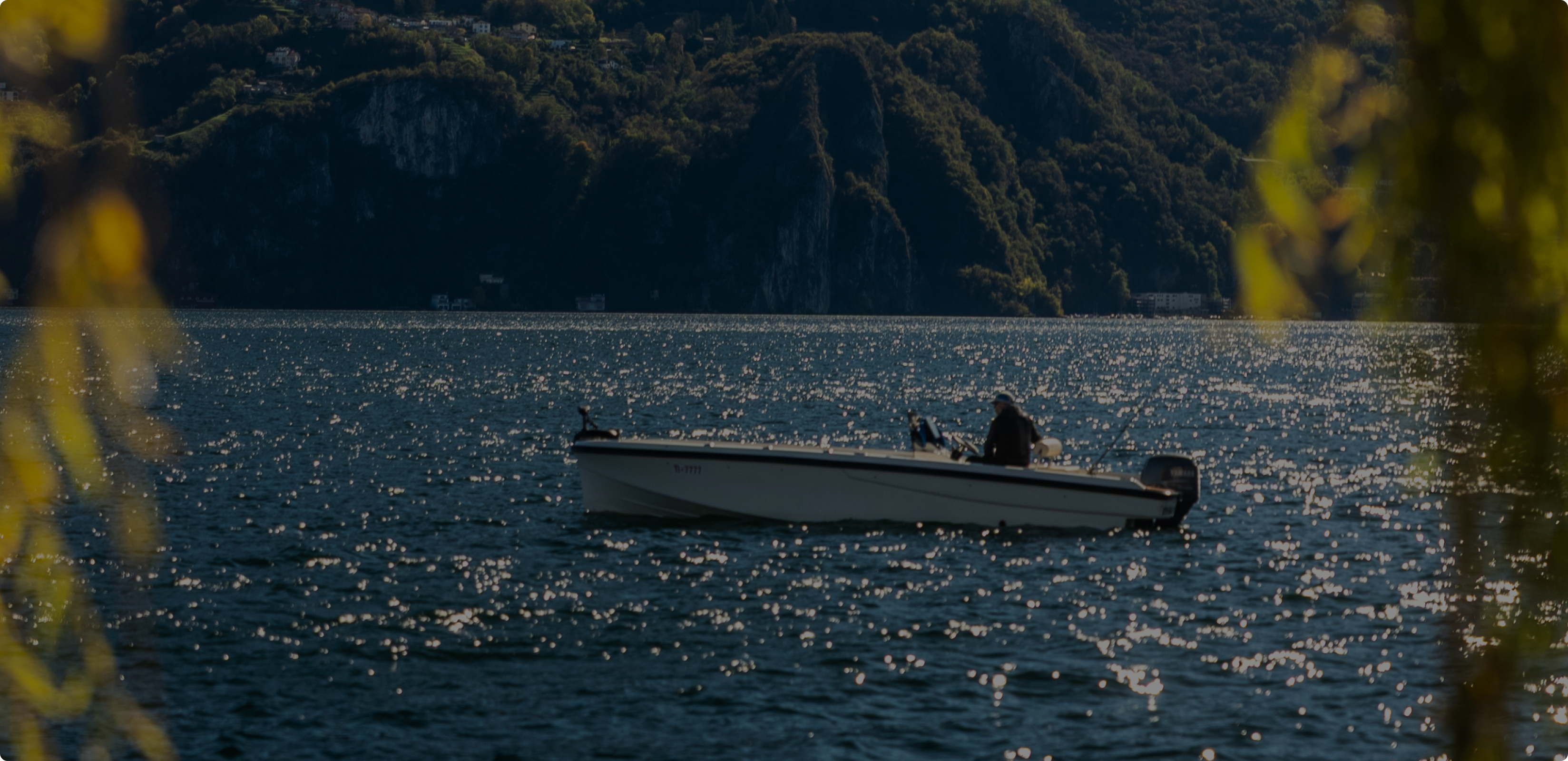
Other experiments tied to digital assets are happening elsewhere in the country. We stop by Zurich station, where, tucked away on the platform and almost anonymous, sits one of the best sandwich shops we have ever tried, and we take the train to Lugano, about two hours south of Zurich. At the end of this journey, running through some of Europe’s most beautiful landscapes, between lakes and mountains, we arrive in the city chosen by Tether for its European base. Tether is one of the most powerful crypto companies in the world, if not the most powerful, in charge of issuing the USDT stablecoin (a dollar-pegged crypto), one of the largest market capitalizations in the sector. Now diversified across multiple activities (Bitcoin mining, AI data centers, agriculture, streaming, neuroscience), the company, said to employ only between 100 and 200 people, generated more than $14 billion in profit in 2024, a figure it is expected to repeat in 2025, which would make it the most profitable company in the world without being publicly listed. In this part of Switzerland, Ticino, where Dante’s language reigns and which is nicknamed the “Monte Carlo of Switzerland,” Tether’s Turin-born founding and executive team chose to install part of its offices. For the lifestyle and the language, no doubt, even if tax considerations likely play a role too, since there are incentives for Italians and lower corporate pressure than elsewhere in Europe, even if still far higher than in Zug (19.3% versus 11.8%).

Our stay took place during Plan B, the Bitcoin-focused event created by the company. For a week, developers, investors and everyday enthusiasts digress on the future of the digital asset. And it is from all over the world that key figures in the sector gather there, whether for public roundtables or more private cocktails. From one street to the next, it is not uncommon to run into Adam Back (co-founder and CEO of Blockstream), Elizabeth Stark (co-founder of Lightning Labs), or Nicolas Bacca slipping away into the coworking space dedicated to crypto startups, PoW.space (PoW being the acronym for proof of work, Bitcoin’s consensus mechanism). The space is housed inside a former bank, and its top two floors would be occupied, according to our sources, by… Tether.

Switzerland

A panettone with a taste of Bitcoin

But the company is not aiming to leave Bitcoin’s footprint only for the duration of a yearly event. It has developed a payments program, complete with terminals distributed free of charge, to let local merchants easily accept Bitcoin, USDT and LVGA (a crypto designed specifically for Lugano). Around 350 businesses have equipped themselves, of all kinds: jewelry shops, art galleries, cafés, identifiable through stickers placed in windows, similar to those used by other payment networks like Amex, Visa or Mastercard. During our visit, however, the impact felt mixed. The manager of the IMAGO gallery on Via Nassa, there for nearly seven years, told us she had never carried out a single transaction in cryptocurrencies. At the café of the same name a few meters away, the waitress had seen a bit more success: “Over the past few months, we’ve had four or five payments. A few this week because of the event. But overall, it’s very rare,” she agrees. Overall, paying in cryptocurrencies was not part of the daily routine for any of the merchants we spoke to. A question of time, or of education?

switzerlandOne thing is certain: all energies are being mobilized to evangelize this Bitcoin-scented city, all the way to panettone. One of them is made by the family-run food company Gabbani, which uses surplus energy from the photovoltaic panels at its production plant to mine Bitcoin. Not far from there, a new statue depicting the anonymous Satoshi Nakamoto, designed by artist Valentina Picozzi (said to be Giancarlo Devasini’s partner), was inaugurated by the mayor in Ciani Park, just behind the Congress Palace. A first version of the statue had been vandalized and thrown into Lake Lugano. Clearly, even in Switzerland, Bitcoin leaves no one indifferent. But in one form or another, it keeps blending in everywhere.


1SwissInfo, 12 novembre 2015

2Interview, “Démocratie directe : un « modèle » helvétique ?”, nonfiction.fr,  April 11 2017

RTS, La Matinale, 23 août 2023

4Neighbourhood crime, violence or vandalism in 2023, Eurostat, published in 2025

Published onDec 19th, 2025

Writer
Former journalist for Le Monde, Le Figaro, and Capital's Cryptocurrency section. Bitcoin node runner.

related articles

Welcome to CoinShares

Personal Data

0102

When you visit CoinShares website, cookies enhance your experience. They help us to show you more relevant content. Some cookies are necessary for the site to work and will always be active. Blocking some types of cookies may impact your experience of the website and the services which we offer on our website.

We use cookies on our site to optimize our services. Learn more about our EU cookie policy or US cookie policy.

  • Necessary
    Question circle icon
  • Preferences
    Question circle icon
  • Statistical
    Question circle icon
  • Marketing
    Question circle icon
Necessary cookies help make a website usable by enabling basic functions like page navigation and access to secure areas of the website. The website cannot function properly without these cookies.
Preference cookies enable a website to remember information that changes the way the website behaves or looks, like your preferred language or the region that you are in.
Statistic cookies help website owners to understand how visitors interact with websites by collecting and reporting information anonymously.
Marketing cookies are used to track visitors across websites. The intention is to display ads that are relevant and engaging for the individual user and thereby more valuable for publishers and third party advertisers.