Digital asset fund manager survey - august 2026
 4 min read
- Finance
The first step back In
Allocations rose to 1.2%, the first increase since the October 2025 sell-off, driven entirely by institutions rotating out of fixed income and commodities. Value perception was the fastest-rising reason to invest.
Volatility is the leading barrier for the uninvested, despite 30-day volatility sitting near its record low of 22%. Investors are pricing drawdown risk, not realised volatility.
Regulation remains the top concern among the invested, reflecting Clarity Act uncertainty, though corporate restrictions and regulatory fears have fallen sharply among those yet to invest.
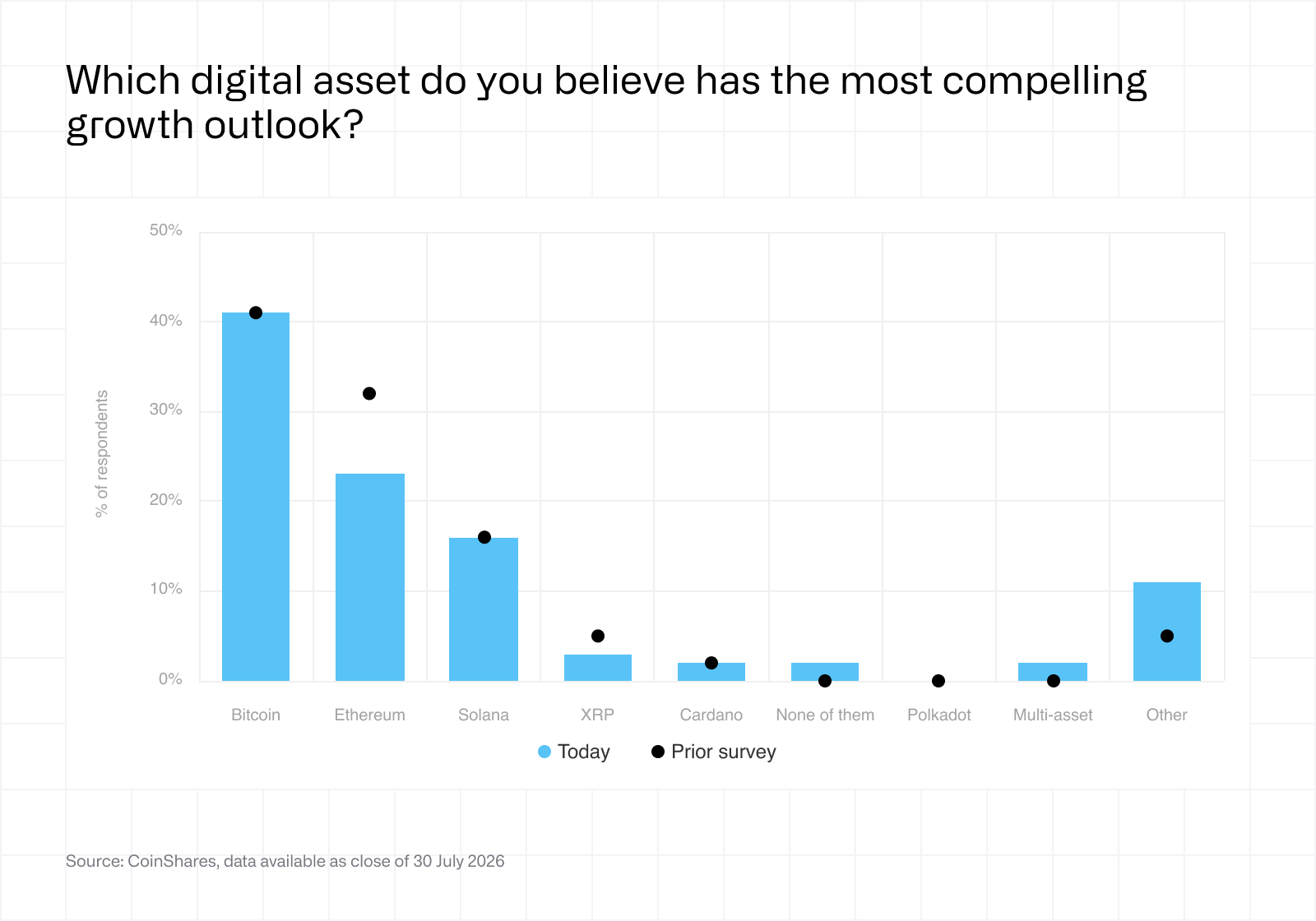
Bitcoin retains the most compelling growth outlook. Ether's has deteriorated sharply on Clarity Act delays and senior staff turnover at the Ethereum Foundation, with modest rotation into altcoins.
Bitcoin retains the top spot as the digital asset with the most compelling growth outlook, little changed from last quarter. The outlook for ether has deteriorated sharply, which we believe reflects the falling odds of the Clarity Act passing this year alongside concerns over the high turnover of senior staff at the Ethereum Foundation.
Most altcoins were little changed. The exception was the "other" category, which saw the largest rise of any component, with respondents citing Zcash, HYPE and SUI.
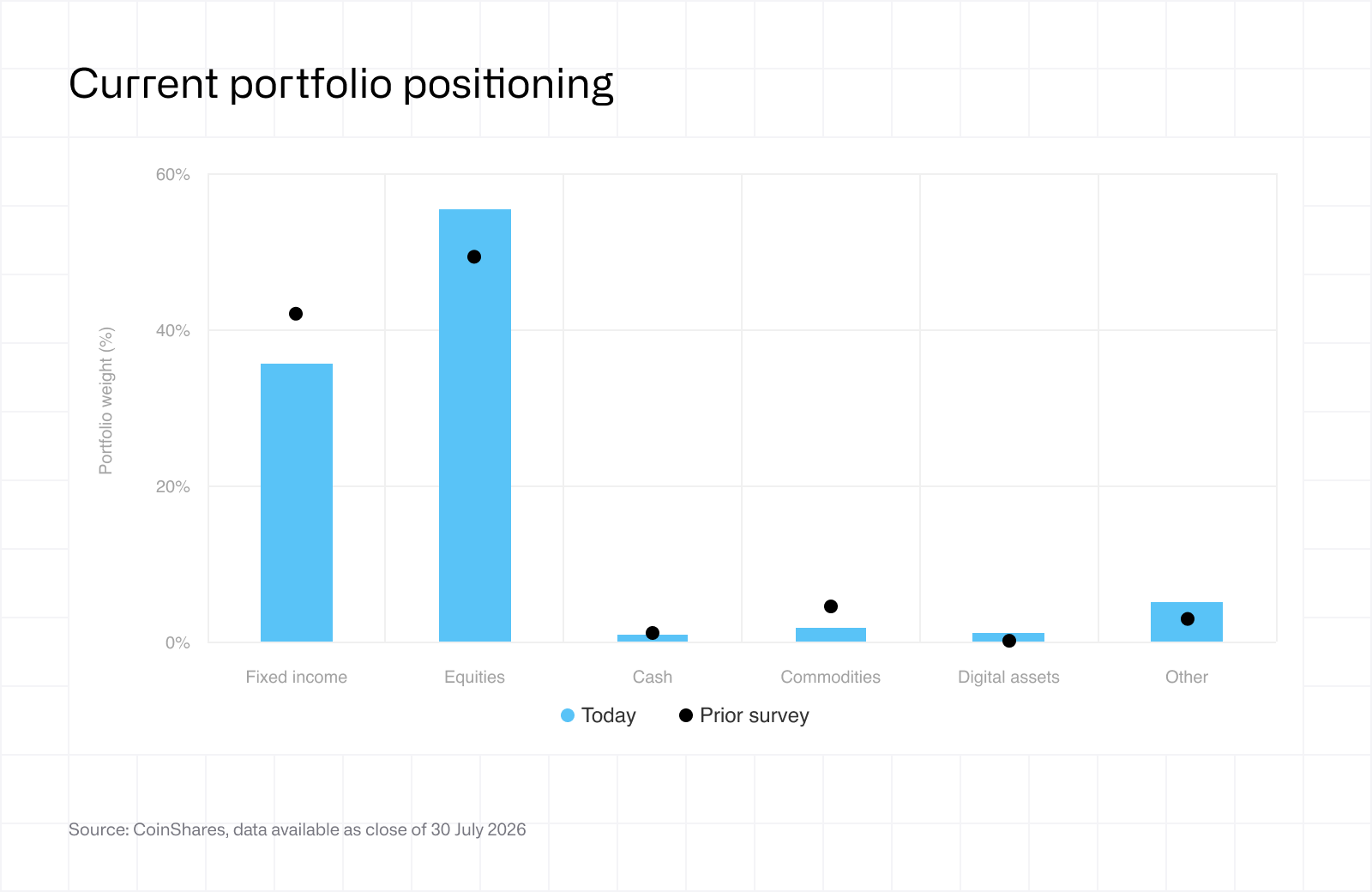
 Digital asset allocations rose to 1.2% of portfolios, the first increase since the sell-off began in October 2025, suggesting investors are beginning to re-allocate. Across cohorts, the move was driven entirely by institutional investors.
Institutions have also rotated into other higher-risk asset classes, notably equities, funding this by selling commodities and fixed income.
 Bitcoin and ether remain the core holdings in portfolios, although we have seen a reduction in those positions in favour of altcoins.
This surprises us given the poor sentiment of the past quarter, which typically weighs more heavily on altcoins. The data suggests multi-asset approaches in particular have gained in popularity. This hasn’t been reflected in fund flow data.
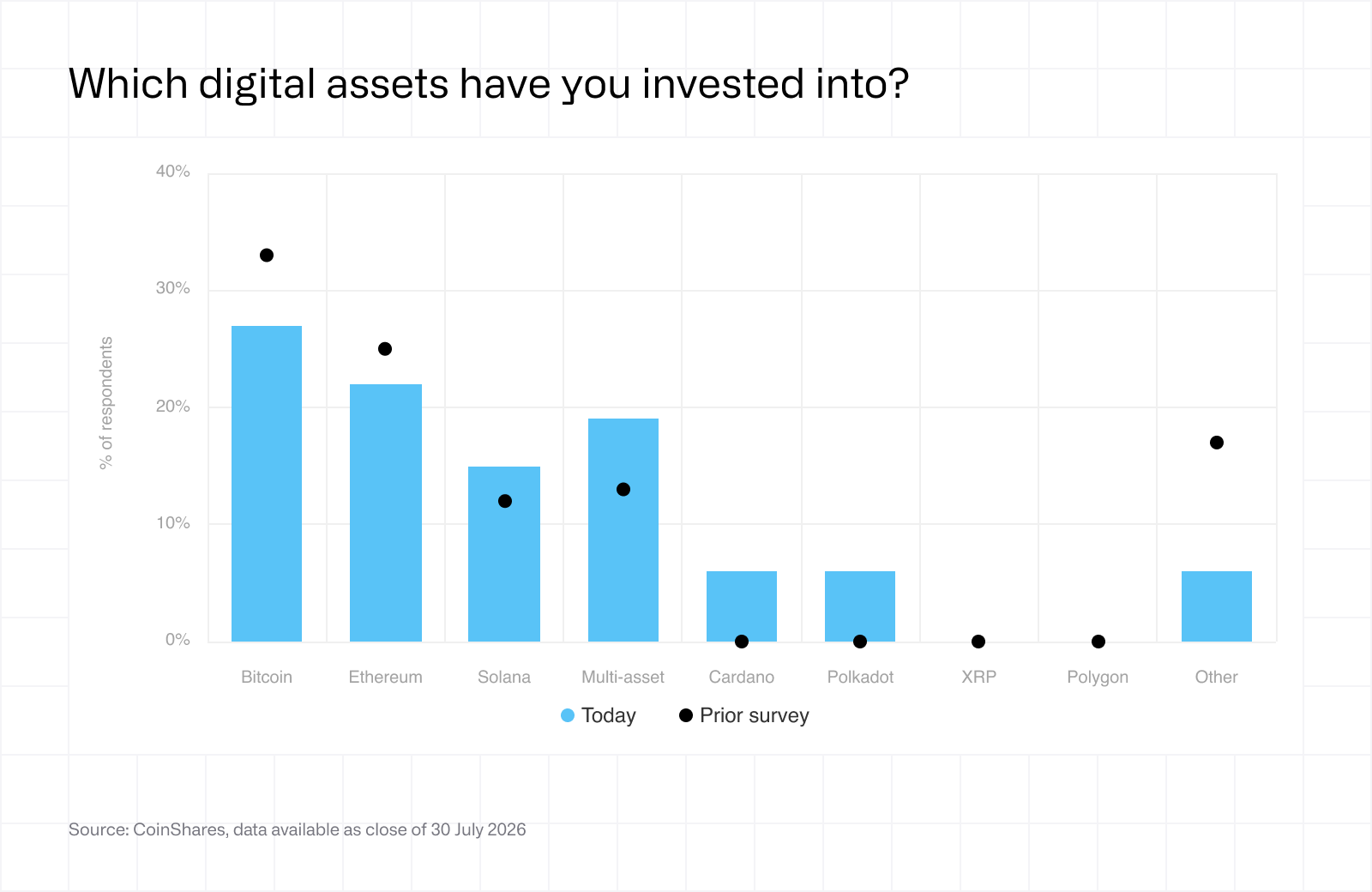 Diversification and client demand remain the primary motivations for investing, together accounting for 50% of the rationale for adding digital assets to portfolios. Appetite for exposure to distributed ledger technology has also risen modestly.
The most notable increase, however, was in investors' perception of the asset class as good value. This is encouraging, and suggests recent price weakness is being read as a buying opportunity rather than a warning.
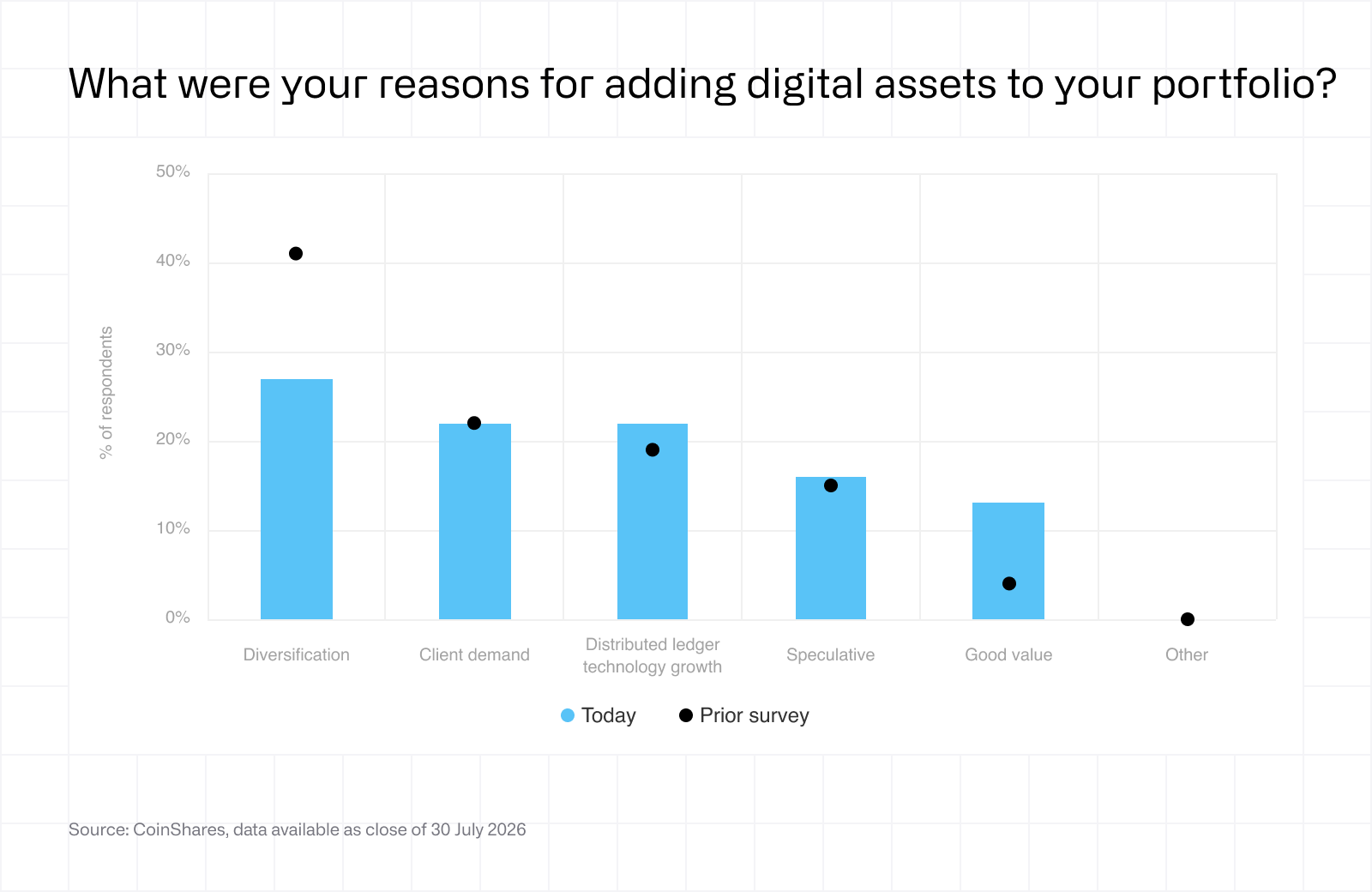 Volatility has risen to the top of the list of reasons preventing investors from buying digital assets. We believe the perception of price movements over the past quarter is the main culprit, despite 30-day volatility currently sitting close to its record low of 22%. Reputational risk remains another stubborn barrier to entry.
More encouragingly, corporate restrictions and concerns over regulation have both fallen sharply, presumably reflecting the proliferation of ETPs and continued constructive regulatory progress.
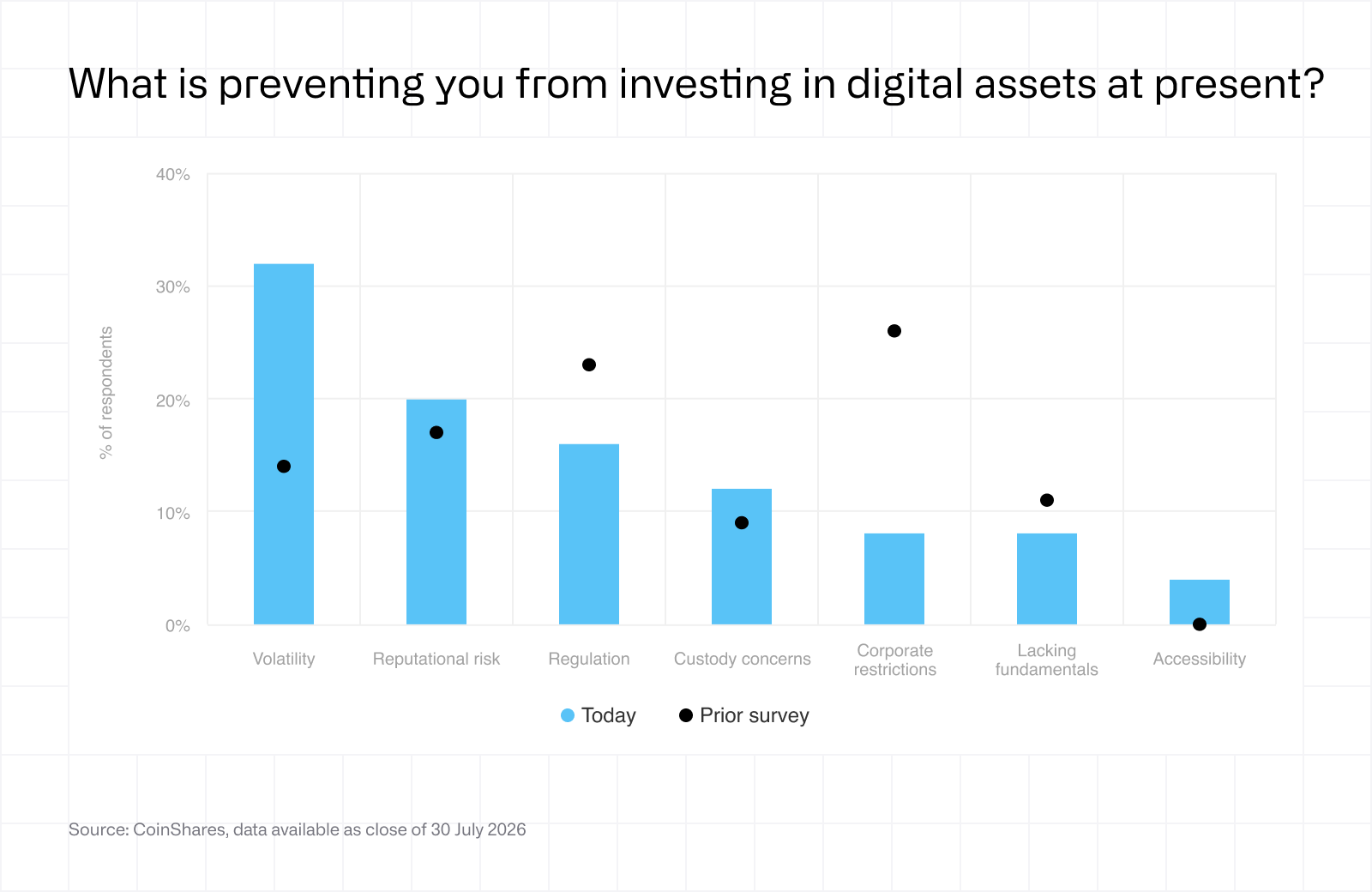 Regulation remains the top concern among those already invested. This doesn't surprise us, given the ongoing uncertainty surrounding the Clarity Act. Volatility has fallen, yet it remains a persistent concern, perhaps because investors are responding to bitcoin's drawdown risk rather than its realised volatility.
Quantum risk continues to come up in client meetings, which likely explains why so many selected it.
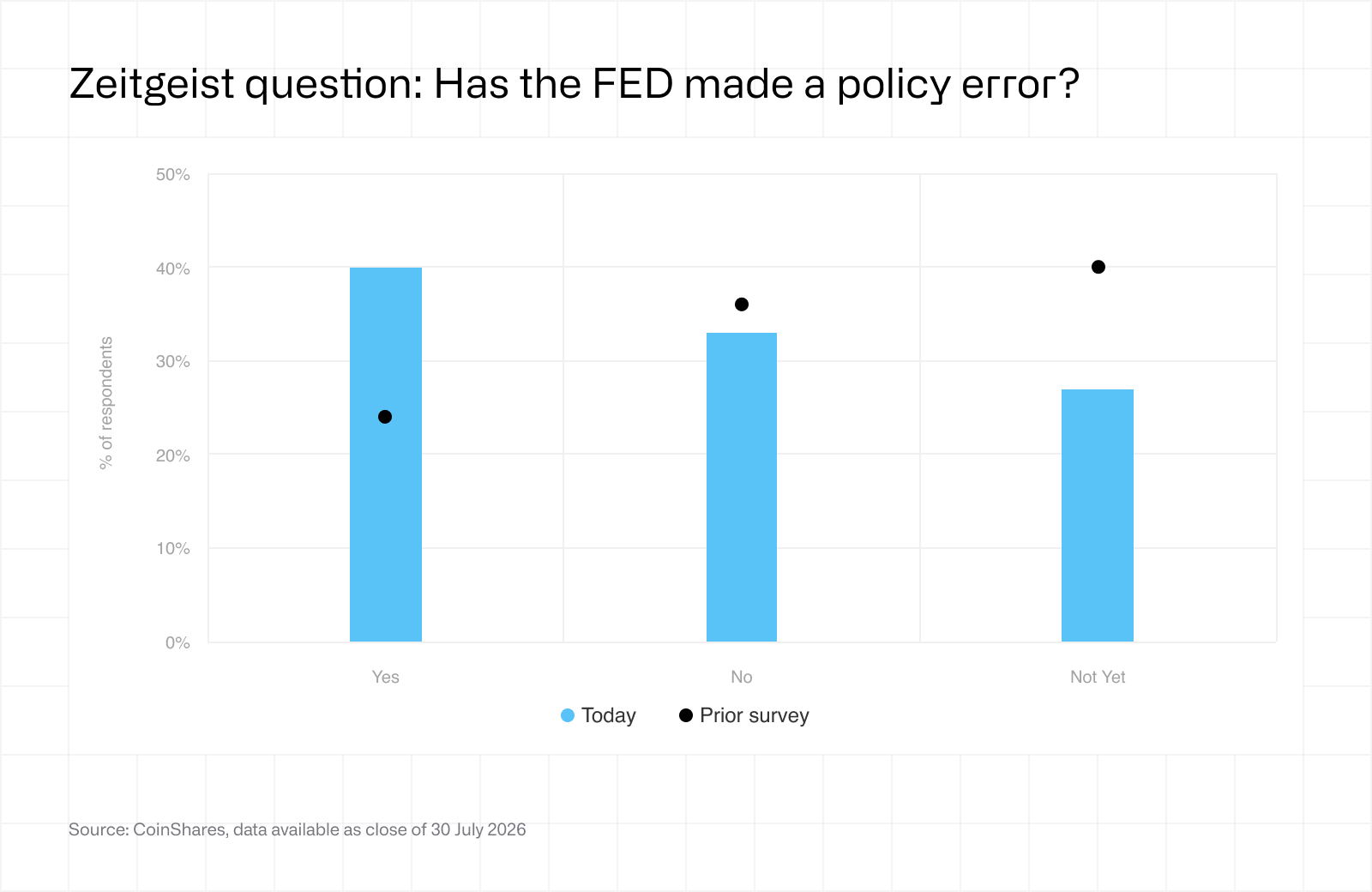
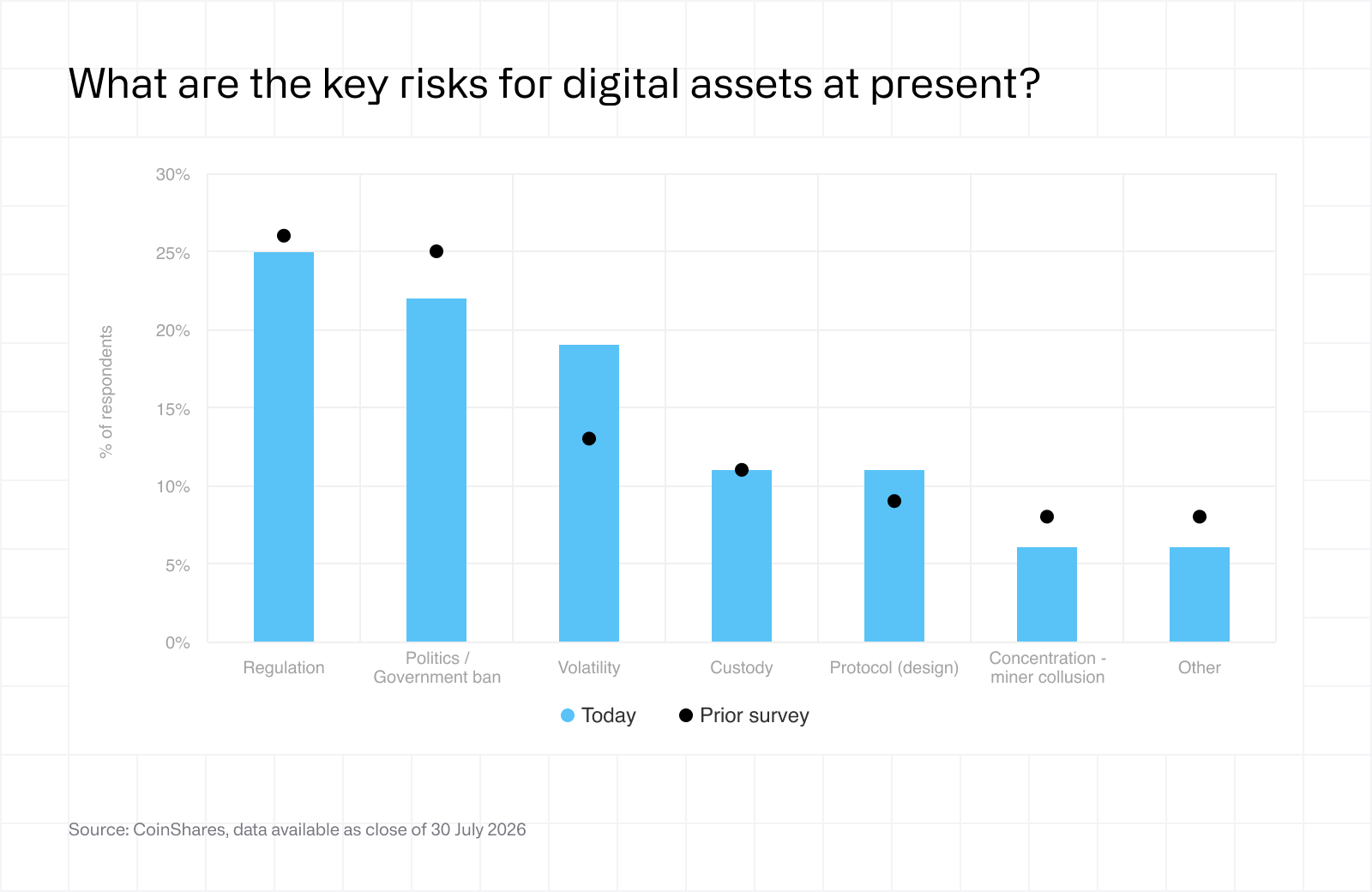 There has been a sharp rise in the share of investors who believe the Fed is making a policy mistake. The survey doesn't distinguish between whether respondents think the Fed is too hawkish or too dovish, but a considerable number moved from undecided to yes.
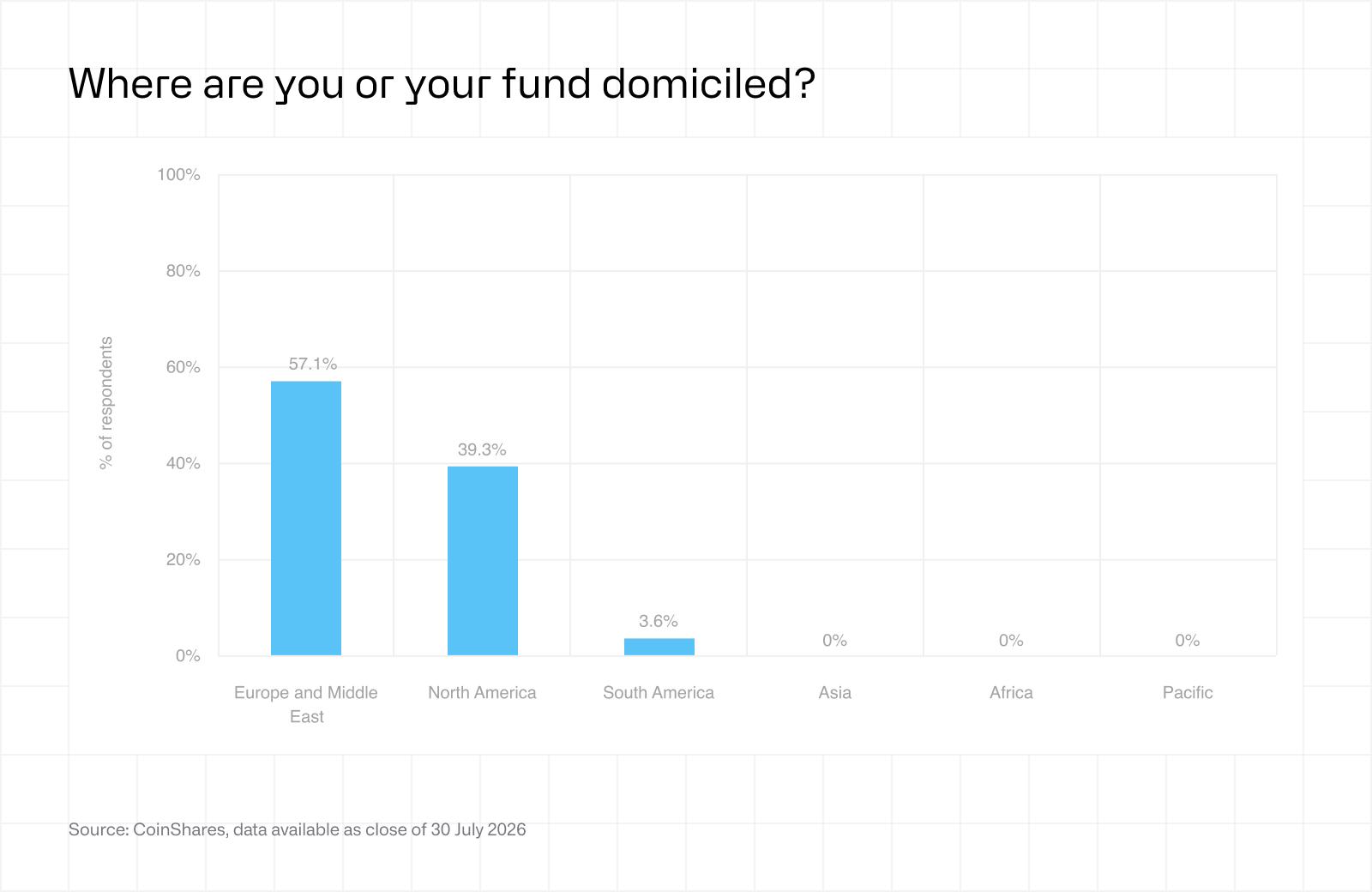
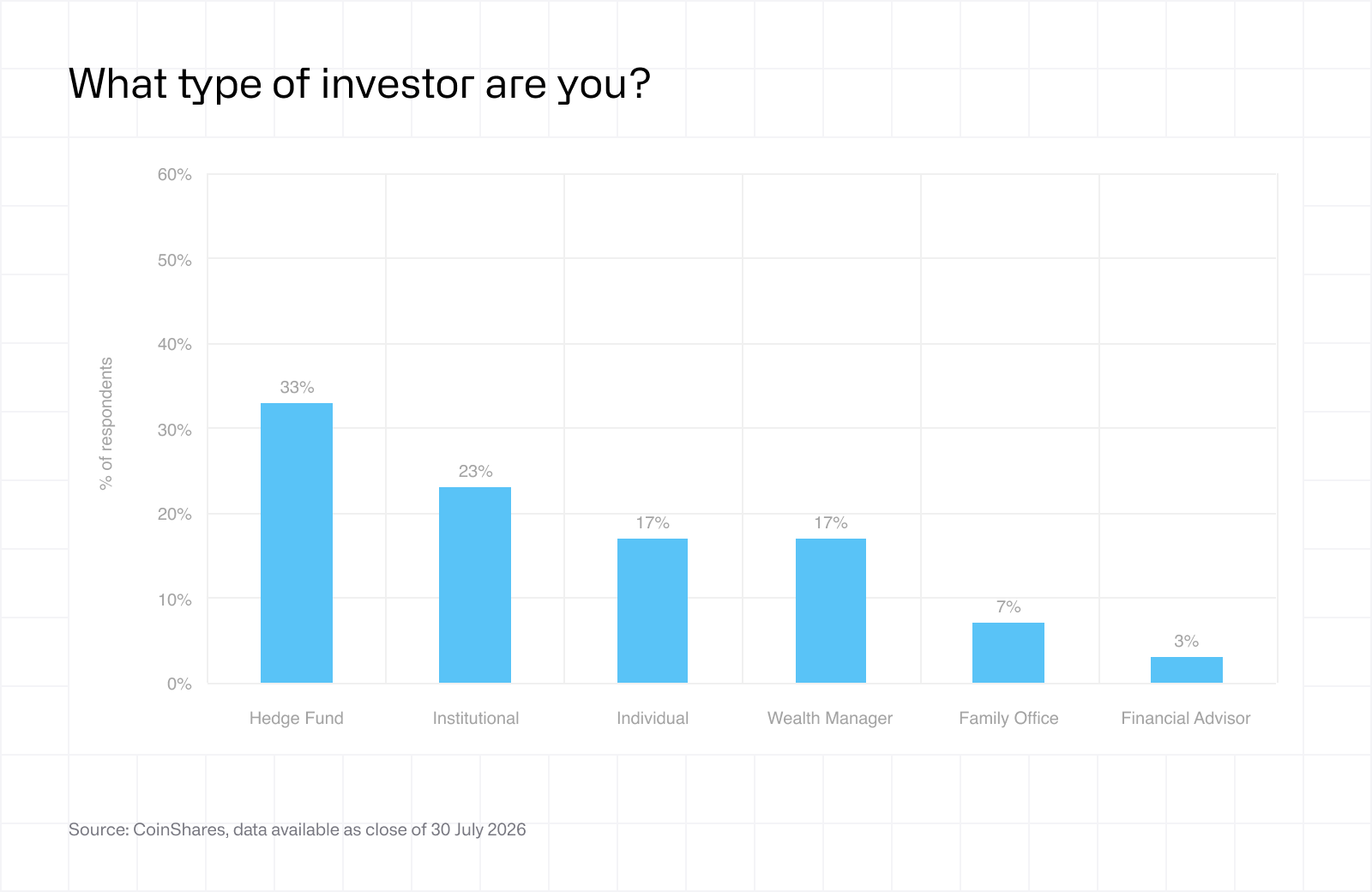
ABOUT OUR SURVEY: The July 2026 Survey drew 30 responses from investors who cover ~US$1.16 trillion of assets under management.