
This website uses cookies
We use cookies to personalise content and ads, to provide social media features and to analyse our traffic. We also share information about your use of our site with our social media, advertising and analytics partners who may combine it with other information that you’ve provided to them or that they’ve collected from your use of their services.
Consent Selection
Details
  • Necessary cookies help make a website usable by enabling basic functions like page navigation and access to secure areas of the website. The website cannot function properly without these cookies.

    • Learn more about this provideropens in a new window
      CookieConsentStores the user's cookie consent state for the current domain
      Maximum Storage Duration: 1 yearType: HTTP Cookie
    • Learn more about this provideropens in a new window
      bcookieUsed in order to detect spam and improve the website's security.
      Maximum Storage Duration: 1 yearType: HTTP Cookie
      li_gcStores the user's cookie consent state for the current domain
      Maximum Storage Duration: 180 daysType: HTTP Cookie
    • Learn more about this provideropens in a new window
      datadomeUsed in context with the website's BotManager. The BotManager detects, categorizes and compiles reports on potential bots trying to access the website.
      Maximum Storage Duration: 1 yearType: HTTP Cookie
    • _pk_testcookie_domainThis cookie determines whether the browser accepts cookies.
      Maximum Storage Duration: 1 dayType: HTTP Cookie
    • __cf_bm [x3]This cookie is used to distinguish between humans and bots. This is beneficial for the website, in order to make valid reports on the use of their website.
      Maximum Storage Duration: 1 dayType: HTTP Cookie
  • Preference cookies enable a website to remember information that changes the way the website behaves or looks, like your preferred language or the region that you are in.
    • Learn more about this provideropens in a new window
      lidcRegisters which server-cluster is serving the visitor. This is used in context with load balancing, in order to optimize user experience.
      Maximum Storage Duration: 1 dayType: HTTP Cookie
  • Statistic cookies help website owners to understand how visitors interact with websites by collecting and reporting information anonymously.
    • Learn more about this provideropens in a new window
      guestRegisters data on visitors' website-behaviour. This is used for internal analysis and website optimization.
      Maximum Storage Duration: 1 monthType: HTTP Cookie
    • Learn more about this provideropens in a new window
      personalization_idThis cookie is set by Twitter - The cookie allows the visitor to share content from the website onto their Twitter profile.
      Maximum Storage Duration: 400 daysType: HTTP Cookie
    • _pk_uidUsed by Piwik Analytics Platform to identify the visitor on repeat visits to the website.
      Maximum Storage Duration: 1 yearType: HTTP Cookie
      _pk_id#Collects statistics on the user's visits to the website, such as the number of visits, average time spent on the website and what pages have been read.
      Maximum Storage Duration: 1 yearType: HTTP Cookie
      _pk_ses#Used by Piwik Analytics Platform to track page requests from the visitor during the session.
      Maximum Storage Duration: 1 dayType: HTTP Cookie
    • FPGSIDRegisters statistical data on users' behaviour on the website. Used for internal analytics by the website operator.
      Maximum Storage Duration: 1 dayType: HTTP Cookie
      FPIDRegisters statistical data on users' behaviour on the website. Used for internal analytics by the website operator.
      Maximum Storage Duration: 400 daysType: HTTP Cookie
      FPLCRegisters a unique ID that is used to generate statistical data on how the visitor uses the website.
      Maximum Storage Duration: 1 dayType: HTTP Cookie
    • _gaRegisters a unique ID that is used to generate statistical data on how the visitor uses the website.
      Maximum Storage Duration: 2 yearsType: HTTP Cookie
      _ga_#Used by Google Analytics to collect data on the number of times a user has visited the website as well as dates for the first and most recent visit.
      Maximum Storage Duration: 2 yearsType: HTTP Cookie
  • Marketing cookies are used to track visitors across websites. The intention is to display ads that are relevant and engaging for the individual user and thereby more valuable for publishers and third party advertisers.
    • Learn more about this provideropens in a new window

      Some of the data collected by this provider is for the purposes of personalization and measuring advertising effectiveness. The provider may use the IP Addresses for ads measurement and ads personalization.

      ads/ga-audiencesUsed by Google AdWords to re-engage visitors that are likely to convert to customers based on the visitor's online behaviour across websites.
      Maximum Storage Duration: SessionType: Pixel Tracker
    • Learn more about this provideropens in a new window
      userRefererDetermines how the user accessed the website. This information is used by the website operator in order to measure the efficiency of their marketing.
      Maximum Storage Duration: 1 monthType: HTTP Cookie
    • Learn more about this provideropens in a new window
      #:session-dataTracks the individual sessions on the website, allowing the website to compile statistical data from multiple visits. This data can also be used to create leads for marketing purposes.
      Maximum Storage Duration: PersistentType: HTML Local Storage
      eng_mtTracks the conversion rate between the user and the advertisement banners on the website - This serves to optimise the relevance of the advertisements on the website.
      Maximum Storage Duration: PersistentType: HTML Local Storage
      t_gidThis cookie assigns a specific visitor ID, when the visitor interacts with ads or content from the website - this allows the website to target the visitor with similar ads or content.
      Maximum Storage Duration: 1 yearType: HTTP Cookie
      t_pt_gidCollects information on user preferences and/or interaction with web-campaign content - This is used on CRM-campaign-platform used by website owners for promoting events or products.
      Maximum Storage Duration: 1 yearType: HTTP Cookie
      taboola global:user-idSets a unique ID for the visitor, that allows third party advertisers to target the visitor with relevant advertisement. This pairing service is provided by third party advertisement hubs, which facilitates real-time bidding for advertisers.
      Maximum Storage Duration: PersistentType: HTML Local Storage
      taboola_session_idThis cookie is used to collect information on a visitor. This information will become an ID string with information on a specific visitor – ID information strings can be used to target groups with similar preferences, or can be used by third-party domains or ad-exchanges.
      Maximum Storage Duration: SessionType: HTTP Cookie
    • Learn more about this provideropens in a new window
      1/i/adsct [x2]Collects data on user behaviour and interaction in order to optimize the website and make advertisement on the website more relevant.
      Maximum Storage Duration: SessionType: Pixel Tracker
      muc_adsCollects data on user behaviour and interaction in order to optimize the website and make advertisement on the website more relevant.
      Maximum Storage Duration: 400 daysType: HTTP Cookie
      guest_idCollects data related to the user's visits to the website, such as the number of visits, average time spent on the website and which pages have been loaded, with the purpose of personalising and improving the Twitter service.
      Maximum Storage Duration: 400 daysType: HTTP Cookie
      guest_id_adsCollects information on user behaviour on multiple websites. This information is used in order to optimize the relevance of advertisement on the website.
      Maximum Storage Duration: 400 daysType: HTTP Cookie
      guest_id_marketingCollects information on user behaviour on multiple websites. This information is used in order to optimize the relevance of advertisement on the website.
      Maximum Storage Duration: 400 daysType: HTTP Cookie
    • _gcl_auUsed by Google AdSense for experimenting with advertisement efficiency across websites using their services.
      Maximum Storage Duration: 3 monthsType: HTTP Cookie
      _gcl_lsTracks the conversion rate between the user and the advertisement banners on the website - This serves to optimise the relevance of the advertisements on the website.
      Maximum Storage Duration: PersistentType: HTML Local Storage
    • pardot [x2]Used in context with Account-Based-Marketing (ABM). The cookie registers data such as IP-addresses, time spent on the website and page requests for the visit. This is used for retargeting of multiple users rooting from the same IP-addresses. ABM usually facilitates B2B marketing purposes.
      Maximum Storage Duration: SessionType: HTTP Cookie
  • Unclassified cookies are cookies that we are in the process of classifying, together with the providers of individual cookies.
    • cs_analytics_ip_blockedPending
      Maximum Storage Duration: SessionType: HTTP Cookie
      user_tokenPending
      Maximum Storage Duration: 1 yearType: HTTP Cookie
    • _twpidPending
      Maximum Storage Duration: SessionType: HTTP Cookie
Cookie declaration last updated on 8/20/26 by Cookiebot
[#IABV2_TITLE#]
[#IABV2_BODY_INTRO#]
[#IABV2_BODY_LEGITIMATE_INTEREST_INTRO#]
[#IABV2_BODY_PREFERENCE_INTRO#]
[#IABV2_BODY_PURPOSES_INTRO#]
[#IABV2_BODY_PURPOSES#]
[#IABV2_BODY_FEATURES_INTRO#]
[#IABV2_BODY_FEATURES#]
[#IABV2_BODY_PARTNERS_INTRO#]
[#IABV2_BODY_PARTNERS#]
About
Cookies are small text files that can be used by websites to make a user's experience more efficient.

The law states that we can store cookies on your device if they are strictly necessary for the operation of this site. For all other types of cookies we need your permission.

This site uses different types of cookies. Some cookies are placed by third party services that appear on our pages.

You can at any time change or withdraw your consent from the Cookie Declaration on our website.

Learn more about who we are, how you can contact us and how we process personal data in our Privacy Policy.

Please state your consent ID and date when you contact us regarding your consent.
Image A data-driven look at institutional bitcoin exposure in Q3 2025

A data-driven look at institutional bitcoin exposure in Q3 2025

Timer5 min read

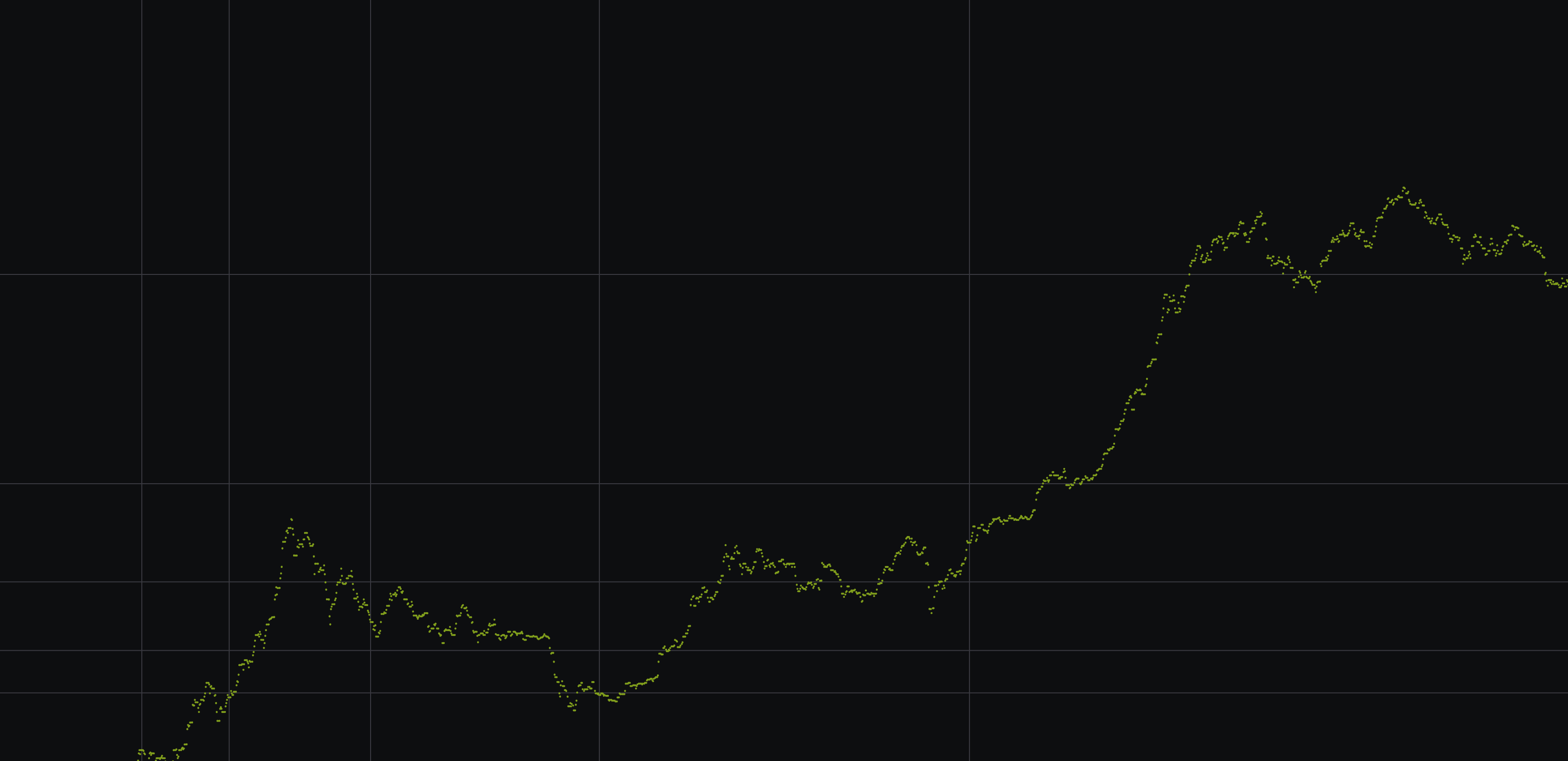
Bitcoin fell 11% this past week, making four straight weeks of negative price action. It was just less than two months ago that bitcoin had touched a record high price over $126k. Yet now, market sentiment seems overwhelmingly fearful, 35% beneath the highs. 

Undoubtedly, the attention of the moment is focused on price. Market participants are trying to understand the reason(s) for this drawdown as well as any reasonable explanation of how low it might go. 

However, just for this article, we’d like to turn your attention elsewhere. The deadline for the latest round of 13F filings has just passed. Meaning, we now have an opportunity to understand the bitcoin exposure of deep pocket financial professionals via the US ETF complex. Thus, amid the shuffle of a price-sensitive news cycle, this article will lean into the objectivity of SEC reports, aiming to inform of the non-retail demand vector for bitcoin.

The SEC’s 13F filings unveil the quarterly holdings of US firms managing over $100 million in assets, with the latest round pertaining to Q3 2025. We measured over $12.5bn of net flow was recorded into global bitcoin ETFs in Q3. In this article, we will look into the questions of who, how much, to which products, and what likelihood this demand vector can continue for bitcoin. We’ll mix this round of 13F data release with previous quarterly releases to help answer these questions.

Q3 13F data confirms rising allocations among professional investors, especially investment advisors

The latest 13F reports are a timely reminder that the structural demand base for bitcoin continues to increase. Despite the backdrop of price volatility, US listed bitcoin ETFs have consistently grown, and so have the number of institutions reporting exposure to them. Q3 2025 was no exception, both ETF assets under management (AUM) and the cumulative holdings of 13F filers once again moved higher.

Quarter over quarter, bitcoin’s price rose 6.4%; US bitcoin ETF AUM rose 13%; reported 13F holdings rose nearly in tandem at 12%. It’s a steady and positive picture. The main takeaway being that a growing share of bitcoin supply continues to be absorbed through regulated products and professional investors.

Professional investor US  Bitcoin ETF holdings vs total marketAs of Q3 end, 13F filers account for 24% of the AUM in the US bitcoin ETF complex, and the average portfolio allocation size of reporters remain below 1%. We see it as allocators taking cautious entries, with still ample room for future fund flows, both by the size of allocations increasing and from sidelined professionals. This can be the case even without any significant shifts in institutional risk appetite, in our view.

Concentration across ETF issuers also remains a defining characteristic of these bitcoin products. Grayscale, BlackRock, and Fidelity represent 89% of total US bitcoin ETF assets. Perhaps surprisingly, there is little discrepancy between the preference of the broader market and 13F filers when it comes to product. The scale and reputation of traditional issuers alongside the first mover advantage of, soon to be publicly listed, Grayscale are keeping a foothold on overall market share.

13-F filer holdings by institution typeMoving forward to the “who”, advisors remain the most significant source of growth. In the above chart, we strip out the price changes QoQ to observe bitcoin-equivalent positioning. With this, we estimate advisors now hold 185,000 BTC equivalent exposure, accounting for 57% of total 13F reported bitcoin assets and more than double the holdings of hedge funds. From our experience, we find the cause is likely from continued client demand and the increasing normalization of bitcoin within diversified portfolios. Advisors have seemingly become the most consistent marginal buyers of bitcoin since the ETFs launched. It’s a promising trend for long-term bitcoin investors.

Beyond the aggregate patterns, this round of filings revealed several notable changes among individual institutions.

Harvard’s endowment increased its exposure by 257%, reaching 3,868 BTC equivalent, or $441.2m at the time of their filing. While small relative to their portfolio, their reputation as a long-standing and conservative institution is material. Likewise, their growing allocation size is encouraging. In other endowment news, Emory University also increased its position, by 91% to 456 BTC equivalent, or $52.1m dollars. 

Al Warda in the United Arab Emirates reported ownership for the first time, with 4,521 BTC equivalent, or $515.6m. In a comment provided to Bloomberg, the Abu Dhabi Investment Council (ADIC) noted, “We view Bitcoin as a store of value similar to gold, and as the world continues to move toward a more digital future, we see Bitcoin playing an increasingly important role alongside gold. Both assets contribute to diversifying our portfolio, and we expect to hold them as part of our near and long-term strategy.” We couldn’t agree more with the ADIC and suggest even reading that quote one more time. Their reasoning is just as important as the allocation itself, especially following the entry last quarter of the UAE’s Mubadala sovereign wealth fund. Take note, we certainly plan to continue following the middle east as an increasingly likely market segment for institutional bitcoin demand.

Large traditional broker dealers and banks also increased their positioning. Wells Fargo reported $491m of exposure, Morgan Stanley reported $724m, and JP Morgan reported $346m. To us, it's indicative of continued integration of bitcoin ETF products across major financial intermediaries.

Filers ranked by institution type

Institutional participation is steadily growing, not slowing

In times of volatile price action, we encourage taking a step back to assess the fundamentals. Despite the price swings decreasing in magnitude over the long-term, crypto assets have a long history of both hype and panic. Among the price-sensitive news cycles, consider the overall supply and demand prospects of bitcoin. Conveniently, the supply-side is quite forecastable, so the questions almost solely end up about demand. 

What the 13F filings are telling us is that professional allocators are slowing but surely entering the bitcoin market through spot ETFs. While still relatively small, this is what you want to see as a long-term bitcoin investor. More passive and structural demand, less reactive and price-sensitive demand. 

In the end these filings tell us that institutional participation in bitcoin is steadily expanding, and we root for it to continue, such that a gradual build-up of professional demand reduces the type of short-term price swings we’ve experienced lately.

Published onDec 9th, 2025

Writer
CoinShares Author Logo
CoinShares

Welcome to CoinShares

Personal Data

0102

When you visit CoinShares website, cookies enhance your experience. They help us to show you more relevant content. Some cookies are necessary for the site to work and will always be active. Blocking some types of cookies may impact your experience of the website and the services which we offer on our website.

We use cookies on our site to optimize our services. Learn more about our EU cookie policy or US cookie policy.

  • Necessary
    Question circle icon
  • Preferences
    Question circle icon
  • Statistical
    Question circle icon
  • Marketing
    Question circle icon
Necessary cookies help make a website usable by enabling basic functions like page navigation and access to secure areas of the website. The website cannot function properly without these cookies.
Preference cookies enable a website to remember information that changes the way the website behaves or looks, like your preferred language or the region that you are in.
Statistic cookies help website owners to understand how visitors interact with websites by collecting and reporting information anonymously.
Marketing cookies are used to track visitors across websites. The intention is to display ads that are relevant and engaging for the individual user and thereby more valuable for publishers and third party advertisers.