



Cos'è Aptos - Guida
 10 minuti di lettura
- Altcoins
Aptos è stata lanciata il 18 ottobre 2022 da Aptos Labs, un team guidato da Mo Shaikh e Avery Ching, ex ingegneri Meta coinvolti nel progetto della blockchain Diem. Quando questa è stata sospesa, gran parte della tecnologia, tra cui il linguaggio di programmazione Move, è stata recuperata. Il linguaggio di programmazione Move è un linguaggio smart contract inizialmente sviluppato da Meta per la sua blockchain Diem, ma ora utilizzato da Aptos (e Sui). Shaikh si è dimesso dalla carica di CEO nel dicembre 2024, e Ching, in precedenza Chief Technology Officer, ne ha preso il posto; Shaikh è rimasto come consulente strategico.
Aptos Labs ha raccolto 200 milioni di dollari nel seed round di marzo 2022 guidato da a16z Crypto, con contributi da parte di Multicoin Capital e altri.
Mesi dopo, il 26 luglio 2022, Aptos Labs ha completato un round di finanziamento di Serie A da 150 milioni di dollari co-guidato da FTX Ventures e Jump Crypto, portando il capitale totale raccolto a circa 350 milioni di dollari.
Caratteristiche tecniche principali
Aptos è una blockchain Layer 1 progettata per rendere il Web3 simile al Web2. Riducendo i ritardi, limitando le transazioni non riuscite e migliorando l’esperienza utente, Aptos mira a colmare il divario in termini di performance e affidabilità che separa le app decentralizzate dalle piattaforme internet tradizionali.
Attraverso innovazioni quali l’esecuzione parallela, un linguaggio di programmazione sicuro (Move) e un meccanismo di consenso Proof of Stake a pipeline, Aptos offre agli sviluppatori le fondamenta a elevate prestazioni su cui costruire la prossima generazione di applicazioni Web3.
Aptos unisce un motore di esecuzione parallela, il linguaggio di programmazione Move e un protocollo di consenso Byzantine Fault Tolerant (BFT) a pipeline protetto dal Proof of Stake. Questo design rende più rapida la finalizzazione delle transazioni, aumenta la resilienza in condizioni di carico variabile nella rete e getta le basi per applicazioni avanzate in tempo reale.
Performance della rete
In ambienti controllati, le performance di Aptos hanno superato le 160.000 transazioni al secondo (TPS). Nei test in condizioni reali distribuiti geograficamente, ha raggiunto circa 20.000 TPS con una latenza inferiore a un secondo.
La latenza è mantenuta bassa grazie a una tecnica chiamata Zaptos, che prevede la sovrapposizione di esecuzione, convalida e archiviazione delle transazioni con le operazioni di consenso. In questo modo è possibile ridurre il ritardo end-to-end tra l’invio di una transazione e la visualizzazione della conferma.
I validatori sono distribuiti a livello globale e progettati per gestire un throughput elevato. Tuttavia, studi di iniezione degli errori dimostrano che Aptos è sensibile ai guasti dei validatori locali.
Se diversi validatori situati nella stessa area subiscono un guasto o si disconnettono, la rete non si ripristina rapidamente. Necessita di tempo per riprendersi, il che può rallentare le transazioni o ridurre l’affidabilità della rete nel breve termine.
Vale la pena sottolineare la domanda effettivamente realizzata. Aptos ha incassato 1,40 milioni di dollari di commissioni di rete totali nel corso del 2025 e 643.637 dollari nella prima metà del 2026.1 Una capacità superiore a 160.000 TPS non rappresenta quindi il vincolo di questa rete.
Utilità dei token: a cosa serve APT?
Il token di Aptos (APT) è stato lanciato con un’offerta totale di un miliardo, divisa tra la comunità (51%), i principali contributori (19%), la fondazione (16,5%) e gli investitori (13,5%).
Sebbene la quota controllata dalla fondazione potrebbe sembrare generosa, l’82% dei token è attualmente in staking, e la maggior parte è bloccata e verrà gradualmente rilasciata nell’arco di 4-10 anni, limitando così l’improvvisa pressione di vendita.
Il token APT alimenta la blockchain Aptos in diversi modi, dall’elaborazione delle transazioni alla sicurezza della rete. Nonostante il suo ruolo principale sia legato alle operazioni sulla mainnet, APT entra in gioco anche nella governance e nell’allineamento dell’ecosistema. Il token APT di Aptos è utilizzato per:
Commissioni di transazione: gli APT sono necessari per pagare per l’invio di transazioni, per interagire con gli smart contract e per trasferite asset tra diversi account.
Staking e sicurezza dei validatori: gli ATP possono essere messi in staking direttamente o delegati a validatori. In cambio, i partecipanti guadagnano una quota delle ricompense della rete, incoraggiando i comportamenti onesti e garantendo la sicurezza della rete.
Partecipazione alla governance: i detentori di APT stanno incominciando a influenzare, seppure in maniera ancora ridotta, le decisioni del protocollo attraverso una coordinazione off-chain. Nei prossimi aggiornamenti è previsto un meccanismo di votazione formale.
Programmi di incentivazione: gli APT sono utilizzati per stimolare la crescita dell’ecosistema, allineando sviluppatori, utenti e progetti attraverso sovvenzioni e incentivi.
Performance di mercato
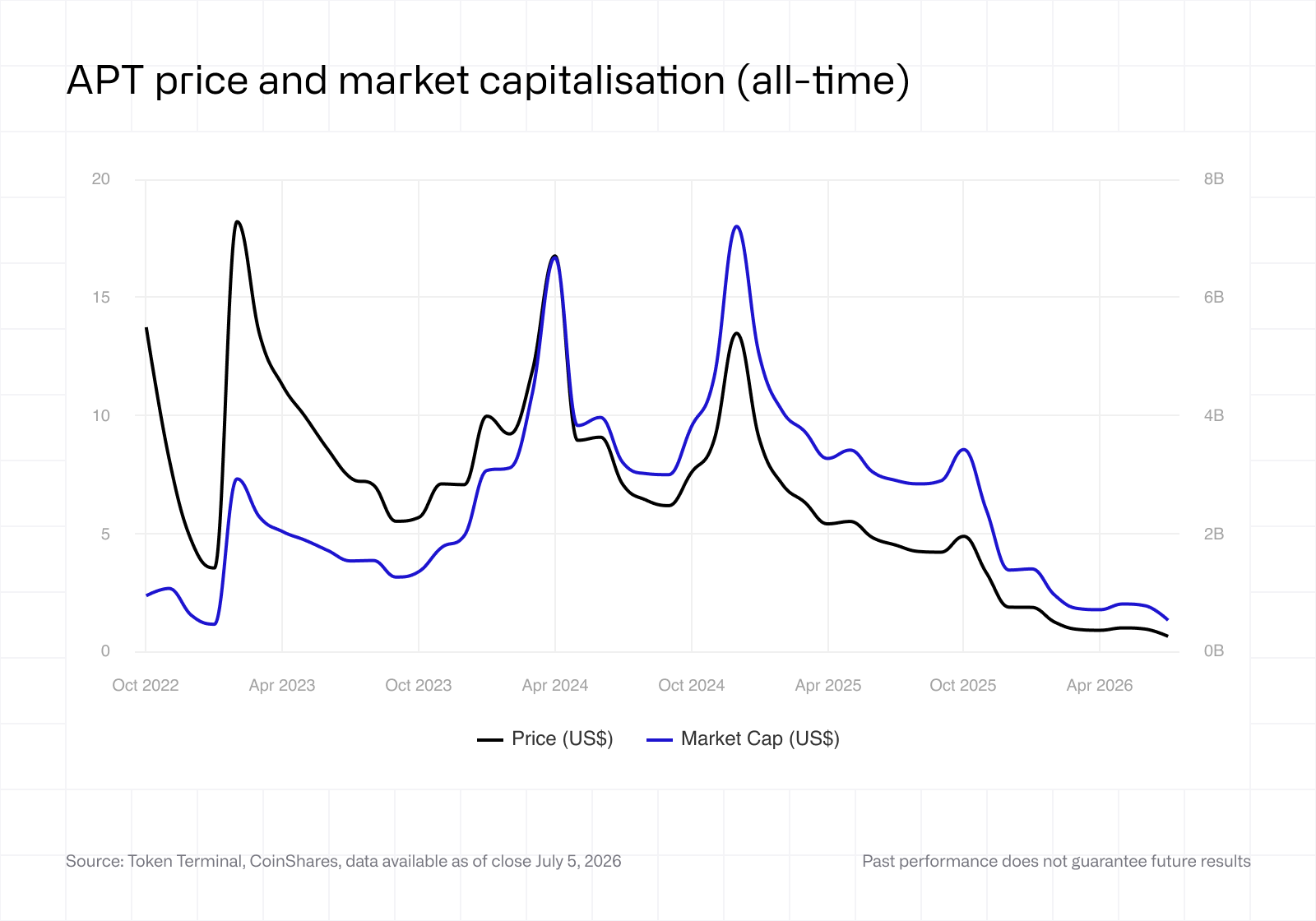
L'APT veniva scambiato a 0,57 dollari al 30 giugno 2026, per una capitalizzazione di mercato in circolazione di 474,5 milioni di dollari su 833 milioni di token. Questa divergenza tra il picco di prezzo e il picco di capitalizzazione di mercato è la conseguenza meccanica del calendario di sblocco dei token.
Ecosistema e casi d’uso
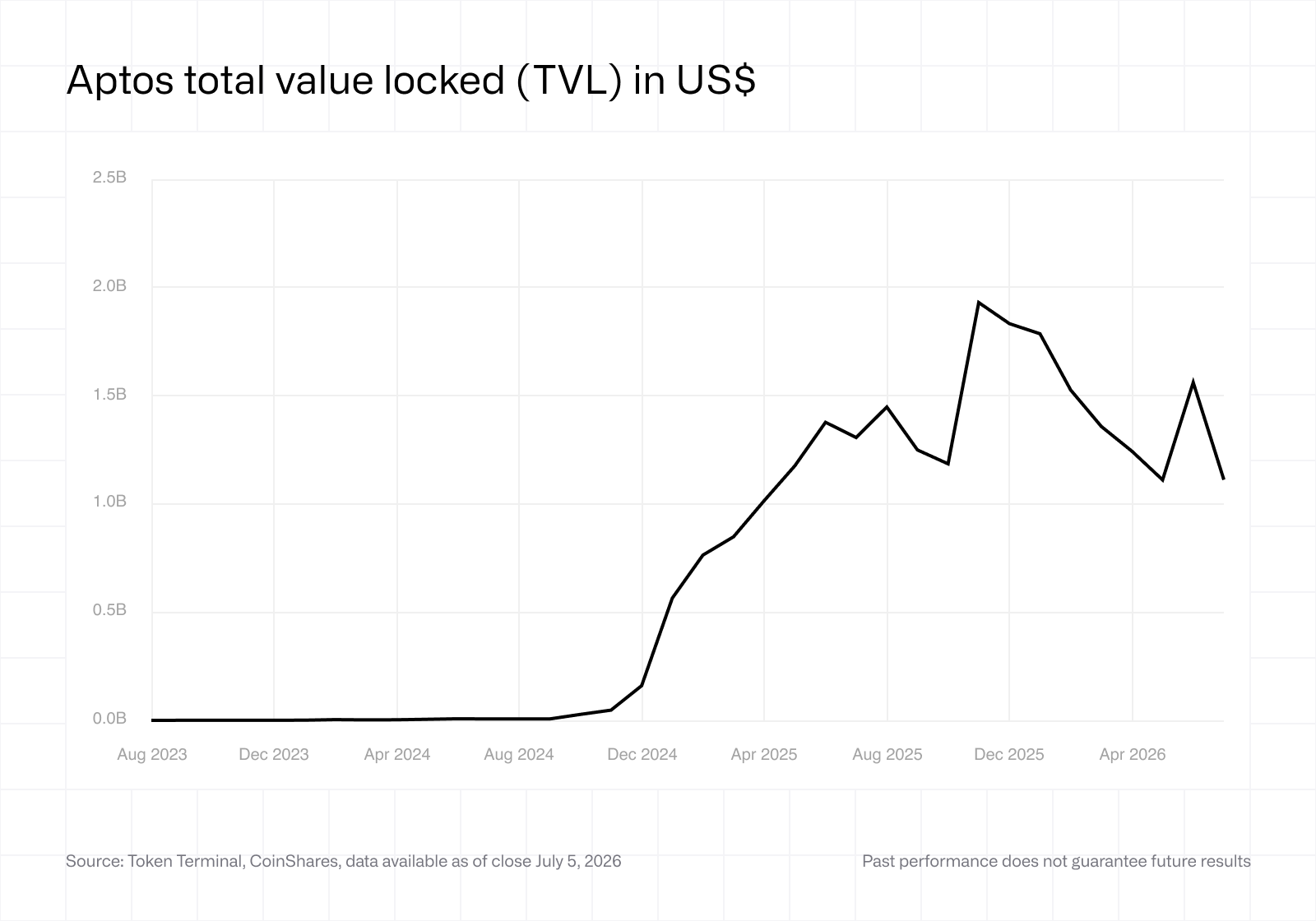
Aptos ha trovato un caso d'uso, ma non è quello con cui la chain era stata inizialmente promossa. Il total value locked dell'ecosistema si attestava a 1,08 miliardi di dollari al 30 giugno 2026, in calo rispetto al picco di 2,18 miliardi di dollari di ottobre 2025 — ma ciò che conta è la composizione: l'offerta di stablecoin su Aptos ammontava a 975,9 milioni di dollari, e le cinque maggiori applicazioni sulla chain per valore sono Tether (840,4 milioni di dollari), Circle (135,5 milioni di dollari), Securitize (34,4 milioni di dollari), Franklin Templeton (19,6 milioni di dollari) e Apollo (18,3 milioni di dollari). Quattro di queste cinque sono emittenti di stablecoin o asset tradizionali tokenizzati. Aptos funziona quindi più come infrastruttura di regolamento per asset del mondo reale (RWA) che come sede per la DeFi crypto-nativa.
 I dati sulle commissioni confermano questo quadro. Nella prima metà del 2026, Tether ha generato 11,32 milioni di dollari e Circle 3,61 milioni di dollari dell'attività economica attribuita alle applicazioni su Aptos, mentre le maggiori applicazioni crypto-native sono state Merkle Trade con 217 mila dollari e Aave con 180 mila dollari. Due ordini di grandezza separano gli emittenti dai protocolli costruiti al di sopra di essi.
La scelta di Franklin Templeton e Apollo di emettere su Aptos rappresenta un segnale istituzionale significativo, che la maggior parte delle Layer 1 di dimensioni comparabili non può vantare. La domanda aperta è se l'emissione attirerà attività di trading, prestito e collateralizzazione tale da rendere la chain economicamente autosufficiente, oppure se resterà semplicemente un luogo a basso costo per parcheggiare asset tokenizzati. Sulla base dei dati disponibili fino a giugno 2026, questo non è ancora avvenuto.
Cross-chain: compatibile, ma non con le EVM
Aptos non è compatibile nativamente con le EVM. Utilizza invece il linguaggio Move, pertanto le dApp basate su Solidity, in particolare quelle di Ethereum, devono essere riscritte. Tuttavia, l’interoperabilità è garantita da bridge sicuri come LayerZero, Wormhole e Celer, che consentono di trasferire token tra Ethereum, Solana e Aptos.
L’Aptos Foundation continua a sostenerne l’adozione attraverso sovvenzioni e programmi ecosistemici volti ad attirare sviluppatori provenienti da catene concorrenti.
Pro e contro
Aptos combina promettenti punti di forza a livello tecnico con difficoltà tipiche degli stadi iniziali, offrendo sia un buon potenziale di crescita, sia rischi chiave che gli investitori oculati devono soppesare.
Pro
Aptos introduce innovazioni dal punto di vista tecnico e architettonico che offrono vantaggi concreti per performance Layer 1 di nuova generazione, quali:
Elaborazione in parallelo delle transazioni: permette di eseguire dApp con un throughput elevato e una congestione minima, ideali per assicurare scalabilità nella DeFi e nel gaming.
Il linguaggio smart contract Move: offre misure di protezione integrate, come la sicurezza basata sulle risorse, riducendo significativamente il rischio di sfruttamento degli smart contract.
Forte sostegno da parte delle venture capital e della fondazione: è supportata da a16z, Binance Labs e altri, che offrono capitali stabili per lo sviluppo a lungo termine dell’ecosistema.
Meccanismo di consenso a bassa latenza: garantisce il raggiungimento della finalizzazione in maniera quasi istantanea, migliorando l’esperienza utente e l’idoneità per le app ad alta frequenza.
Connessione con le catene principali: l’interoperabilità tramite LayerZero, Wormhole e Celer espone gli utenti agli asset di Ethereum e Solana.
Emissione istituzionale: Franklin Templeton, Apollo e Securitize emettono tutti asset tokenizzati su Aptos, insieme a Tether e Circle. Per una chain di queste dimensioni, questa è la prova più solida disponibile che il suo modello di sicurezza viene preso sul serio dagli emittenti regolamentati.
Contro
Tuttavia, Aptos deve affrontare le crescenti difficoltà tipiche delle blockchain ancora agli inizi, tra cui:
Sblocchi continui di token: una parte consistente di APT resta bloccata, e i rilasci graduali potrebbero introdurre una pressione di vendita persistente. L'effetto è visibile nei dati storici: la capitalizzazione di mercato di APT ha raggiunto il picco nel dicembre 2024 a un prezzo pari a circa un terzo del massimo di gennaio 2023, poiché l'offerta è cresciuta più velocemente di quanto sia sceso il prezzo.
Insieme di validatori relativamente concentrato: il controllo iniziale della rete è sbilanciato verso gli insider, sollevando preoccupazioni in termini di decentralizzazione e resistenza alla censura.
Ecosistema ancora agli inizi: l'attività nativa del protocollo resta molto contenuta. Le commissioni di rete totali sono state pari a 1,40 milioni di dollari nel 2025 e a 643.637 dollari nella prima metà del 2026, con la maggiore applicazione nativa che ha generato 217.656 dollari in quel semestre.
Non compatibile con EVM: gli sviluppatori devono apprendere Move e riscrivere le applicazioni, creando un maggiore attrito iniziale nonostante i benefici di sicurezza a lungo termine.
Conclusioni
A quattro anni dal lancio, il divario tra ciò che Aptos è in grado di fare e ciò che le viene richiesto rimane significativo. Ciò che è cambiato è la provenienza della domanda: Aptos ospita oggi quasi un miliardo di dollari tra stablecoin e asset tokenizzati provenienti da emittenti come Tether, Circle, Franklin Templeton e Apollo, una posizione autentica e insolita per una chain di questo valore di mercato. Se ciò si tradurrà in un vero e proprio modello di business dipenderà dal fatto che si sviluppi attività al di sopra di questi asset. Finora, ciò non è ancora avvenuto.
Pubblicato ilSet 1st, 2025
