



Cos'è Avalanche - Guida
 8 minuti di lettura
- Altcoins
Gli albori di Avalanche
Avalanche è una blockchain Layer 1 lanciata nel 2020 da Ava Labs, un team nato dalla ricerca guidata dal professore dell’Università Cornell Emin Gün Sirer.
Avalanche punta a offrire una velocità di livello consumer e commissioni contenute, consentendo al contempo alle applicazioni di lanciare le proprie blockchain specifiche per applicazione (oggi chiamate Avalanche L1, in origine subnet), un design che attrae imprese, giochi e piattaforme di asset tokenizzati che necessitano di prestazioni prevedibili e set di regole personalizzati.
Caratteristiche tecniche principali
Il progetto ha introdotto una nuova famiglia di protocolli di consenso (Snow o Snowman) progettata per aumentare il throughput e velocizzare la finalizzazione.
Attraverso il consenso Snow/Snowman, Avalanche fa in modo che tutti i computer della sua rete trovino un accordo il più velocemente possibile. Invece di un sistema in cui ciascun computer comunica con tutti gli altri (come nel caso delle prime blockchain), essi effettuano ripetuti e rapidi “sondaggi casuali” su un piccolo gruppo di altri computer. Se continua a emergere la stessa risposta, la rete la registra come definitiva. Il risultato è il raggiungimento della finalizzazione in pochi secondi, un indicatore diverso dal semplice numero di TPS.
Avalanche potrebbe essere descritta come un layer-0, ovvero un layer di regolamento di reti, dal momento che il layer principale convalida le Avalanche L1, chain sovrane che condividono l'economia dell'insieme di validatori di Avalanche e possono essere personalizzate (con o senza permesso, token di gas personalizzati, Ethereum Virtual Machine o altre macchine virtuali). Ciò consente ad Avalanche di scalare orizzontalmente attraverso numerose L1, con comunicazione incrociata nativa tra le reti, mantenendo al contempo tempi di finalità ridotti e compatibilità EVM per la familiarità degli sviluppatori.
Avalanche pone l'accento sul time to finality (TTF), espresso in secondi, e su un throughput elastico al crescere del carico sulle varie L1; la documentazione per sviluppatori separa esplicitamente il TPS dalla finalità, per evitare confronti fuorvianti. Per quanto riguarda questa metrica standard, misurare il TPS della C-Chain di Avalanche è piuttosto poco significativo, dal momento che il suo scopo principale è regolare le L1, ciascuna con proprie prestazioni e attività.
A cosa serve AVAX?
Gas fee e commissioni: l'AVAX viene utilizzato per pagare le commissioni di transazione sulla rete primaria e può essere impiegato come gas su alcune L1 (altre possono impostare i propri token di gas).
Staking e sicurezza: i validatori mettono in stake AVAX per mettere in sicurezza la rete e ricevono ricompense in cambio.
Governance/configurazione: i parametri del protocollo e le direzioni degli aggiornamenti vengono influenzati tramite proposte di governance on-chain e programmi della fondazione. Le regole delle singole L1 sono decise dai rispettivi sviluppatori.
Usi speciali: su subnet L1 enterprise/permissioned, l'AVAX può svolgere ruoli di staking, commissioni o collaterale, a seconda della configurazione della subnet.
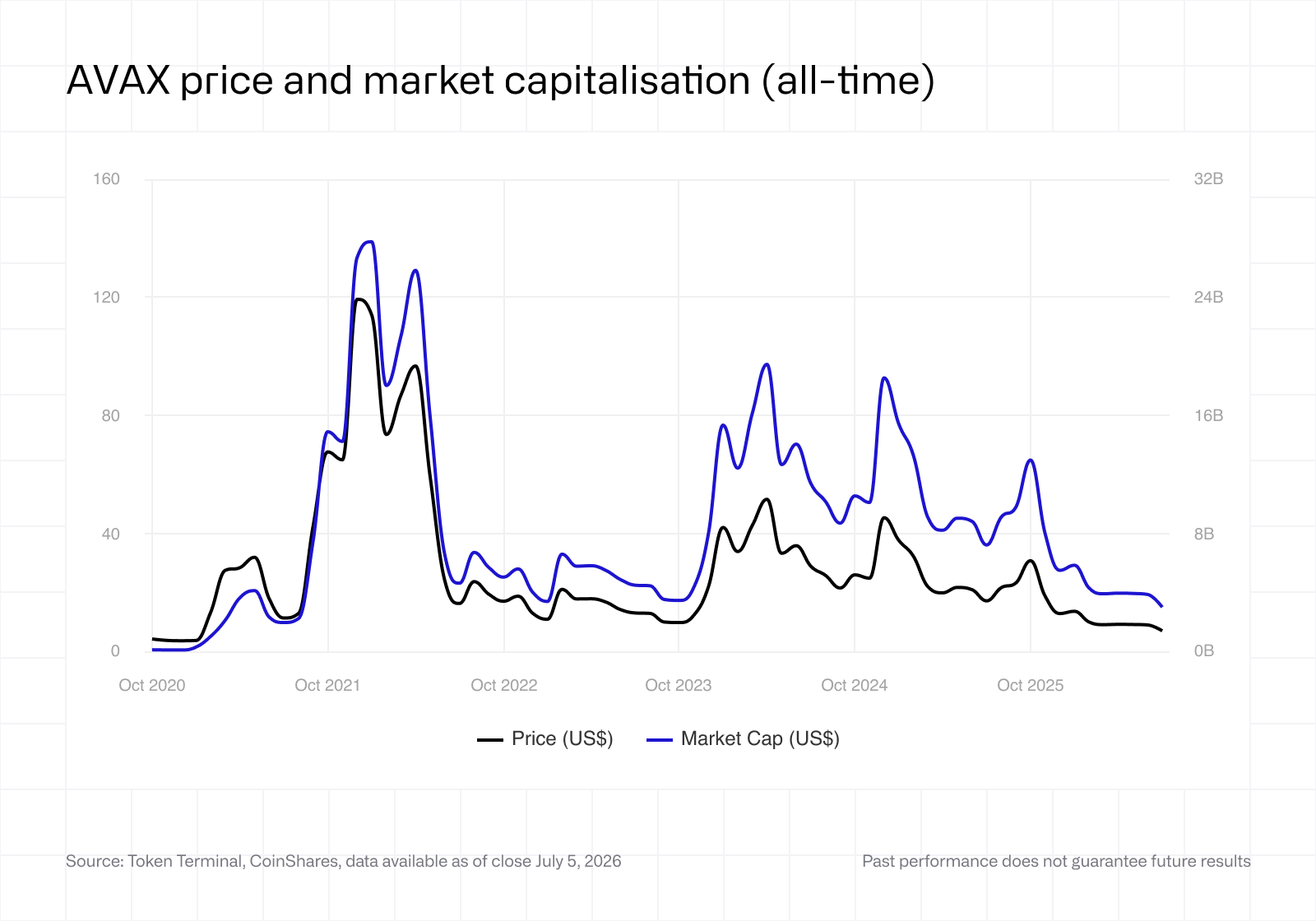
L'AVAX veniva scambiato a 6,52 dollari al 30 giugno 2026, per una capitalizzazione di mercato in circolazione di 2,82 miliardi di dollari su 432 milioni di token in circolazione.
Ecosistema e casi d’uso
Avalanche sostiene un ecosistema ricco e in crescita che abbraccia la finanza decentralizzata (DeFi), i token non fungibili (NFT), il gaming basato su blockchain e progetti infrastrutturali essenziali. Nella DeFi, le sue ridotte commissioni di transazione e la finalizzazione quasi istantanea permettono soluzioni di negoziazione, prestito e gestione degli asset rapide ed economiche. Sebbene quest’anno tali attività siano diminuite, le piattaforme NFT hanno sfruttato la scalabilità di Avalanche per lanciare collezioni, marketplace e applicazioni creative senza i colli di bottiglia che spesso si riscontrano sulle reti più congestionate.
Anche il gaming si è affermato come area di crescita particolarmente forte, e molti sviluppatori stanno scegliendo di costruire sulle sottoreti di Avalanche per approfittare di performance dedicate, costi operativi prevedibili e la possibilità di personalizzare regole e ambienti per le proprie applicazioni. L’architettura flessibile permette ai progetti di offrire esperienze utente fluide, isolando al contempo la loro attività dalla congestione in altre parti della rete. Per esempio, la Federazione internazionale di calcio FIFA ha scelto Avalanche per la sua rete Layer 1 dedicata, creata per supportare la piattaforma di collezionabili digitali FIFA Collect.
L'interoperabilità è inoltre un pilastro centrale del design di Avalanche. La piattaforma facilita il movimento di asset, come le stablecoin, tra diverse chain all'interno del proprio ecosistema, grazie a funzionalità di interoperabilità native. Le L1 possono inoltre comunicare direttamente tra loro tramite un protocollo di messaggistica. Questo consente a reti sovrane di scambiare dati, attivare transazioni cross-subnet e coordinarsi senza dipendere da bridge di terze parti, migliorando sia la velocità sia la sicurezza.
L'attività sulla rete è aumentata in modo netto, e non transitorio. Il numero medio di indirizzi attivi giornalieri si è mantenuto tra 31.000 e 100.000 al mese durante il 2025, chiudendo dicembre a 31.260. È poi salito a 362.631 a gennaio 2026, per mantenersi tra 617.000 e 628.000 ogni mese da febbraio a giugno 2026, raggiungendo 649.489 il 30 giugno. Si tratta di un incremento di circa venti volte, sostenuto per cinque mesi.
Il lato dei costi si è mosso in direzione opposta. Le commissioni della C-Chain sono scese da 8,30 milioni di dollari nel corso del 2025 a 1,01 milioni di dollari nella prima metà del 2026. Transazioni più economiche e molto più numerose rappresentano un esito coerente degli aggiornamenti Avalanche9000 e Granite, non una contraddizione, ma ciò significa che la C-Chain sta attualmente guadagnando molto poco da una base di utenti ben più ampia. Va inoltre notato che questo dato riguarda esclusivamente la C-Chain ed esclude l'attività sulle Avalanche L1, dove la rete indirizza la maggior parte del traffico applicativo.
Infine, Avalanche è stata scelta da importanti operatori finanziari come piattaforma per l’emissione di asset reali, in particolare Franklin Templeton, il quale vi ha lanciato il suo mercato monetario BENJI; VanEck, che ha introdotto il suo fondo tokenizzato in titoli di Stato statunitensi VBILL; e la piattaforma Centrifuge, che ha collaborato con il protocollo Grove per emettere due prodotti Janus Henderson su Avalanche.
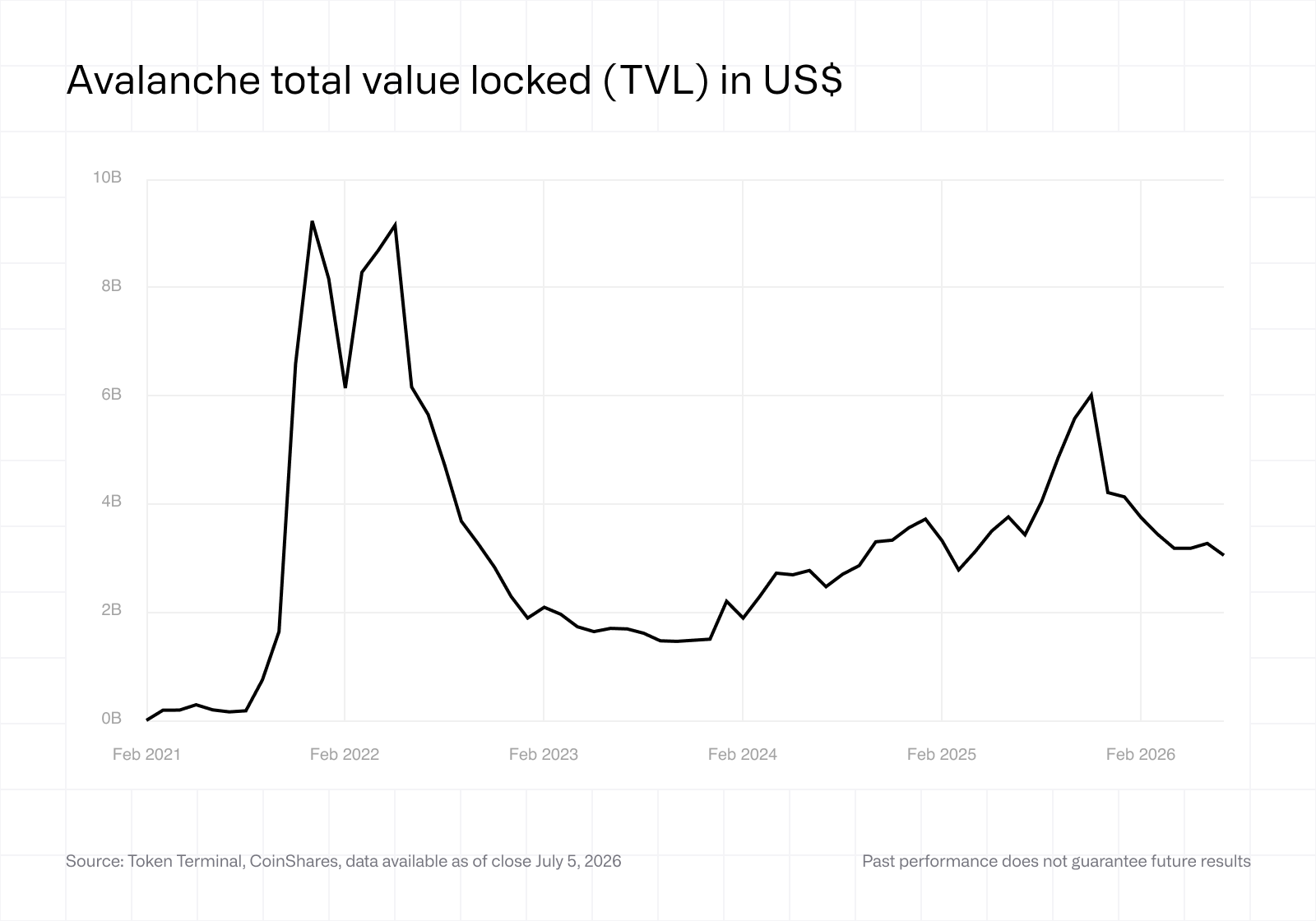
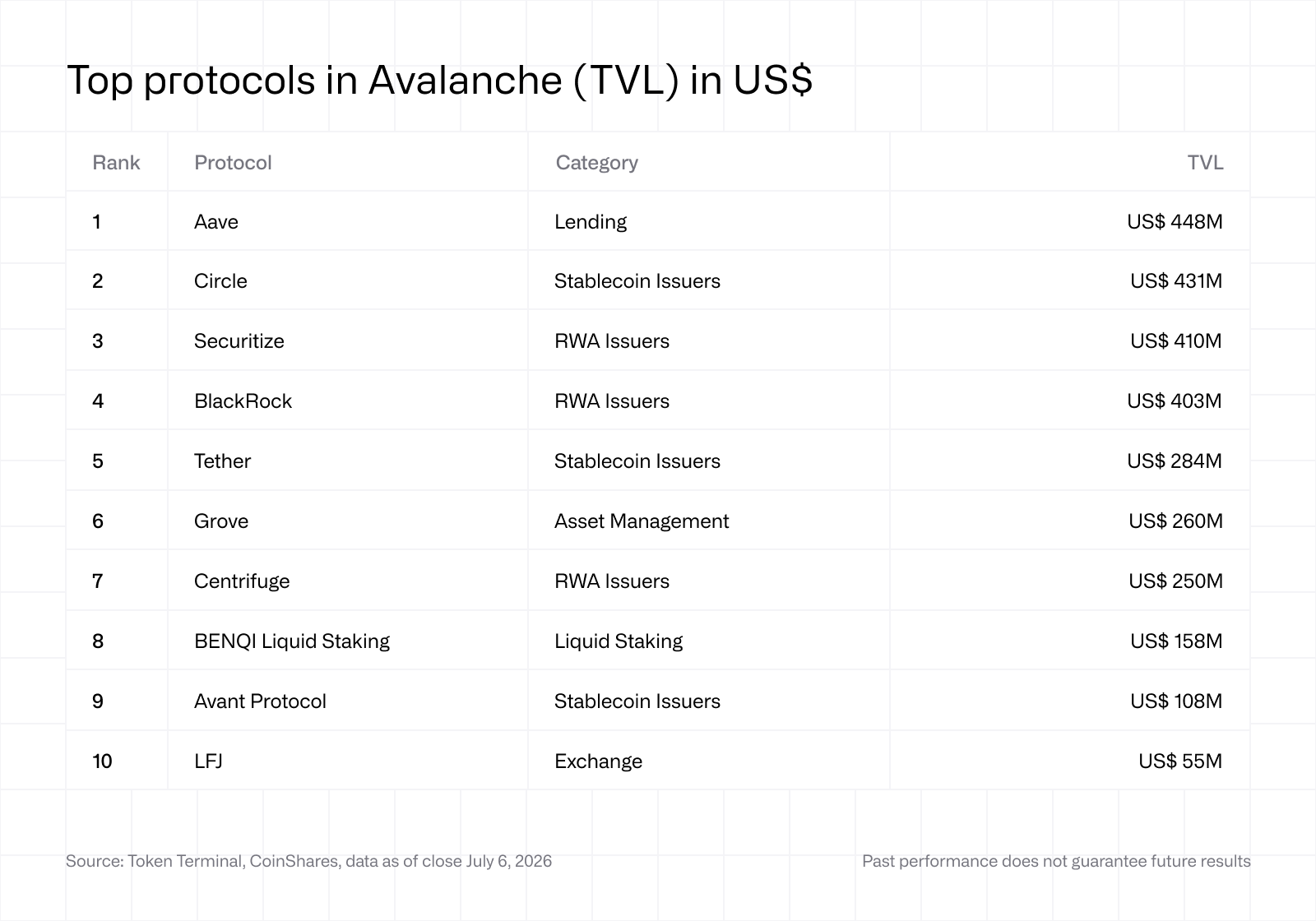 Il business degli asset tokenizzati è ora misurabile. Dei dieci maggiori protocolli su Avalanche per valore bloccato, quattro sono emittenti di asset del mondo reale e tre sono emittenti di stablecoin: Aave guida la classifica con 448 milioni di dollari, seguita da Circle con 431 milioni di dollari, Securitize con 410 milioni di dollari, BlackRock con 403 milioni di dollari, Tether con 284 milioni di dollari, Grove con 260 milioni di dollari e Centrifuge con 250 milioni di dollari. Il total value locked sull'intera rete si attestava a 3,05 miliardi di dollari al 30 giugno 2026, di cui 926 milioni di dollari in stablecoin.
Pro e contro
Pro
Finalità istantanea, scalabilità tramite le L1, commissioni basse e forte compatibilità EVM attraggono sviluppatori e utenti.
L'ecosistema continua a maturare, sostenuto da consistenti grant e da una crescita attiva delle dApp in diversi settori.
Adozione istituzionale dimostrata: quattro dei dieci maggiori protocolli su Avalanche per valore bloccato sono emittenti di asset del mondo reale, tra cui BlackRock e Securitize.
Contro
Volatilità del prezzo dell'AVAX: in calo del 67,3% nel 2025 e del 51,8% nella prima metà del 2026.
Assenza di sicurezza condivisa tra le L1.
Concorrenza con gli ecosistemi di altri layer di regolamento.
Scarsa cattura delle commissioni a livello del layer di regolamento: le commissioni della C
Chain sono scese a 1,01 milioni di dollari nella prima metà del 2026, dagli 8,30 milioni di dollari dell'intero 2025, anche se gli indirizzi attivi sono aumentati di circa venti volte. La crescita dell'attività avviene su chain le cui commissioni non confluiscono nella C-Chain.
Punti chiave
Avalanche colma il divario tra un'infrastruttura ad alta velocità e personalizzabile e un'usabilità adatta al grande pubblico. Completa Ethereum offrendo elevate prestazioni e flessibilità pur mantenendo la compatibilità EVM, il che la rende un alleato prezioso piuttosto che un concorrente diretto. L'adozione da parte della finanza tradizionale non è più soltanto una prospettiva: gli emittenti di asset del mondo reale e di stablecoin rappresentano ormai sette dei dieci maggiori protocolli della rete per valore bloccato. Il divario da colmare è quello tra questa adozione e il token, sceso del 67,3% nel 2025 e di nuovo del 51,8% nella prima metà del 2026, mentre l'utilizzo cresceva nettamente. L'AVAX resta considerevolmente più volatile rispetto a Bitcoin, Ethereum o Solana.
Pubblicato ilSet 22nd, 2025
