



Beyond Bitcoin: don’t miss the new crypto on the block
 4 min read
- Finance
- Altcoins
The materials on this website or any third-party websites accessed herein are not associated with and have not been reviewed or approved by: (i) Valkyrie Funds LLC dba CoinShares, its products, or the distributor of its products, or (ii) CoinShares Co., its products, or the marketing agent of its products.
For more than a decade, Bitcoin has been the star of the crypto show. It’s the first digital asset to break through to the mainstream, earning its reputation as “digital gold.” With the approval of the first spot Bitcoin ETFs in early 2024 and its record-breaking price of $124,000 last August, Bitcoin is no longer just a curiosity — it’s now considered a legitimate store of value and a serious part of any modern portfolio.
But while Bitcoin holds its place as the anchor, the crypto story doesn’t end there. Beyond BTC, a whole ecosystem of altcoins is busy building something different: the foundations of tomorrow’s financial system. These networks and protocols are less about being “money” and more about powering services, payments, and apps that traditional finance could never deliver.
Altcoins as the infrastructure of finance
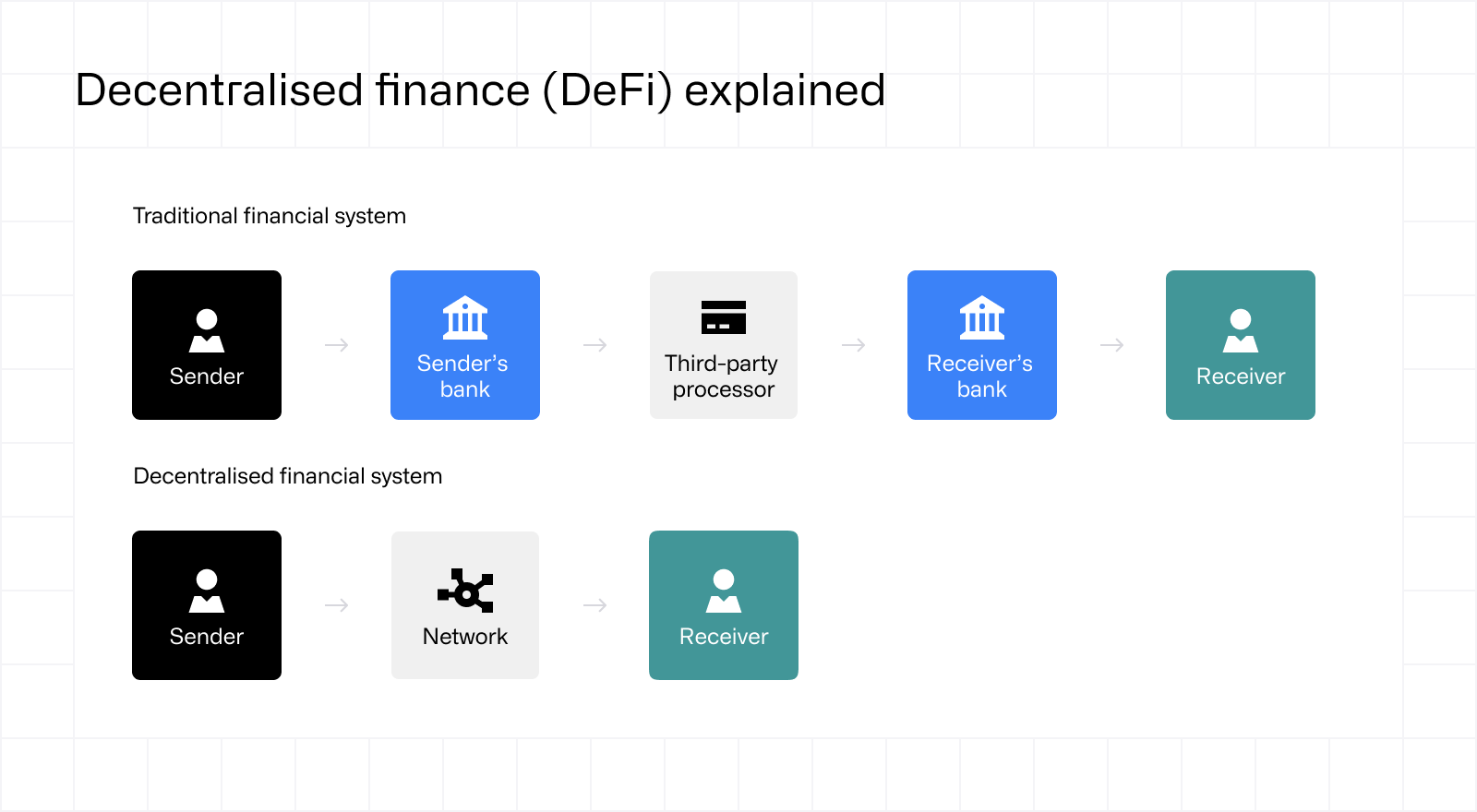
Take Ethereum. It introduced smart contracts — self-executing code that runs financial agreements without middlemen. That breakthrough made it possible to create decentralized finance (DeFi), a parallel system of lending, borrowing, trading, and investing built entirely on blockchains. Since then, other networks like Solana, Sui, and Sei have joined the race, offering high-speed, low-cost alternatives capable of handling thousands of transactions for a fraction of a penny.
Around these blockchains, entire financial services have sprung up. Protocols such as AAVE, Morpho, or Hyperliquid are reimagining lending, money markets, and exchanges in code. Have you ever had any trouble borrowing money from your bank for your car or to fix a damage in the house? Nowadays, you actually don’t even need to have a bank account: if you hold crypto, you can borrow by using it as a collateral without asking any permission. On AAVE, for instance, more than $43 billion in assets are managed by smart contracts that let people borrow and lend without banks. Morpho has over $7 billion circulating on its protocol, with developers free to build applications on top of it. Hyperliquid is creating decentralized markets for everything from tokenized stocks to prediction markets, processing trades in under a second.
This is why calling altcoins “just tokens” misses the point. They’re not simply speculative assets — they’re infrastructure, powering an entirely new way of moving money and accessing financial services.
Use cases gaining serious traction
If Bitcoin was about proving that blockchain transactions work, altcoins have been about proving what else blockchains can do.
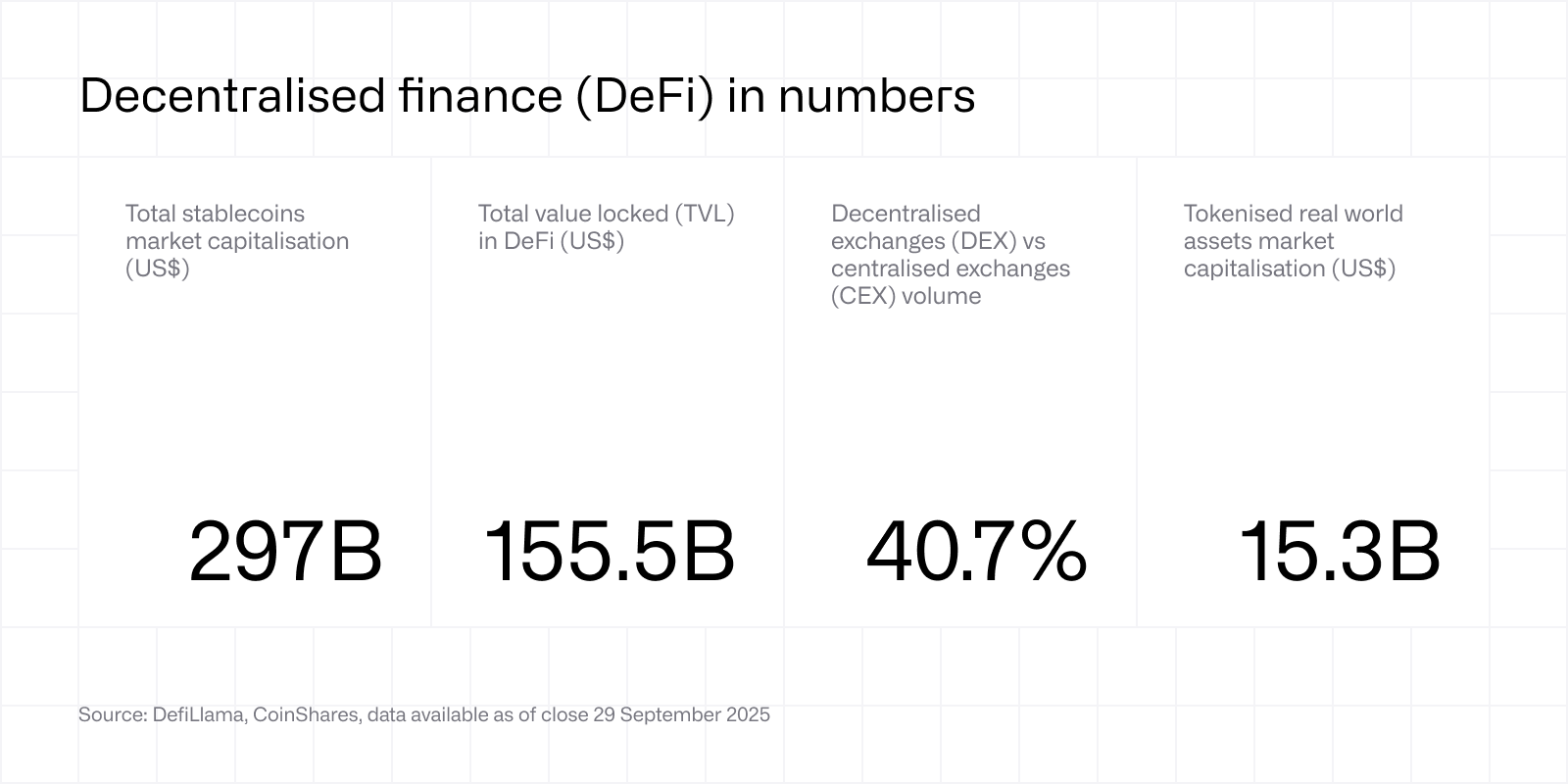
One of the clearest examples is the explosion of stablecoins — crypto assets pegged to traditional currencies like the dollar. Today, stablecoins move more than $200 billion in transactions every single day, a scale larger than Visa and Mastercard combined. Their total market cap is nearing $300 billion. For many users, stablecoins have become the backbone of cross-border payments and the fuel of DeFi markets. Have you ever needed to send money abroad, maybe to a close family member, on a weekend? With a digital wallet and stablecoins, you can do it anytime, 24/7, and without needing anyone’s permission. Even Visa has started testing stablecoins for international settlements in order to reduce costs and use a more reliable infrastructure.
Tokenized assets are another wave building fast. Money market funds are already being tokenized, giving investors 24/7 access to traditionally slow-moving products. There’s no longer any need to wait for stock exchange opening hours to invest.Tokenized ETFs are likely next. Together with the rise of DeFi, these use cases show that blockchain isn’t just a speculative playground anymore: it’s becoming the plumbing of global finance.
Why it matters for investors
At first glance, investing in altcoins might seem riskier than sticking with Bitcoin. And in many ways, it is. Not every project will make it, just like most startups fail. But the ones that do succeed can deliver outsized returns. Ethereum and Solana are proof: since their launches, ETH is up more than 2,100% and SOL more than 20,000%, according to TradingView1.
The difference here is that, for the first time, anyone can participate. You don’t need a seat in Silicon Valley or Wall Street connections. By holding tokens, you’re not just betting on price, you’re gaining exposure to the infrastructure of a new financial system that’s still being built in real time.
The future rails of finance
Bitcoin will always remain the store of value, the anchor that grounds the crypto ecosystem. But altcoins are positioning themselves as the rails on which the next generation of finance will run. From lending protocols to instant payments, from stablecoins to tokenized assets, they’re laying down the code that could power a truly global, borderless financial system.
The early internet looked chaotic too: full of websites and startups that vanished. And no, we won’t mention Pet.com again. But the ones that survived shaped the world as we know it today. And again, there’s no need to name them. Altcoins may follow a similar path. Most won’t last. A few will become essential. And those who are exposed early could end up owning a piece of the financial infrastructure of the future.
The question isn’t whether altcoins matter anymore. It’s which ones will power tomorrow’s economy, and whether you’ll be along for the ride.
1Past performance does not guarantee future results
Published onOct 13th, 2025
