

This website uses cookies
We use cookies to personalise content and ads, to provide social media features and to analyse our traffic. We also share information about your use of our site with our social media, advertising and analytics partners who may combine it with other information that you’ve provided to them or that they’ve collected from your use of their services.
Consent Selection
Details
  • Necessary cookies help make a website usable by enabling basic functions like page navigation and access to secure areas of the website. The website cannot function properly without these cookies.

    • Learn more about this provideropens in a new window
      CookieConsentStores the user's cookie consent state for the current domain
      Maximum Storage Duration: 1 yearType: HTTP Cookie
    • Learn more about this provideropens in a new window
      bcookieUsed in order to detect spam and improve the website's security.
      Maximum Storage Duration: 1 yearType: HTTP Cookie
      li_gcStores the user's cookie consent state for the current domain
      Maximum Storage Duration: 180 daysType: HTTP Cookie
    • Learn more about this provideropens in a new window
      datadomeUsed in context with the website's BotManager. The BotManager detects, categorizes and compiles reports on potential bots trying to access the website.
      Maximum Storage Duration: 1 yearType: HTTP Cookie
    • _pk_testcookie_domainThis cookie determines whether the browser accepts cookies.
      Maximum Storage Duration: 1 dayType: HTTP Cookie
    • __cf_bm [x3]This cookie is used to distinguish between humans and bots. This is beneficial for the website, in order to make valid reports on the use of their website.
      Maximum Storage Duration: 1 dayType: HTTP Cookie
  • Preference cookies enable a website to remember information that changes the way the website behaves or looks, like your preferred language or the region that you are in.
    • Learn more about this provideropens in a new window
      lidcRegisters which server-cluster is serving the visitor. This is used in context with load balancing, in order to optimize user experience.
      Maximum Storage Duration: 1 dayType: HTTP Cookie
  • Statistic cookies help website owners to understand how visitors interact with websites by collecting and reporting information anonymously.
    • Learn more about this provideropens in a new window
      guestRegisters data on visitors' website-behaviour. This is used for internal analysis and website optimization.
      Maximum Storage Duration: 1 monthType: HTTP Cookie
    • Learn more about this provideropens in a new window
      personalization_idThis cookie is set by Twitter - The cookie allows the visitor to share content from the website onto their Twitter profile.
      Maximum Storage Duration: 400 daysType: HTTP Cookie
    • _pk_uidUsed by Piwik Analytics Platform to identify the visitor on repeat visits to the website.
      Maximum Storage Duration: 1 yearType: HTTP Cookie
      _pk_id#Collects statistics on the user's visits to the website, such as the number of visits, average time spent on the website and what pages have been read.
      Maximum Storage Duration: 1 yearType: HTTP Cookie
      _pk_ses#Used by Piwik Analytics Platform to track page requests from the visitor during the session.
      Maximum Storage Duration: 1 dayType: HTTP Cookie
    • FPGSIDRegisters statistical data on users' behaviour on the website. Used for internal analytics by the website operator.
      Maximum Storage Duration: 1 dayType: HTTP Cookie
      FPIDRegisters statistical data on users' behaviour on the website. Used for internal analytics by the website operator.
      Maximum Storage Duration: 400 daysType: HTTP Cookie
      FPLCRegisters a unique ID that is used to generate statistical data on how the visitor uses the website.
      Maximum Storage Duration: 1 dayType: HTTP Cookie
    • _gaRegisters a unique ID that is used to generate statistical data on how the visitor uses the website.
      Maximum Storage Duration: 2 yearsType: HTTP Cookie
      _ga_#Used by Google Analytics to collect data on the number of times a user has visited the website as well as dates for the first and most recent visit.
      Maximum Storage Duration: 2 yearsType: HTTP Cookie
  • Marketing cookies are used to track visitors across websites. The intention is to display ads that are relevant and engaging for the individual user and thereby more valuable for publishers and third party advertisers.
    • Learn more about this provideropens in a new window

      Some of the data collected by this provider is for the purposes of personalization and measuring advertising effectiveness. The provider may use the IP Addresses for ads measurement and ads personalization.

      ads/ga-audiencesUsed by Google AdWords to re-engage visitors that are likely to convert to customers based on the visitor's online behaviour across websites.
      Maximum Storage Duration: SessionType: Pixel Tracker
    • Learn more about this provideropens in a new window
      userRefererDetermines how the user accessed the website. This information is used by the website operator in order to measure the efficiency of their marketing.
      Maximum Storage Duration: 1 monthType: HTTP Cookie
    • Learn more about this provideropens in a new window
      #:session-dataTracks the individual sessions on the website, allowing the website to compile statistical data from multiple visits. This data can also be used to create leads for marketing purposes.
      Maximum Storage Duration: PersistentType: HTML Local Storage
      eng_mtTracks the conversion rate between the user and the advertisement banners on the website - This serves to optimise the relevance of the advertisements on the website.
      Maximum Storage Duration: PersistentType: HTML Local Storage
      t_gidThis cookie assigns a specific visitor ID, when the visitor interacts with ads or content from the website - this allows the website to target the visitor with similar ads or content.
      Maximum Storage Duration: 1 yearType: HTTP Cookie
      t_pt_gidCollects information on user preferences and/or interaction with web-campaign content - This is used on CRM-campaign-platform used by website owners for promoting events or products.
      Maximum Storage Duration: 1 yearType: HTTP Cookie
      taboola global:user-idSets a unique ID for the visitor, that allows third party advertisers to target the visitor with relevant advertisement. This pairing service is provided by third party advertisement hubs, which facilitates real-time bidding for advertisers.
      Maximum Storage Duration: PersistentType: HTML Local Storage
      taboola_session_idThis cookie is used to collect information on a visitor. This information will become an ID string with information on a specific visitor – ID information strings can be used to target groups with similar preferences, or can be used by third-party domains or ad-exchanges.
      Maximum Storage Duration: SessionType: HTTP Cookie
    • Learn more about this provideropens in a new window
      1/i/adsct [x2]Collects data on user behaviour and interaction in order to optimize the website and make advertisement on the website more relevant.
      Maximum Storage Duration: SessionType: Pixel Tracker
      muc_adsCollects data on user behaviour and interaction in order to optimize the website and make advertisement on the website more relevant.
      Maximum Storage Duration: 400 daysType: HTTP Cookie
      guest_idCollects data related to the user's visits to the website, such as the number of visits, average time spent on the website and which pages have been loaded, with the purpose of personalising and improving the Twitter service.
      Maximum Storage Duration: 400 daysType: HTTP Cookie
      guest_id_adsCollects information on user behaviour on multiple websites. This information is used in order to optimize the relevance of advertisement on the website.
      Maximum Storage Duration: 400 daysType: HTTP Cookie
      guest_id_marketingCollects information on user behaviour on multiple websites. This information is used in order to optimize the relevance of advertisement on the website.
      Maximum Storage Duration: 400 daysType: HTTP Cookie
    • _gcl_auUsed by Google AdSense for experimenting with advertisement efficiency across websites using their services.
      Maximum Storage Duration: 3 monthsType: HTTP Cookie
      _gcl_lsTracks the conversion rate between the user and the advertisement banners on the website - This serves to optimise the relevance of the advertisements on the website.
      Maximum Storage Duration: PersistentType: HTML Local Storage
    • pardot [x2]Used in context with Account-Based-Marketing (ABM). The cookie registers data such as IP-addresses, time spent on the website and page requests for the visit. This is used for retargeting of multiple users rooting from the same IP-addresses. ABM usually facilitates B2B marketing purposes.
      Maximum Storage Duration: SessionType: HTTP Cookie
  • Unclassified cookies are cookies that we are in the process of classifying, together with the providers of individual cookies.
    • cs_analytics_ip_blockedPending
      Maximum Storage Duration: SessionType: HTTP Cookie
      user_tokenPending
      Maximum Storage Duration: 1 yearType: HTTP Cookie
    • _twpidPending
      Maximum Storage Duration: SessionType: HTTP Cookie
Cookie declaration last updated on 8/20/26 by Cookiebot
[#IABV2_TITLE#]
[#IABV2_BODY_INTRO#]
[#IABV2_BODY_LEGITIMATE_INTEREST_INTRO#]
[#IABV2_BODY_PREFERENCE_INTRO#]
[#IABV2_BODY_PURPOSES_INTRO#]
[#IABV2_BODY_PURPOSES#]
[#IABV2_BODY_FEATURES_INTRO#]
[#IABV2_BODY_FEATURES#]
[#IABV2_BODY_PARTNERS_INTRO#]
[#IABV2_BODY_PARTNERS#]
About
Cookies are small text files that can be used by websites to make a user's experience more efficient.

The law states that we can store cookies on your device if they are strictly necessary for the operation of this site. For all other types of cookies we need your permission.

This site uses different types of cookies. Some cookies are placed by third party services that appear on our pages.

You can at any time change or withdraw your consent from the Cookie Declaration on our website.

Learn more about who we are, how you can contact us and how we process personal data in our Privacy Policy.

Please state your consent ID and date when you contact us regarding your consent.
Image Che cos’è Hyperliquid e perché è importante

Che cos’è Hyperliquid e perché è importante

Timer9 minuti di lettura

  • Ethereum
  • Altcoins

Hyperliquid è diventato uno dei progetti più discussi della DeFi, e non solo, grazie al suo obiettivo di combinare performance simili a quelle del mercato azionario con la decentralizzazione on-chain.

Considerato il primo DEX a incarnare i principi di Satoshi Nakamoto, Hyperliquid si basa sul suo token nativo $HYPE, il quale, grazie al suo rapido aumento di prezzo, al momento della stesura di questo articolo rientra tra le prime 20 criptovalute.

Ma l’exchange è solo una parte del quadro generale: Hyperliquid è anche una blockchain Layer-1, presentata dai suoi fondatori come l’infrastruttura di nuova generazione per la finanza globale.

Una rete DeFi costruita dai trader per i trader

Il progetto è stato lanciato a maggio 2022 da un team di sole undici persone, come ha spiegato il cofondatore Jeff Yan in un’intervista con il podcast TBPN ad agosto 2025. “All’epoca la DeFi era ancora in fase sperimentale”, ricorda. “La maggior parte dei prodotti era scadente e credevamo di poter fare di meglio.”

Il fallimento di FTX non ha fatto altro che rafforzare la loro convinzione che il mercato avesse bisogno di un exchange peer-to-peer davvero decentralizzato e con auto custodia. Da questa visione è nata Hyperliquid, una piattaforma che ha registrato un importante fatturato nel corso dell’ultimo anno. Invece di raccogliere fondi tramite una ICO, Hyperliquid ha seguito l’etica di Bitcoin. Non è stata coinvolta alcuna società di venture capital e nessuno poteva acquistare i token prima del lancio.

“Hyperliquid ha un approccio cripto-nativo”, ha spiegato Yan al podcast TBPN. “Si tratta di un protocollo neutro, uno che appartiene davvero alla comunità.”

A febbraio 2023, Hyperliquid ha lanciato la sua mainnet alpha chiusa, attirando circa 4.000 utenti e offrendo 28 coppie di trading. La rete è entrata pienamente in funzione ad agosto dello stesso anno.

Da allora Hyperliquid ha attirato oltre 820.000 utenti ed elaborato oltre 231 miliardi di dollari di depositi, classificandosi come il terzo exchange decentralizzato più grande, dopo PancakeSwap e Uniswap.

Nonostante fosse stato in origine progettato unicamente per la negoziazione di futures perpetui, il team si è presto reso conto che Hyperliquid aveva il potenziale per diventare la base di un nuovo ecosistema finanziario.

“La nostra ambizione non ha limiti”, ha spiegato Jeff Yan. “Stiamo costruendo qualcosa che, in futuro, potrà ospitare tutta la finanza. Hyperliquid è una blockchain, non solo un exchange.”

Oggi il protocollo prospera grazie alla crescita guidata dalla comunità, un modello di viralità decentralizzata in cui gli stessi trader sono diventati i più convinti sostenitori del progetto.

Tokenomics progettata per la comunità

A novembre 2024, Hyperliquid ha fatto notizia in tutto il mondo per il suo airdrop. Distribuito in base all’attività di negoziazione e alla partecipazione iniziale della comunità, aveva un valore di 1,6 miliardi di dollari, uno dei lanci di token più grandi della storia delle criptovalute.

L’airdrop rifletteva la filosofia dei fondatori secondo la quale, per raggiungere la vera decentralizzazione, la comunità cripto andava messa al centro.

A novembre 2025, circa 270,8 milioni di token $HYPE sono in circolazione, con un limite massimo fissato a un miliardo, il che conferisce al progetto una capitalizzazione di mercato di circa 10,7 miliardi di dollari.

Un elemento fondamentale del successo di Hyperliquid è la sua strategia aggressiva di buy-back, o riacquisto, attraverso la quale circa il 97% delle commissioni raccolte viene utilizzato per sostenere il prezzo di $HYPE.

Secondo CoinGecko, Hyperliquid è attualmente responsabile di quasi la metà di tutti i riacquisti di token del 2025. Si tratta di uno dei valori più alti tra i grandi progetti. A metà ottobre ha riacquistato oltre 21,36 milioni di token HYPE, per un valore di circa 644,6 milioni di dollari. Il secondo acquirente più importante, LayerZero, ha speso circa 150 milioni di dollari, solo un quarto del totale di Hyperliquid.

Alcuni critici, tuttavia, sostengono che questi riacquisti concentrino la domanda nella fase iniziale, invece di creare valore duraturo. Avvertono inoltre che, a meno che l’attività degli utenti e i fondamenti dell’ecosistema non continuino a crescere allo stesso ritmo, il meccanismo in sé potrebbe non essere sufficiente a mantenere la stabilità a lungo termine.
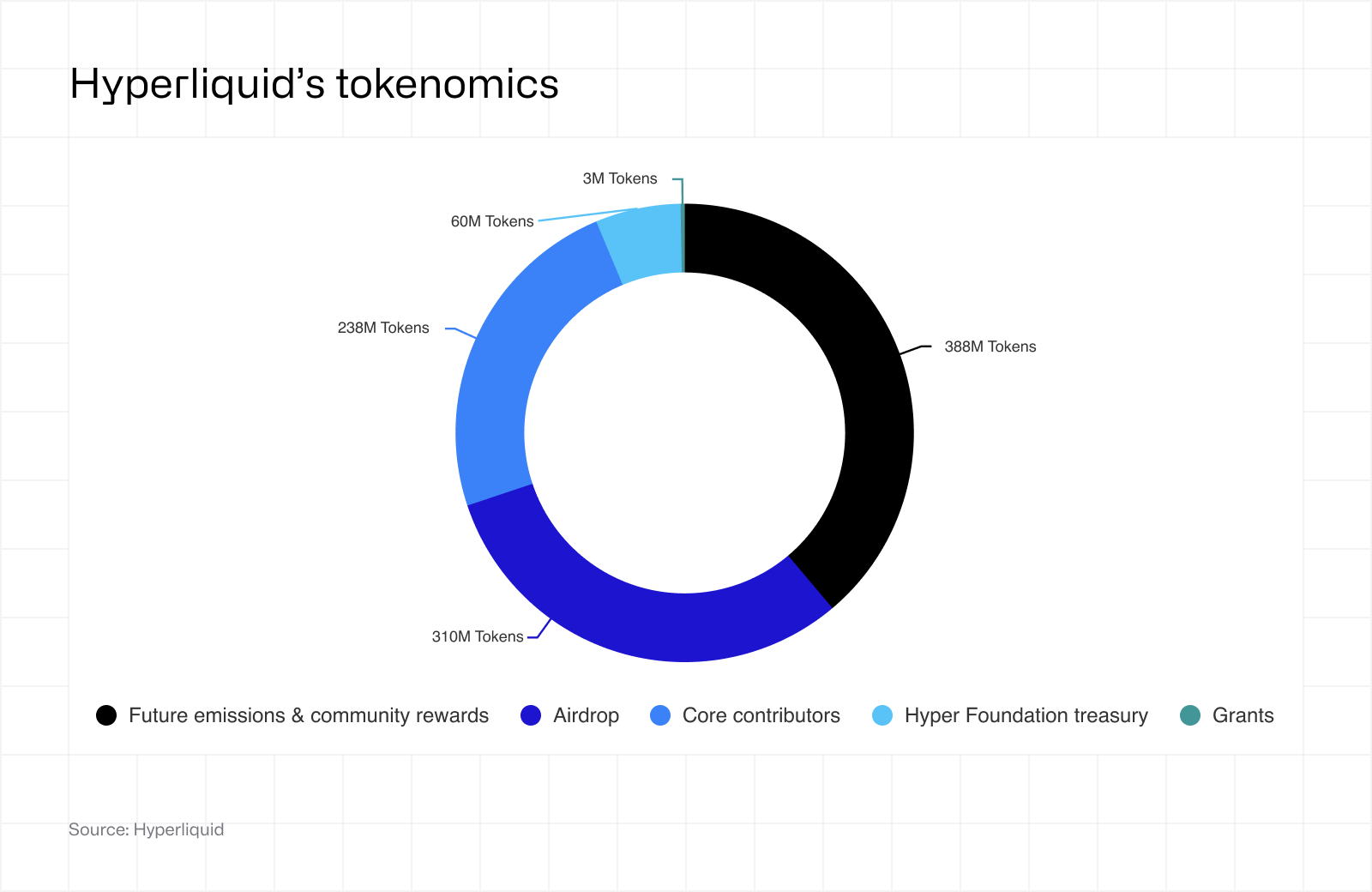
Hyperliquid's tokenomics

Token buybacks

La nascita di HyperEVM

A febbraio 2025 Hyperliquid ha dato inizio a un nuovo capitolo con l’introduzione di HyperEVM. Questo importante aggiornamento ha reso la rete pienamente compatibile con la macchina virtuale di Ethereum (Ethereum Virtual Machine o EVM), segnando il passaggio da un puro livello di scambio a un ecosistema Layer-1 programmabile.

Uno dei primi cambiamenti visibili è la possibilità di trasferire il token HYPE spot su HyperEVM, dove ora funziona come token gas nativo.

Questa integrazione permette agli sviluppatori di implementare smart contract compatibili con Ethereum con performance notevolmente migliorate, collegando direttamente le applicazioni DeFi al motore di corrispondenza centrale di Hyperliquid.

Unendo un order book a bassa latenza e smart contract generici, Hyperliquid si è evoluta al di là di un exchange decentralizzato tradizionale. Ora funziona come un’infrastruttura finanziaria Layer-1 completa, progettata per ospitare i mercati dei prestiti, i prodotti strutturati, gli asset sintetici e i protocolli DeFi avanzati all’interno di un ecosistema fluido e componibile.

Sfide normative e preoccupazioni legate alla centralizzazione

Con l’espansione di Hyperliquid, il protocollo si trova ad affrontare rischi normativi e strutturali. L’implementazione del regolamento MiCA in Europa e di nuove regole sui derivati sintetici negli Stati Uniti potrebbe trasformare il panorama della conformità per la negoziazione decentralizzata.

Da un punto di vista tecnico, l’integrazione di un exchange con order book ad alta frequenza e una catena Layer-1 compatibile con EVM introduce importanti sfide di coordinamento e sicurezza.

La centralizzazione rimane uno dei principali rischi strutturali di Hyperliquid. Attualmente la rete funziona con 24 validatori, i quali, sebbene non siano direttamente controllati da sviluppatori, la rendono altamente concentrata.

Nella sua fase iniziale, Hyperliquid si affidava anche a stablecoin esterne come USDC, che venivano integrate da altre reti, in particolare Arbitrum ed Ethereum, tramite un bridge, creando un potenziale single point of failure.

Il bridge era controllato da un piccolo gruppo di validatori e contratti aggiornabili, concentrando così la fiducia in pochi operatori. Gli utenti che depositavano USDC ricevevano token wrapped sulla blockchain Hyperliquid, che di fatto rappresentavano un credito riscattabile dipendente dagli amministratori del bridge.

Questa dipendenza ha cominciato a diminuire con il lancio di USDH, la stablecoin nativa di Hyperliquid, lo scorso settembre. Emettendo stablecoin on-chain, USDH riduce la dipendenza da custodi esterni e mitiga i rischi dei bridge.

Tuttavia, la Hyper Foundation detiene ancora il 60,5% dello stake totale dei validatori. Sebbene al di sotto della soglia del 66,7% per il pieno controllo, circa il 20% dello stake totale è stato delegato nuovamente agli stessi node attraverso il programma della fondazione stessa, mantenendo un alto grado di concentrazione.

Queste vulnerabilità sono diventate evidenti lo scorso marzo durante il caso JELLY, quando un trader avrebbe manipolato il prezzo del token attraverso attività on-chain coordinate, causando perdite non realizzate per 13,5 milioni di dollari per il vault dell’Hyperliquidity Provider (HLP).

Hyperliquid ha temporaneamente sospeso le negoziazioni e ha regolato manualmente le posizioni a 0,0095 $, scatenando feroci proteste da parte della comunità. Per riguadagnare la fiducia degli utenti, la Hyperliquid Foundation ha rimborsato gli interessati a 0,037555 $, a eccezione degli indirizzi segnalati.

Da allora il team si è impegnato a ridurre il predominio della fondazione attraverso la delega progressiva e l’inserimento di nuovi validatori indipendenti.

Delegare la crescita a terze parti

Un’altra soluzione del team per limitare il proprio predominio consiste nel permettere a terze parti di costruire sulla propria infrastruttura:
- Con i builder code gli sviluppatori possono creare il proprio front-end su Hyperliquid e guadagnare commissioni. Ciò aumenta la distribuzione e la base di utenti della piattaforma. Portafogli come Phantom, Rabby e MetaMask, per esempio, hanno integrato i mercati dei contratti perpetui di Hyperliquid nelle proprie interfacce utilizzando builder code. Secondo flowscan.xyz, per esempio, al 18 novembre 2025 Phantom ha guadagnato oltre 10 milioni di dollari dal lancio di questa funzionalità l’8 luglio 2025.
- Con HIP-3, le entità che mettono in staking 500.000 HYPE possono lanciare e collegare i propri mercati dei contratti perpetui a Hyperliquid e godere della sua liquidity. Queste entità ricevono il 50% dei ricavi generati dai propri mercati. Al 18 novembre 2025, i mercati HIP-3 hanno registrato un volume di oltre 100 milioni di dollari.

Con la continua crescita di Hyperliquid, la sua sfida sarà quella di rimanere una piattaforma di riferimento per i capital market, nonostante la concorrenza crescente: Lighter, Pacifica, EdgeX ed Extended, per non parlare della rivalità dei CEX “tradizionali” che temono di perdere terreno. Inoltre, rimane da vedere se Hyperliquid riuscirà a rimanere inattaccabile dal punto di vista della conformità. Se così fosse, potrebbe essere nella posizione giusta per competere per gli interessi degli investitori istituzionali.

Pubblicato ilDic 17th, 2025

Scrittore
CoinShares Author Logo
CoinShares

Articoli correlati

Benvenuto to CoinShares

Dati personali

0102

Quando visiti il sito web di CoinShares, i cookie migliorano la tua esperienza. Ci aiutano a mostrarti contenuti più pertinenti. Alcuni cookie sono necessari per il funzionamento del sito e saranno sempre attivi. Bloccare alcuni tipi di cookie potrebbe influire sulla tua esperienza del sito web e sui servizi che offriamo sul nostro sito.

Utilizziamo i cookie sul nostro sito per ottimizzare i nostri servizi. Scopri di più sulla nostra politica sui cookie per l’UE o sulla nostra politica sui cookie per gli Stati Uniti.

  • Necessari
    Question circle icon
  • Preferences
    Question circle icon
  • Statistici
    Question circle icon
  • Marketing
    Question circle icon
I cookie necessari aiutano a rendere un sito web utilizzabile abilitando funzioni di base come la navigazione tra le pagine e l'accesso alle aree protette del sito. Il sito web non può funzionare correttamente senza questi cookie.
I cookie di preferenza permettono a un sito web di ricordare informazioni che modificano il modo in cui il sito si comporta o appare, come la lingua preferita o la regione in cui ti trovi.
I cookie statistici aiutano i proprietari del sito web a capire come i visitatori interagiscono con i siti raccogliendo e riportando informazioni in modo anonimo.
I cookie di marketing vengono utilizzati per tracciare i visitatori attraverso i siti web. L'intento è di mostrare annunci pertinenti e coinvolgenti per l'utente individuale, rendendoli così più preziosi per gli editori e gli inserzionisti di terze parti.