



Hyperliquid e Solana: esposizione indiretta al boom dei mercati predittivi
 7 minuti di lettura
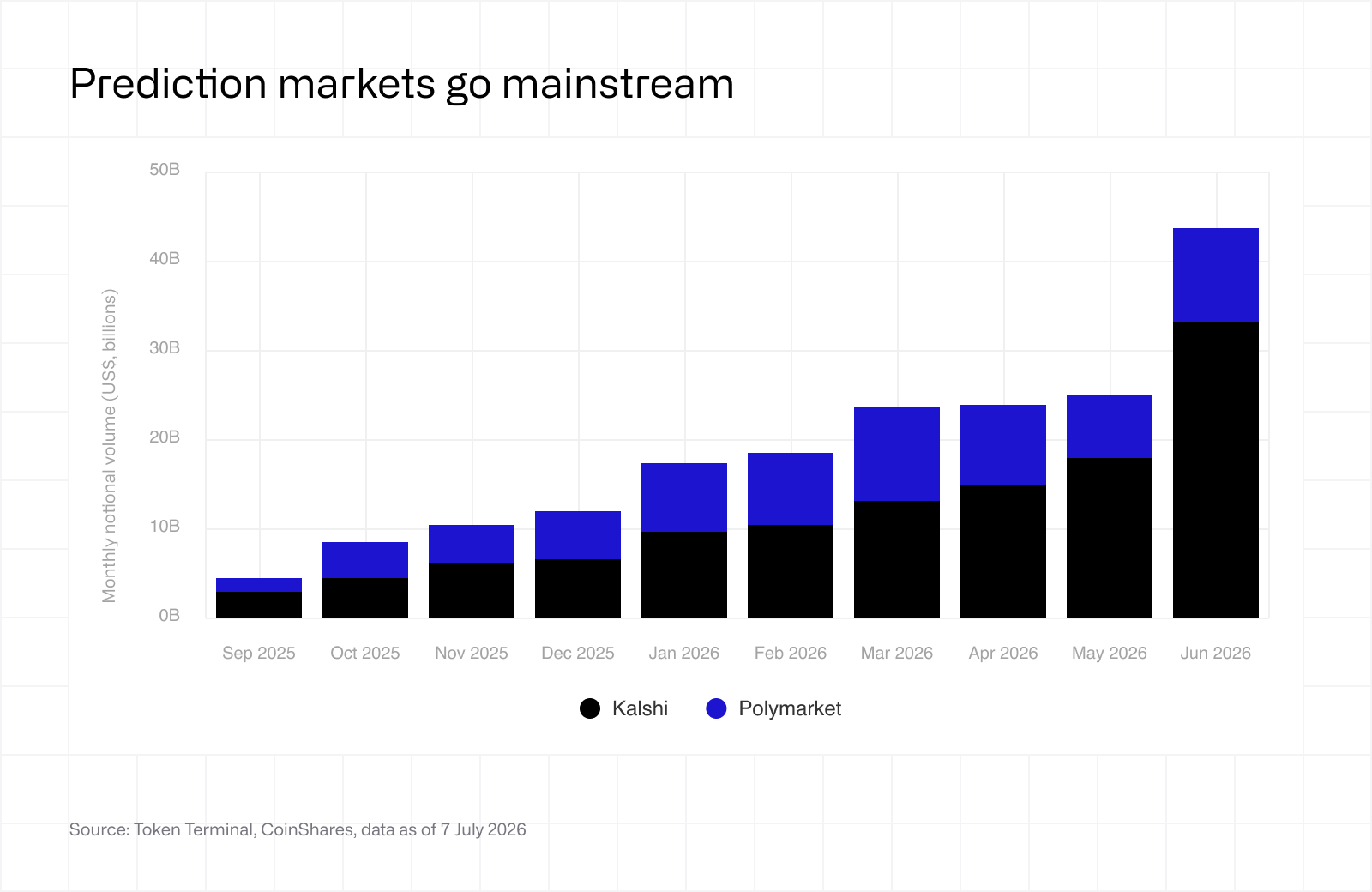
I mercati predittivi sono passati da curiosità di nicchia a uno dei segmenti in più rapida crescita della finanza. Il volume nozionale mensile complessivo scambiato su Kalshi e Polymarket, le due maggiori piattaforme, è salito da 4,5 miliardi di dollari nel settembre 2025 a 43,7 miliardi nel giugno 2026, con l'ultimo dato sostenuto dalle prime settimane dei Mondiali FIFA 2026.1 L'analisi indipendente condotta da Pew Research Center sui dati di The Block colloca lo stesso aggregato intorno ai 24 miliardi di dollari per l'aprile 2026, a conferma della tendenza.2 Kalshi ha nel frattempo raccolto 1 miliardo di dollari a una valutazione di 22 miliardi e a giugno sarebbe stata in trattativa per una nuova raccolta a 40 miliardi, mentre Intercontinental Exchange ha impegnato 2 miliardi di dollari su Polymarket, in larga parte per ottenere accesso ai suoi dati.3
 Nessuna delle due società è quotata in borsa e non esiste alcun token che rappresenti una proprietà diretta dell'una o dell'altra piattaforma. Due reti blockchain, però, Hyperliquid e Solana, stanno diventando l'infrastruttura su cui questa crescita poggia sempre di più, e i loro token nativi, HYPE e SOL, offrono agli investitori un modo per assumere esposizione indiretta a quella tendenza.
Hyperliquid ha integrato i mercati predittivi nel proprio exchange
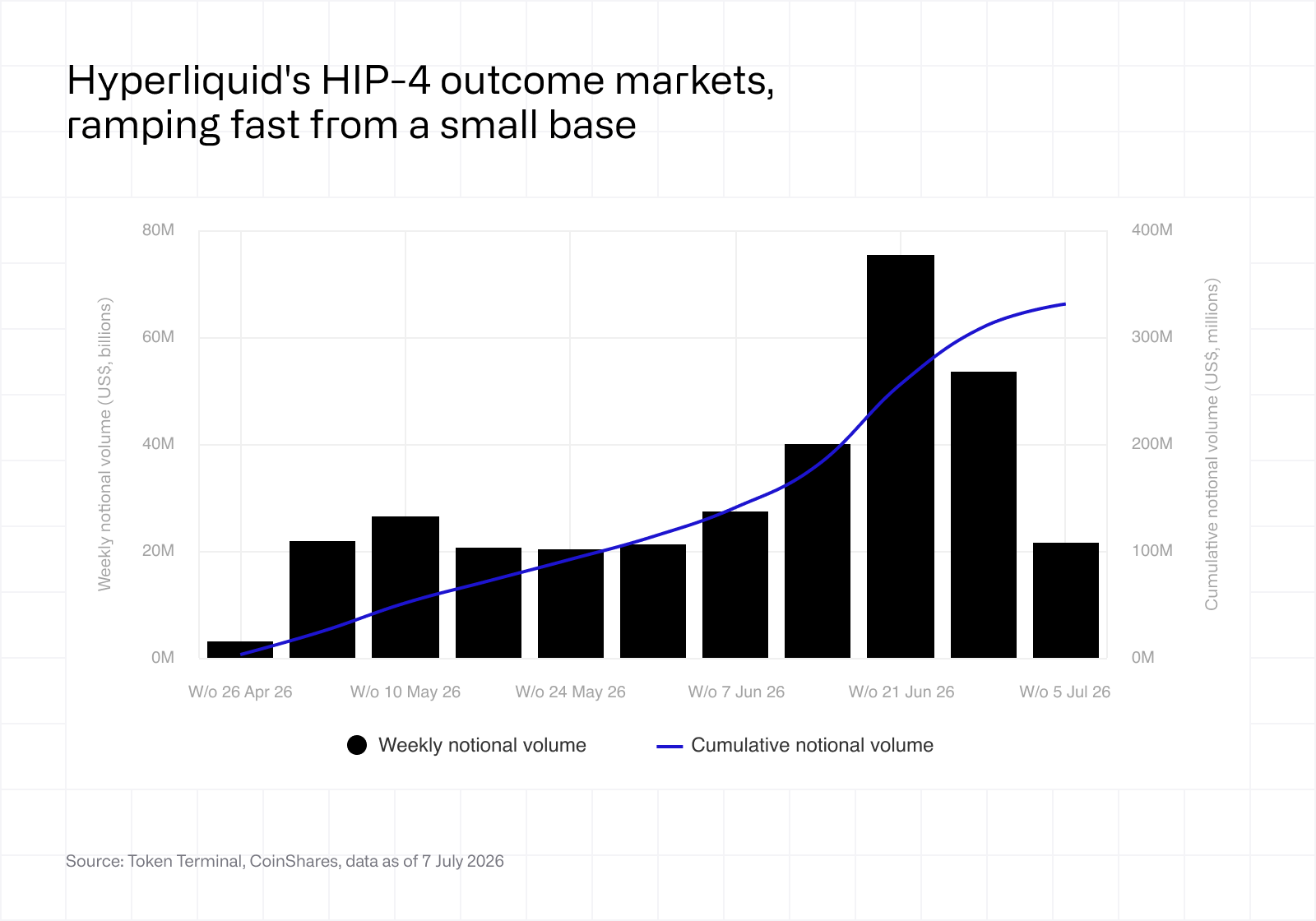
Il 2 maggio 2026 Hyperliquid ha lanciato HIP-4, la propria funzionalità di mercati sugli esiti. Si tratta di una piccola sede di negoziazione on-chain per gli stessi contratti sì/no trattati da Kalshi e Polymarket, ospitata direttamente all'interno dell'exchange di futures perpetui di Hyperliquid, già operativo. Nelle prime nove settimane HIP-4 ha trattato 331,1 milioni di dollari di volume nozionale cumulato, passando da meno di 3 milioni nella settimana di lancio a un massimo settimanale superiore a 75 milioni a fine giugno, e ha generato 5.906 dollari di ricavi di protocollo sul controvalore spot sottostante: ancora un errore di arrotondamento a fronte dei 15,4 miliardi di dollari di capitalizzazione di mercato di HYPE.4
 Il collegamento con HYPE passa dall'Assistance Fund di Hyperliquid, che destina al riacquisto di HYPE sul mercato i ricavi da commissioni di protocollo, insieme a contributi come il 50% dei ricavi lordi versato dall'emittente di stablecoin Circle.5 Ogni dollaro generato da HIP-4 si aggiunge, per quanto oggi in misura marginale, a quella spinta ai riacquisti.
Solana è diventata il canale su cui si distribuiscono i mercati predittivi
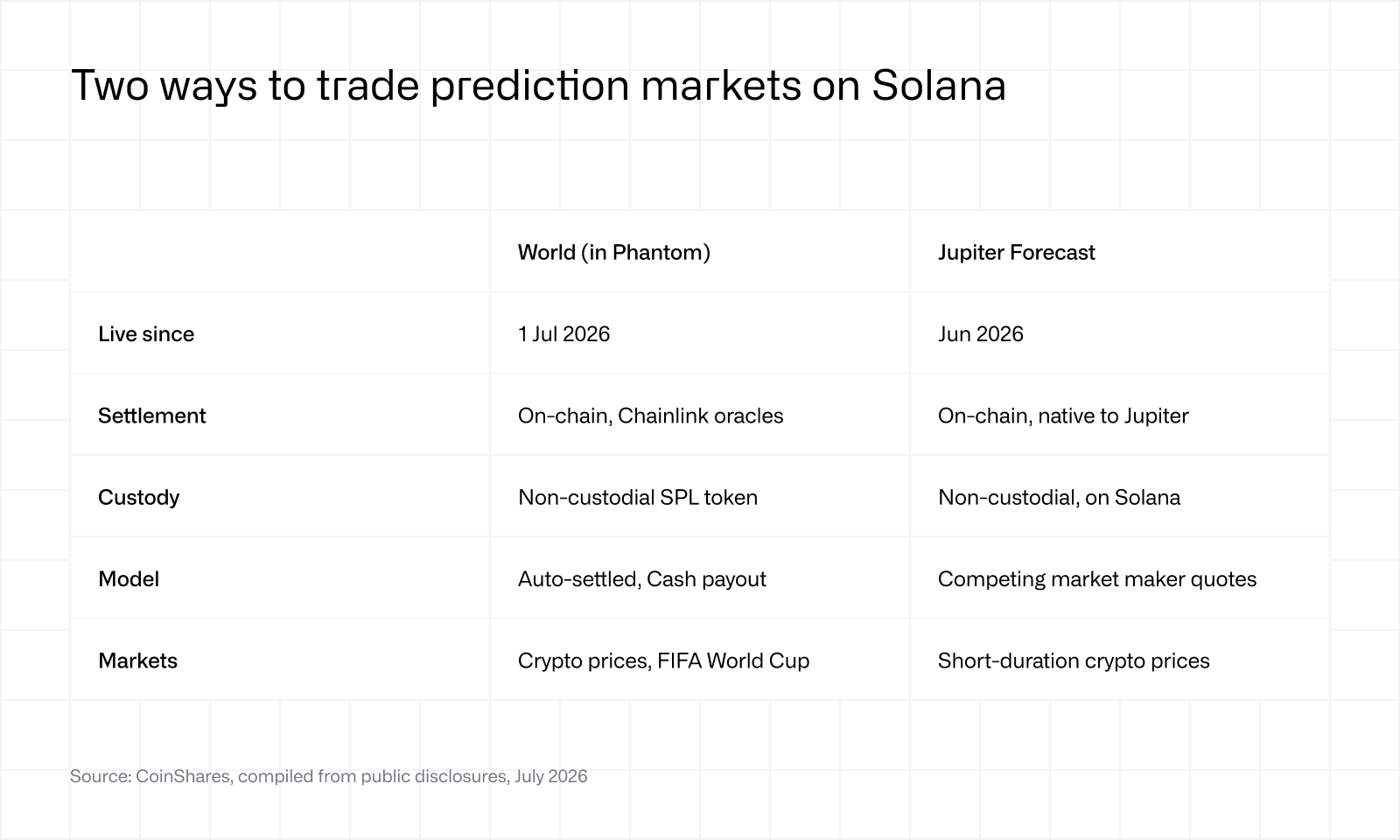
Il ruolo di Solana è diverso: si comporta meno come una sede di negoziazione e più come un'infrastruttura di distribuzione. Phantom, il wallet dominante dell'ecosistema Solana con circa 20 milioni di utenti, ha iniziato a offrire mercati predittivi collegati a Kalshi nel dicembre 2025, permettendo agli utenti di operare con token basati su Solana senza uscire dall'applicazione.6 L'accordo si è chiuso il 1° giugno 2026, quando Phantom lo ha sostituito con World, un mercato predittivo costruito nativamente su Solana che si regola automaticamente tramite oracoli Chainlink ed emette ogni posizione sotto forma di token detenuto direttamente nel wallet dell'utente.7 Su un fronte diverso, Jupiter, la maggiore applicazione di trading su Solana, a giugno ha lanciato una propria sede nativa, Forecast, che abbina i trader a market maker in concorrenza tra loro anziché a un pool di liquidità condiviso, e ha dichiarato di voler affiancare Polymarket più che competere con essa.8
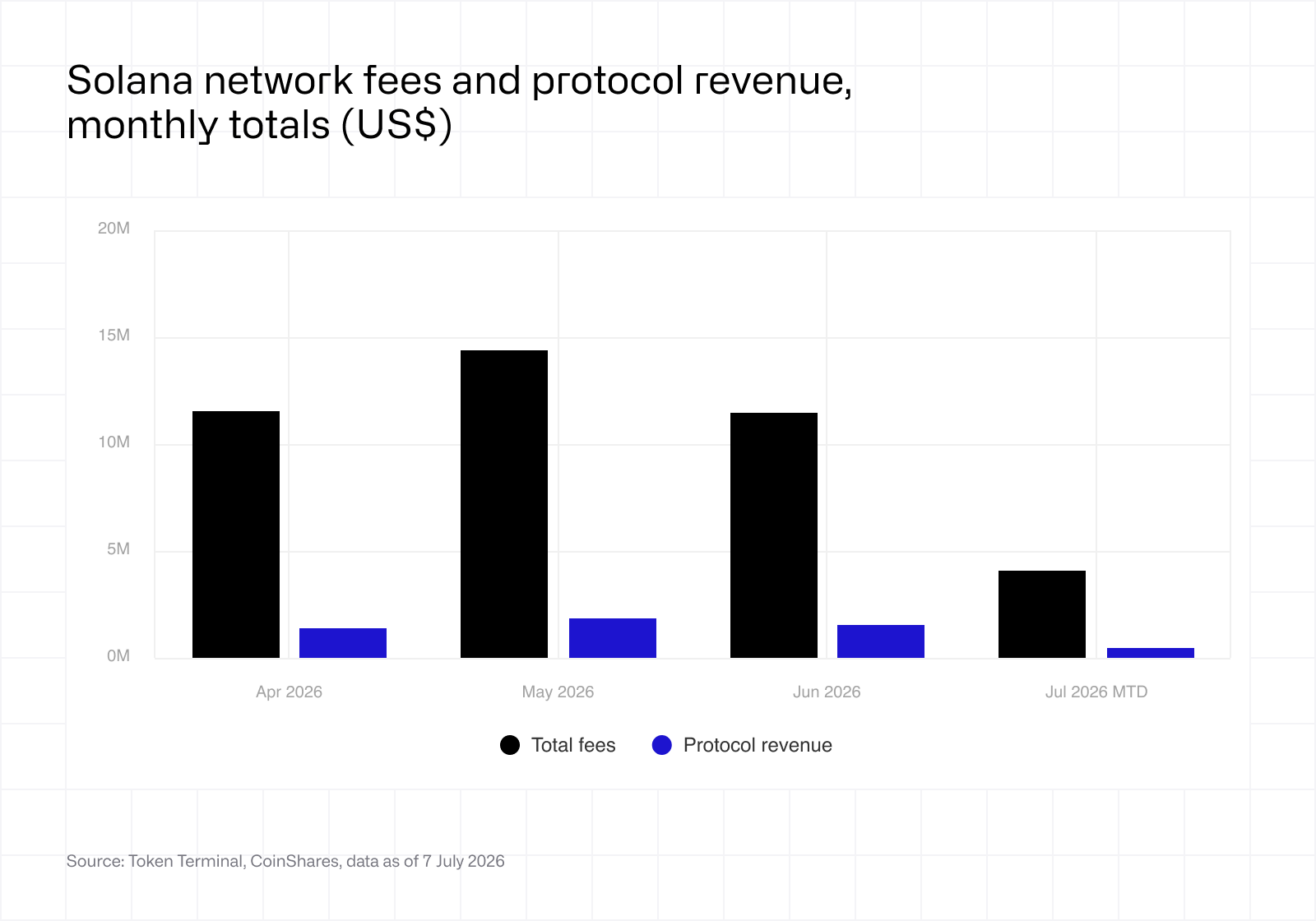
 Non è detto che tutta questa attività si traduca in ricavi per Kalshi o Polymarket. Si traduce invece in attività sulla rete Solana e nei ricavi di protocollo di Solana, pari al 50% circa delle commissioni di transazione trattenute dalla rete, che tra aprile, maggio e giugno 2026 si sono attestati in media intorno a 1,4 milioni di dollari al mese, a fronte di una capitalizzazione di mercato di SOL pari a 47 miliardi.9
Una base di ricavi ridotta, e per giunta instabile
In entrambi i casi la sproporzione di scala è l'avvertenza da mettere in conto. I ricavi a cinque cifre di HIP-4 e il modesto gettito mensile di Solana sono minimi rispetto al valore di mercato dei rispettivi token: siamo quindi di fronte a una tesi di opzionalità e di posizionamento, non a un motore di utili di breve periodo. L'avvicendamento delle sedi su Solana, da Kalshi a World nel giro di sette mesi, ricorda quanto in fretta possano cambiare gli accordi di distribuzione in questo settore: il canale dominante di oggi non è detto che sarà quello di domani.
Per gli investitori che desiderano quell'esposizione senza negoziare direttamente sui protocolli sottostanti, CoinShares propone il CoinShares Hyperliquid Staking ETP e il CoinShares Solana Staking ETP, una via regolamentata per detenere HYPE e SOL senza accedere direttamente alle reti.10
Fonti
Token Terminal, volume nozionale mensile di negoziazione di Kalshi e Polymarket, dati al 7 luglio 2026.
Pew Research Center, «Trading volume on prediction markets has soared in recent months», analisi dei dati di The Block, 27 maggio 2026.
Bloomberg / TechCrunch, «Kalshi doubles valuation in 5 months, hitting $22 billion», 7 maggio 2026; Coindesk, «Kalshi targets a massive $40 billion valuation, widening lead over rival Polymarket», 24 giugno 2026; investor relations di Intercontinental Exchange, «$600 million investment in Polymarket», 27 marzo 2026.
Token Terminal, dati settimanali e cumulati su volume nozionale/spot e ricavi di Hyperliquid Outcome Markets (HIP-4), al 7 luglio 2026; Token Terminal, prezzo e capitalizzazione di mercato di HYPE, al 7 luglio 2026.
Dati di protocollo di Hyperliquid tramite Token Terminal, condizioni dell'Assistance Fund e della condivisione dei ricavi con Circle, al 7 luglio 2026.
Coindesk, «Phantom adds Kalshi to wallet, lets users trade prediction markets with Solana tokens», 12 dicembre 2025.
Coindesk, «Mysterious Solana project World unveiled as fully onchain prediction market», 1° luglio 2026; TechTimes, «Prediction market World launches in Phantom: Chainlink oracles auto-settle Solana trades», 2 luglio 2026.
Cryptopolitan, «Jupiter launches Forecast, Solana's first native prediction market», giugno 2026.
Token Terminal, commissioni e ricavi della rete Solana, aprile-luglio 2026; Token Terminal, prezzo e capitalizzazione di mercato di SOL, al 7 luglio 2026.
Pagine prodotto di CoinShares, coinshares.com/etp/physical-hype/ e coinshares.com/etp/physical-solana/; denominazioni dei prodotti e ISIN da registro prodotti interno (Notion, «Website Data :: HYPE and SOL on SIX»).
Pubblicato ilLug 16th, 2026