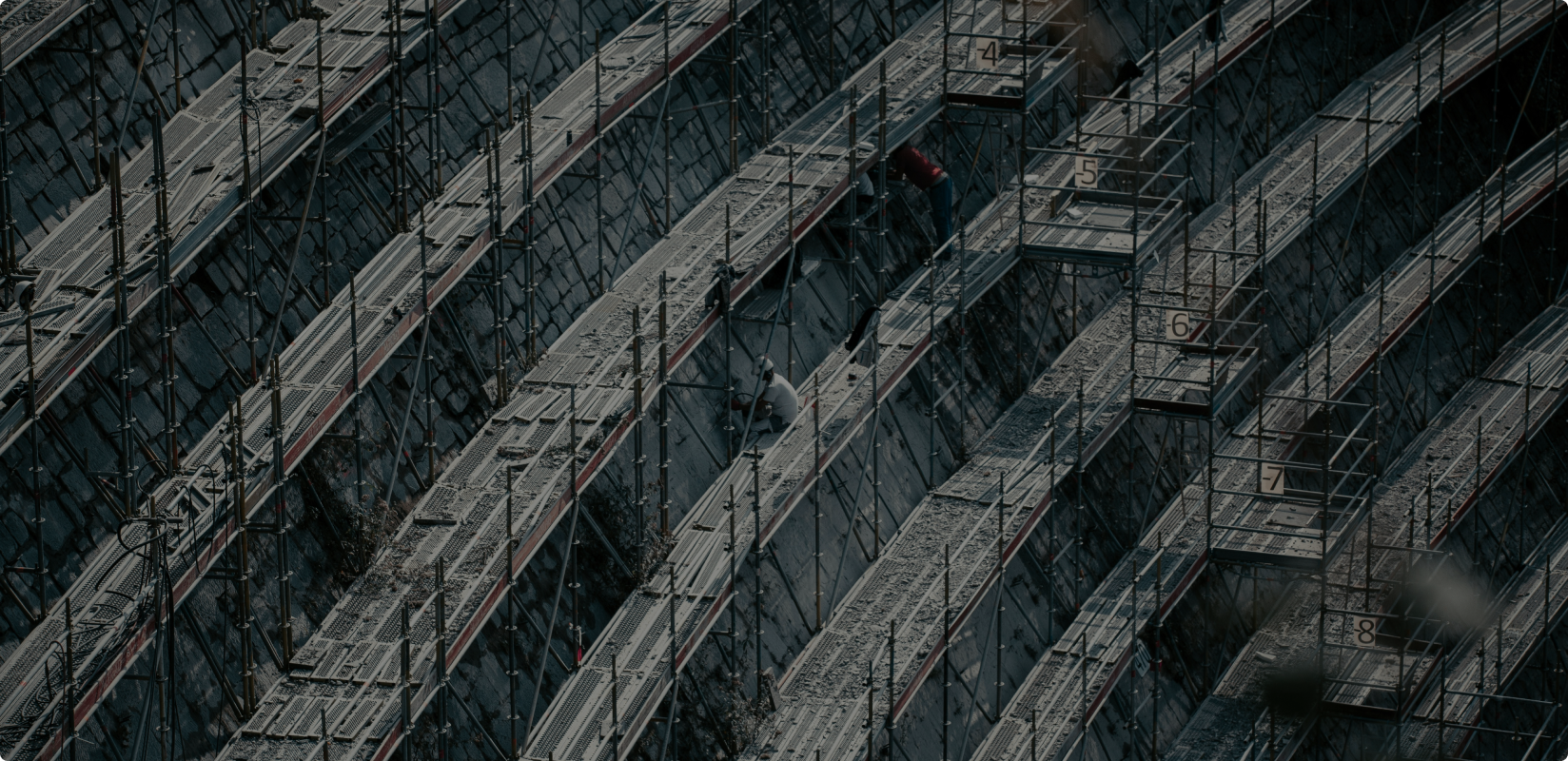
Le véritable enjeu, c'étaient les tuyaux
 6 min de lecture
- Finance
- Régulation
Il existe une lecture de ce marché qui voit dans la vague actuelle de cessations d'activité un verdict sur la technologie elle-même. BitMEX1, la plateforme qui a inventé le contrat perpétuel crypto, fermera le 23 septembre après onze années d'existence. BitMart a suivi quelques jours plus tard, en annonçant sa propre fermeture pour janvier. Movement Labs et Storj se sont placés sous Chapter 11 la même semaine. Si votre thèse était que la crypto remplacerait le système financier, les événements récents semblent en apporter la preuve. Notre thèse n'a jamais été que la crypto remplacerait la finance. Elle était que la blockchain en remplacerait l'infrastructure. Ce que nous observons aujourd'hui n'est pas un effondrement. C'est un tri.
Les tuyaux n'ont jamais été aussi sollicités
Regardons ce qui y circule vraiment. Il y a quelques jours, Hyperliquid, l'une des plus grandes plateformes de dérivés décentralisées au monde, a pour la première fois généré davantage de volume sur les actifs du monde réel que sur la crypto : 54 % du volume total, soit quelque 26 milliards de dollars en actions, indices et matières premières, un chiffre supérieur au volume cumulé des contrats perpétuels crypto de l'ensemble des autres exchanges décentralisés. Depuis juin, les actions individuelles sont devenues la première catégorie d'actifs du monde réel sur la plateforme, avec 61 % de ce volume, emmenées non par un token mais par SK Hynix, le fabricant coréen de semi-conducteurs. Pour en savoir plus sur Hyperliquid, nous vous invitons à lire notre étude dédiée.
L'infrastructure de marché crypto-native la plus aboutie tire désormais l'essentiel de son activité d'actifs financiers traditionnels. L'infrastructure a gagné. Sur sa propre infrastructure, la crypto est devenue un utilisateur minoritaire. La même convergence s'opère dans l'autre sens.
CME Group et Cboe continuent d'étoffer leur gamme de produits crypto, tandis que les plateformes crypto cotent de plus en plus de contrats sur actions, ETF et matières premières, à mesure que les investisseurs se tournent vers des marchés ouverts plus longtemps, et à terme 24 heures sur 24. Ce dernier point provoquera quelques réorganisations dans les équipes d'opérations, bien habituées à quitter le bureau à la minute où le marché ferme.
La plateforme Kinexys de JPMorgan a traité plus de 4 000 milliards de dollars de transactions depuis son lancement et affiche désormais plus de 7 milliards de dollars de volume quotidien moyen, sur huit devises. Le fonds de bons du Trésor tokenisé de BlackRock a dépassé 2,5 milliards de dollars d'encours, fonctionne sur huit blockchains et est devenu cette année négociable sur Uniswap, tout en étant accepté en collatéral sur Binance. Les plus grandes banques américaines construisent aujourd'hui un réseau mutualisé de dépôts tokenisés via The Clearing House. Aucune de ces institutions n'achète l'idéologie. Toutes achètent la tuyauterie.
Ce que cet écrémage sélectionne vraiment
Pourquoi, alors, tant d'entreprises crypto-natives mettent-elles la clé sous la porte ? La réponse n'a étonnamment que très peu à voir avec la blockchain.
La première raison est l'absence de rempart durable.
Une plateforme de contrats perpétuels, un outil de suivi de portefeuille ou un agrégateur de DEX étaient des entreprises dont le principal avantage concurrentiel tenait à leur antériorité. Cela fonctionnait tant que les acteurs en place restaient à l'écart. Dès lors que des institutions dotées d'une distribution mondiale, de marques établies, de bilans régulés et de relations clients vieilles de plusieurs décennies sont entrées sur le marché, « être arrivé le premier » a cessé de suffire.
Hyperliquid n'est pas l'exception qui infirme la règle, c'est la règle énoncée deux fois.
Les entreprises qui survivent ne sont plus des sociétés crypto. Ce sont des sociétés d'infrastructure qui, accessoirement, règlent leurs transactions au moyen de la blockchain et se montrent largement indifférentes à l'actif qui transite par le réseau. Celles qui ont disparu étaient des services. Et les services se font absorber.
La deuxième raison est la réglementation. Plus précisément, la conformité.
La conformité est un rempart. Toute la question est de savoir qui le détient déjà.
Lorsque la période de transition de MiCA s'est achevée le 1er juillet, des milliers de prestataires non agréés ont été légalement contraints de cesser de servir des clients européens. Les acteurs du secteur ont parlé d'hécatombe, évoquant des millions d'utilisateurs potentiellement concernés. C'est exactement ce que la réglementation a toujours fait. Elle élève le coût fixe de la participation à un niveau que seules les institutions déjà conçues pour opérer dans ce cadre peuvent absorber sans difficulté. Les institutions financières traditionnelles ont passé près d'un siècle à apprendre à vivre avec la complexité réglementaire. Une grande partie de l'industrie crypto ne l'a pas fait, et beaucoup de ses acteurs n'en auront jamais l'occasion.
Les États-Unis s'engagent aujourd'hui dans le même processus de filtrage.
Le débat autour du Clarity Act porte moins sur la question de savoir si les actifs numériques ont leur place dans le système financier régulé que sur la manière de gérer les conflits d'intérêts une fois qu'ils y seront.
Quel que soit le moment où ce texte sera finalement adopté, il devrait produire aux États-Unis ce que MiCA produit déjà en Europe : fixer des règles de fonctionnement claires pour les institutions régulées, tout en relevant nettement les barrières à l'entrée pour tous les autres.
Pourquoi cette issue était inévitable
Rien de tout cela ne devrait, au fond, nous surprendre. L'infrastructure financière a toujours récompensé la taille, la confiance, la réglementation et la distribution. Autant d'effets de réseau puissants que la technologie seule renverse rarement. La blockchain change la couche technique. Elle améliore considérablement le règlement-livraison, la transparence et la programmabilité. Elle ne supprime pas pour autant l'importance des bilans, des agréments réglementaires, de la confiance des clients ou de la distribution mondiale. Elle accroît même la valeur des institutions capables de conjuguer ces atouts avec une meilleure infrastructure. C'est pourquoi les gagnants de long terme ne seront probablement pas ceux qui auront le protocole blockchain le plus élégant. Ce seront ceux qui sauront intégrer l'infrastructure blockchain à la finance institutionnelle.
Qui mange qui ?
Pendant une bonne partie de la décennie écoulée, le récit dominant voulait que la crypto dévore la finance. Les faits pointent de plus en plus dans la direction inverse.
La finance traditionnelle absorbe l'infrastructure de règlement-livraison de la blockchain, sa structure de marché en continu et sa capacité à rendre les actifs programmables, en laissant de côté l'essentiel de l'idéologie qui les accompagnait à l'origine.
Est-ce une défaite pour la blockchain ? Seulement si l'on a cru que la technologie et l'industrie bâtie autour d'elle ne faisaient qu'un. Elles ne l'ont jamais été.
Une blockchain se moque de régler du Bitcoin, un bon du Trésor tokenisé ou une action SK Hynix. Les tuyaux sont en train d'être refaits, sans bruit, par nombre de ces institutions mêmes que les premiers promoteurs de la crypto pensaient finir par remplacer. C'était de toute façon l'issue la plus probable.
Et pour qui voyait dans la blockchain non pas une insurrection contre la finance, mais la prochaine génération d'infrastructure financière, c'est aussi la plus précieuse.
Les gagnants ne seront pas ceux qui ont tenté de remplacer Wall Street. Ce seront ceux qui, sans bruit, en auront refait les tuyaux.
1 CoinShares a retrouvé la trace de sa toute première transaction sur BitMEX, qui remonte à 2014 : un contrat à terme trimestriel sur lequel nous intervenions déjà comme apporteur de liquidité, à l'aide de notre premier système de négociation propriétaire, Emergence, développé au sous-sol du tout premier bureau de Ledger. Emergence et ses nombreuses versions successives nous ont bien servis pendant dix ans, avant d'être mis à la retraite en 2024 pour laisser la place à son successeur, Matrix. Revoir cette première transaction rappelle le chemin parcouru, par notre secteur comme par notre entreprise, en douze ans. Merci, Arthur, Sam et Ben, d'avoir vécu tout cela à nos côtés. Ce fut une sacrée aventure.