World: what if we scanned our iris in London?
 8 min read
- Altcoins
Everybody is anonymous in London: with over 9 million residents, nobody notices you, even with all the extravagance on one's face or clothes: pink hair doesn't matter, piercings neither, nor platform shoes or lighted sneakers, you can be whoever you want and you will be welcome in any restaurants or shops the same way. You're fungible. Except for the CCTV and its myriad of cameras positioned at every corner of the streets: a research published in 2022 by Clarion Security Systems estimates that there are over 942,000 CCTV cameras in London: one for every ten residents, or enough to record every resident of Croydon and Barnet boroughs.
Some would argue this is a dystopian system, partisans would oppose a much needed architecture in a dangerous era. Nonetheless, everyone will agree that, cameras or not, the 21st century comes with its share of trade-offs in terms of privacy: whether data is left "intentionally" or through a leak, individuals leave trails everywhere at least under a digital form. This is the first century when cookies don't only mean a sweet treat: every website visited, every card payment, photo captured, phone call made, and social channel interaction leave a digital footprint that makes everyone traceable, without even the help of an intelligence service. And each individual is complicit: whether it is for our passport application or our mobile phone authentication, biometric data is collected with our agreement. Privacy is no longer a reality.
"On the Internet, nobody knows you're a dog" mocked one of the most reproduced cartoons published by The New Yorker, made by Peter Steiner in 1993, referring to two dogs talking to each other while browsing the Web. Nowadays, everyone would know they are dogs, their breeds, and their owners, and the type of kibbles they prefer.
This comes with a lot of risks, especially at a time when innovations go faster than a human mind can grasp and adapt. AI has considerably changed our habits, and if its advocates argue that it enhances our lives, it also helps criminal business. Somewhere in France, a woman thought she was in a relationship with Brad Pitt and sent him all her savings, assuming if there was a man in need, it was certainly him. Deepfakes related to porn or political takes (and sometimes both combined) have invaded the Web. And scammers are even cloning voices to improve their phishing methods. Reality becomes confused with the fake, and it is understandable as reality itself becomes so crazy that it is hard to believe. Who would think the President of the United States would one day publish an AI-made video displaying him piloting a plane bombing fecal matter?
Pun aside, identity preservation should not be taken lightly. Impersonation is now a thing all across the globe: in October 2025, the U.S. bank Granite Credit Union mentioned to Fox13 a 'significant rise in AI-powered phishing, deepfake voice calls, and impersonation scams". In Hong Kong, a bank employee wired $26 million to fraudsters a year ago, convinced by a deepfake online meeting.
And unfortunately, the rise of data leaks and the increasing amount of digital trails left online make the job of criminals easier. No one is invulnerable.
The irony is that the moguls of the industry are fully aware of this paradigm change. "I expect some really bad stuff to happen because of technology (...) Very soon the world is going to have to contend with incredible video models that can deepfake anyone or kind of show anything you want," OpenAI (ChatGPT company) CEO Sam Altman said during an a16z podcast.
This might be precisely why the same person co-founded a new venture World (formerly Worldcoin) in 2019. Developed by the private company Tools for Humanity (TFH), it comes under the form of a blockchain protocol associated with a token (WLD), a mobile application with an app store, and what we could describe as a digital identity or passport. The idea: enables one to create their sovereign digital identity. Allegedly unfakeable. Allegedly respectful of privacy rights. A method to fight the prominence of bots on the Internet and a project some supporters describe as a potential gateway to future universal income experiments: in exchange for a registration, users are granted a certain amount of tokens, claimable on a monthly basis.
With a roster full of Silicon Valley stars, it didn't need much to convince its peers: it initially was funded by $25 million from Andreessen Horowitz in 2021, before raising $100 million more six months later mostly with the same VCs. A16z even contributed a third time in 2023, for a $115 million round, this time led by Blockchain Capital, before purchasing $135M of tokens on the open market.
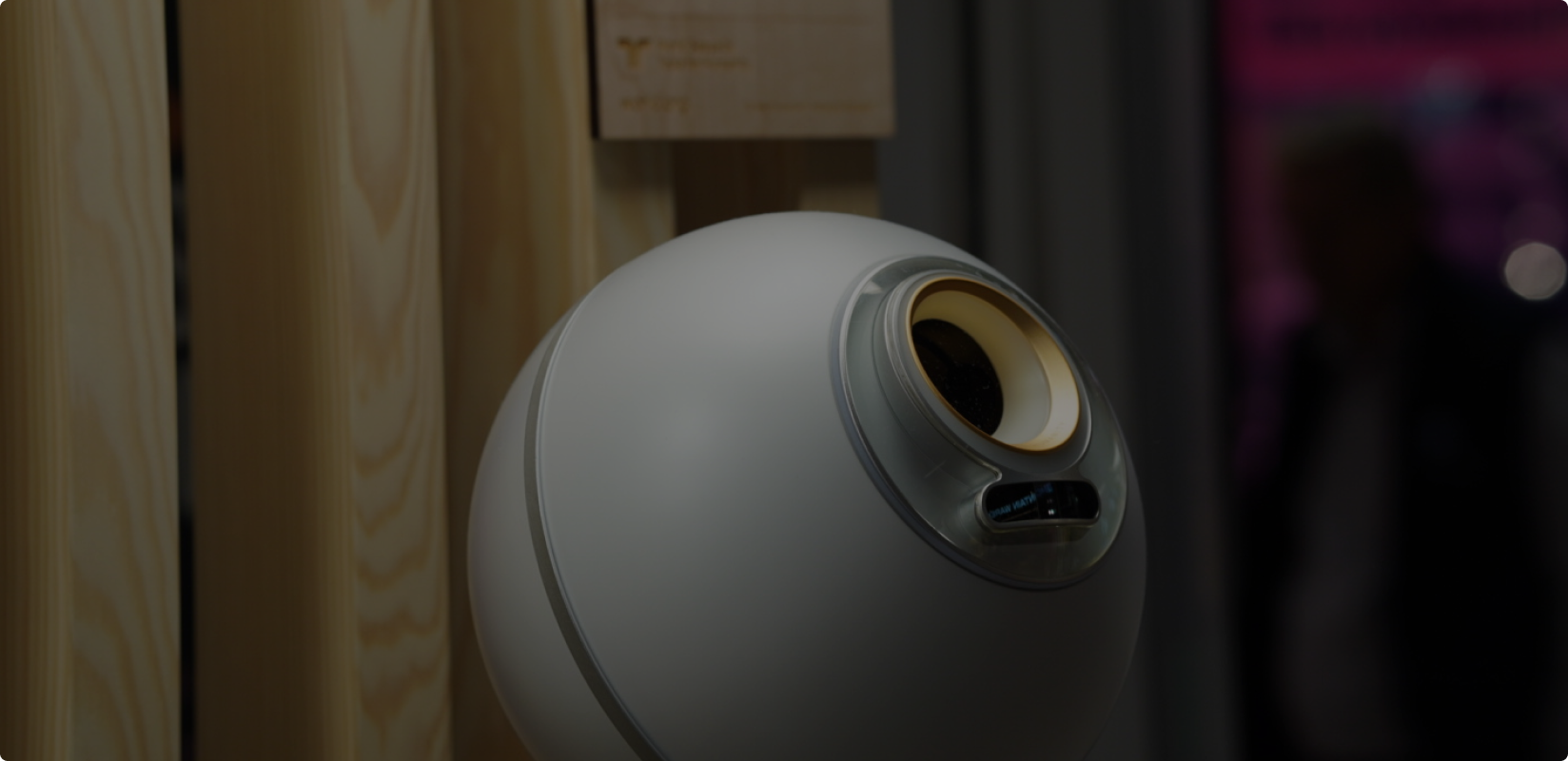
Yet, World wasn't welcome everywhere: for instance, in 2023 Kenya decided to ban the project from its territories. The same year, CNIL, the French DPA, launched an investigation on the project. The main reason is that to operate, World needs to collect biometric data, and it does so by scanning people's irises with a very futuristic object: the Orb. A metallic bigger version of a webcam, which hashes a print of your eye and makes it a unique identifier through a cryptography method called zero-knowledge proof: that means the original print is not used furthermore, only the cryptographic signature is. Nonetheless, many countries or privacy rights defenders worry about the information kept by the company.
"If we wanted to collect data at a global scale, it would be a very expensive and inefficient way to do so", World founding member Saturnin Pugnet explains to The Node, "There are way less expensive methods to collect facial data, whether through the Internet or by paying third-parties for a fraction of the cost of the deployment of our technology. But we've heard the doubts and that's why we have open sourced our technology. Our goal is to provide transparency to the public because this is something related to a sensitive topic".
Dating thanks to World ID
Nowadays, everyone is able to render their own Orb to build on World's protocol. Above all, companies requiring a digital signature are much welcome to use it: Okta, the giant of online identity management, integrated the "Sign in with World ID" feature — a method to log in similar to Apple ID or Google ID — in its marketplace as soon as 2023; in 2025, it has partnered with Match Group to enable World ID on its dating applications, starting with Tinder in Japan. It also launched a door-to-door Orb verification option in Latin America, through a partnership with delivery platform Rappi. It is now also possible to sign up and log in to the booming prediction markets Polymarket and Kalshi with World ID. Finally, it has become accessible in the U.S., with Orb verifications enabled at Razer stores. Surely but slowly, World is expanding its web.

"We're starting to have more and more interactions with consumer apps because they have an increasing ID verification issue and there is still no clear solution to that", Saturnin Pugnet tells us. "But our goal has always been to develop in two times: first, to push to deploy our technology globally and second, to collaborate with existing companies interested in our protocol. We're still in the first phase though, we're still focusing on the deployment".
At the time of the interview (October 2025), Saturnin mentions roughly 30 million individuals registered across 40ish countries. "It progresses well, but we still have a lot to do to reach the billion mark", he adds.
"It progresses well, but we still have a lot to do to reach the billion mark", he adds.
Amongst these millions of individuals, they got one of us: the author of these lines. After a first interaction during their brief visit in Paris in 2023, we went on the trail of one of these Orbs. For compliance reasons, they are not available everywhere, yet. We finally found one. Back to London, then, where our biometrics have already navigated through the borders agency.
The device was located through the World app, downloadable in one click on our phone. It brought us to Victoria Station, in the city of Westminster, not far away from the circles of power of the Houses of Parliament. We wandered a few minutes across all the commuters, without any indication leading us to the Grail. After several hesitations, and one exit, we finally went to the second level of the station to finally find a pop-up installation, surrounded by two young contractors of World. Their job is to onboard new users to the app. "Would you like to earn 50 pounds?" (the app promotional offer available at the time), they ask alternatively to the station wanderers. One stops and asks what this is about. "It is a cryptocurrency project: you register and once you've done the process on the application, you'll be able to claim your money", one of the employees replies.
Another one, intrigued, follows through. "We have been here for two months", a staff member tells us. "And roughly 30-40 people register every day".
He doesn't know much more about World, except that it is a cryptocurrency. He hasn't registered himself. It is obviously a side job. We decided to ease his task and to do the process ourselves. The Orbs are surrounded by wooden pylons and elevated on platforms. The registration is actually quite simple and there is no need to be tech-savvy: "You place your eyes in front of the Orb and then, you launch the application on your phone which will verify it is you. It should last only a few seconds but it can take a few minutes", he explains. It took a few minutes for us, as the application displayed a failure message on our way out. It worried me. Did I do all of this for nothing? Will World cancel my tokens despite having my credentials?

It finally went through, after a second application check. I was able to claim 25 tokens right away, worth roughly 23 pounds at the time of writing. I would be able to claim again the following month, but with a smaller allocation.
While we thank the staff for their help, without really knowing whether it was a good idea to let our beautiful eyes be hashed in a zero-knowledge proof, a father and his daughter are stopped. "Would you like to earn 50 pounds?", he's being asked. He stopped, checked the installation and promised to come back later.
The end goal for World is that this process becomes a daily occurrence globally. It comes with its lot of challenges compliance-wise with some jurisdictions wary of a potential iris scan of minors: "There are many obstacles that we don't expect when we start such a project: in some places, we had to request passports in order to ensure the individuals were legally able to do the process; or the queue created by the people awaiting the verification sometimes was a source of public trouble. So, we've constantly had to adapt."
If he willingly admits that the regulation in Europe, whether it is GDPR or MiCAR, is "challenging to navigate", the opening of the U.S. and the U.K. markets is expected by the team to potentially accelerate World's development. It remains to be seen now, how much the usage becomes part of customs. The truth is that the simple display of "Sign-in with World ID" on a mainstream website like Polymarket presents a certain appeal. One click and you're in. Indeed, others provide the same service but only one rewards with tokens. Will it be enough to convince the world?