


A change might come in the U.S., but not the one most expect
 2 min read
- Finance
The materials on this website or any third-party websites accessed herein are not associated with and have not been reviewed or approved by: (i) Valkyrie Funds LLC dba CoinShares, its products, or the distributor of its products, or (ii) CoinShares Co., its products, or the marketing agent of its products.
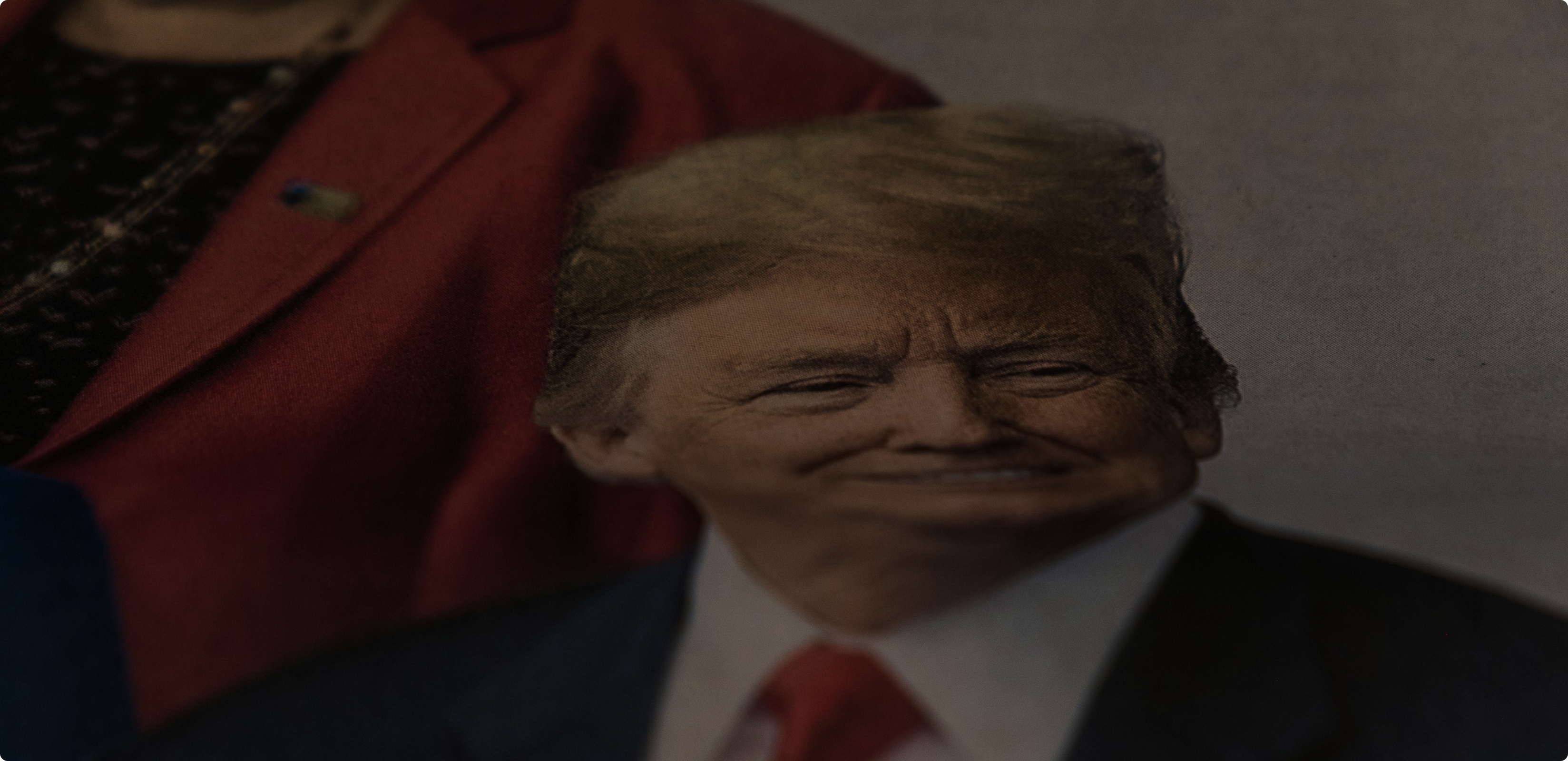
As the U.S. edges closer to another turning point in its political landscape, most are watching Jerome Powell and the Federal Reserve for signs of change. But perhaps the real disruption is coming from a different direction, one far more unexpected. What if, before Powell finishes his term, it is Donald Trump who exits the stage?
At first glance, the idea may seem completely far-fetched. Yet, recent developments, including renewed public scrutiny related to the Epstein case, have begun to generate serious speculation. While nothing is confirmed, and accusations remain in the realm of uncertainty, the political cost of association, regardless of legal outcome, can be difficult to overcome. Even for a man that has more lives than a cat. If this were to escalate, and Trump were forced to step aside, it would reshape the race and rewire market expectations instantly.
The irony here lies in the contrast. Jerome Powell, despite his contentious early tenure and clashes with the Trump administration, has emerged as a stabilizing force. Like it or not, Powell has delivered solid results: a successful soft landing (or something close to it), anchored inflation expectations, and policies that the markets, both equity and crypto, have rewarded with confidence. The Fed Chair track record must be respected.
Trump, meanwhile, continues to dominate headlines but more and more on shaky ground. Should his exit come abruptly, market volatility would be inevitable. Investors do not like surprises, and this would be a seismic one.
What if the Fed and U.S. Treasury merged
But any panic might be short-lived, since there is one name that could act as a savior: JD Vance. With backing from Peter Thiel and parts of the Silicon Valley elite, his alignment with business interests and his cultural fluency with a younger, tech-driven voter base make him a compelling figure for those looking for continuity without chaos, even though he is untested on a national level. There’s one person who might like this idea: Curtis Yarvin, a tech entrepreneur and blogger. According to the Financial Times, which interviewed him, one of his “audacious” proposals is “to merge the Fed and Treasury and revalue assets”—a plan that would pave the way for the U.S. administration to freely implement its easing policy.
Yarvin is no longer particularly pleased with Donald Trump. “It is losing momentum,” he said of the current administration. He would likely welcome a change of air, as would his fans: Elon Musk, Andreessen Horowitz, and Peter Thiel. Another of his admirers might as well: J.D. Vance, who often cites Yarvin as one of his inspirations.
This isn’t the transition most analysts are anticipating. The focus has long been on Powell’s timeline, interest rate policy, and the Fed’s independence post-election. But in this high-stakes moment, the bigger shock may come from Mar-a-Lago rather than Constitution Avenue. Markets should prepare—not with fear, necessarily, but with the understanding that in 2025 America, the unthinkable can quickly become the inevitable.


