Interview - Yat Siu (Animoca Brands)
 13 min read
- Altcoins
- Technology
“We believe altcoins are going to be collectively larger than Bitcoin”
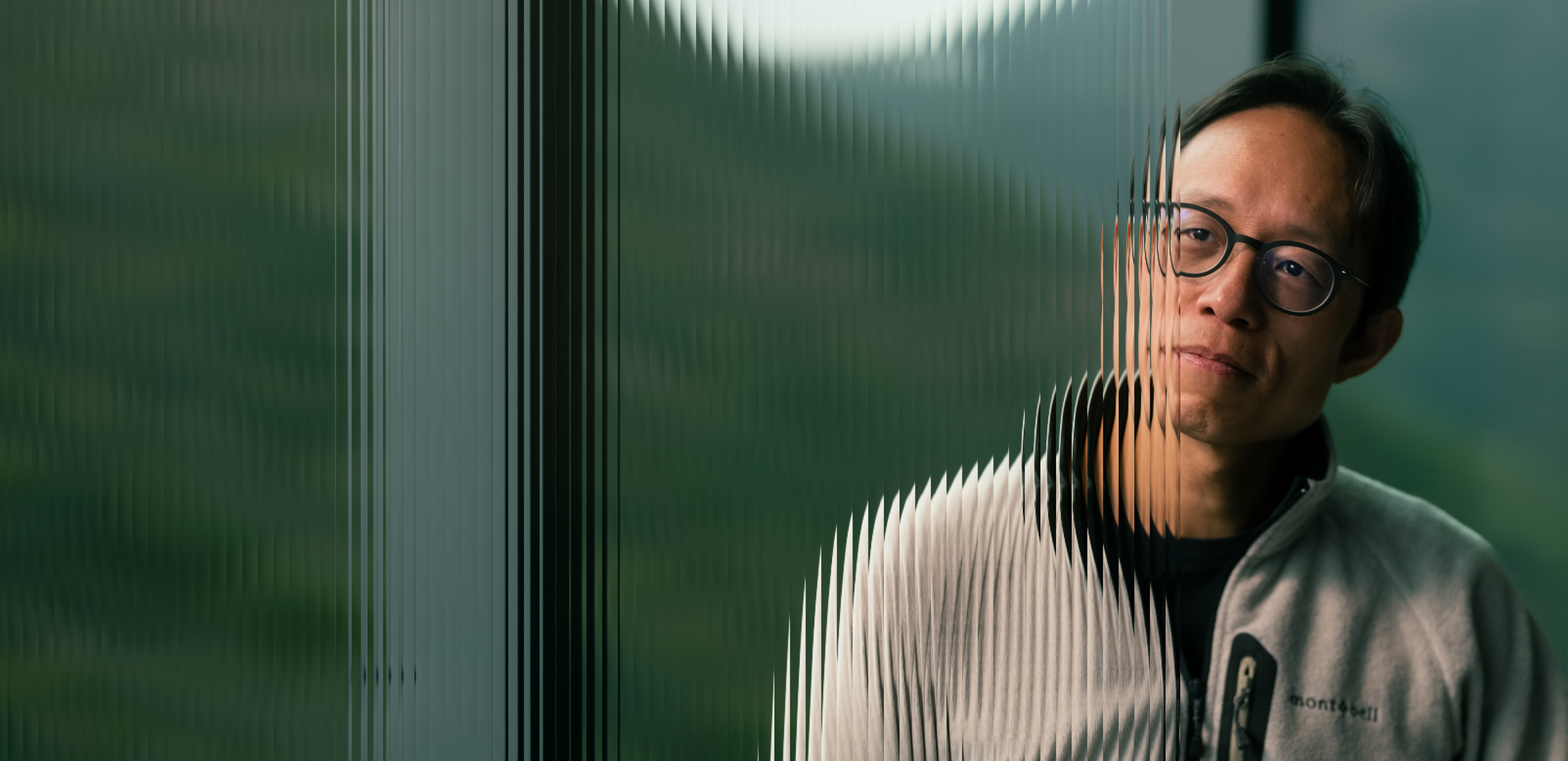
Hong Kong has long fashioned itself as the hinge between East and West, capital and technology. Few figures embody that intersection better than Yat Siu, co-founder and executive chairman of Animoca Brands. His literacy makes him one of the best spokesmen to connect the dots between money, culture and ownership in a digital realm. He has a real ability to base his thoughts on history, philosophy and literature, most notably when he defines the French Revolution as the roots of the reflection of a decentralised governance that blockchain systems now try to achieve. Born in Vienna, forged in the Cold War's cultural crossfire, and now living — as he cheerfully admits — "on a plane", Siu has been a first-mover in almost every digital wave of the past four decades: from CompuServe to early internet service providers, from mobile gaming to NFTs. Today, Animoca Brands sits at the centre of digital assets with over 628 portfolio companies and a conviction that blockchain is nothing less than the infrastructure of a new ownership economy. On the way to go public in the Nasdaq New York via a merger, he extended us an invitation to join him at the company's offices in the district of Wong Chuk Hang, next to the hills of Hong Kong Island.
The Node: You were born and raised in Vienna, studied music, ended up in Hong Kong. What brought you to digital assets?
Yat Siu: I was born and raised in Austria — a sort of a child of the 70s. I studied music because my parents were professional musicians, which is also the reason why I had to study it as an only child. But I grew up in the 70s and 80s, which was a very interesting political time — in some ways with similar echoes of today, but not quite as dramatic. Vienna was right in the middle of Eastern Europe, with the Iron Curtain, and of course Western Europe. My mum used to work at the Komische Oper in Berlin, and I would sometimes visit her and literally cross the border, and I would basically see what real communism looked like, back in the DDR. It had an indelible impression on my ideas of capitalism, socialism and the perspective of ownership — things that became very important to me later, even if I didn't understand them as a child.
I wasn't a very gifted musician — I was probably average. And in music, when you are around truly talented musicians, you see the difference, I'm afraid. Music taught me more about discipline than creativity. But in the mid-80s I used an Atari ST — it had a MIDI port — and I basically wrote one of the very first MIDI programs on a cheap keyboard to help me compose music, because I thought it was very strange to write music with a pen and paper. My professor did not like it at all — at that point, you weren't even allowed to use calculators for maths, never mind using a computer to compose music. However, I uploaded it to a pre-internet service called CompuServe, and people downloaded it and started sending me money in the mail. I was a teenager, and I received money I could not deposit because I didn't have a bank account. No PayPal, no crypto wallet.
Eventually Atari contacted me. I show up at their one-man office in Vienna as this kid, and they're like, who are you? I still got the opportunity — first as a consultant, but ultimately ended up working for Atari for a while. What that experience taught me was that it didn't matter how old I was, or that I was kind of a foreigner. In the 80s, opportunities for people who were not local were much, much harder. But when you were on CompuServe, you were a number — your email address was a number. People didn't even care. It was about what you could do, what your capability was, what you produced. And then I was able to create relationships, and friendships, and opportunities online with people I had never met. At that time, we were used to writing and sending letters. It was like literally sending bottles into the ocean and hoping something comes back. That was the world back then. Today we take it completely for granted.
That led me to America, studying computer science. When Atari went under, my entrepreneurial journey really started — we created a company that did virtual reality modelling (VRML) tools, later acquired by SGI. VRML was basically the HTML version of VR, but this was in 1992. The idea that we would be shopping online, living in a virtual metaverse, experiencing the world entirely digitally — that was already in people's minds in the early 90s. It just took 30 more years to become reality.
Fast forward: I started one of the very first ISPs in Hong Kong, called HKOnline, meaning I witnessed the first generation of the internet from the infrastructure layer. Which is why, to me, what's happening in Web3 and crypto is so synonymous with what happened to the early internet — I see all the same parallels. In 2009, we sold our messaging business to IBM, and that was really the birth of Animoca Brands. We pivoted completely into mobile games, had some success there. And then in 2017, with CryptoKitties, we discovered NFTs and how we could potentially disrupt the gaming industry. Today Animoca Brands is much more than that, but that was our entry point.
What is Animoca Brands today?
The best way to describe Animoca Brands is as a gateway to the utility tokens of Web3. Some people call them altcoins, but the problem with altcoins is that altcoins include memecoins and all sorts of things. We want to focus very much on the utility tokens that actually provide a service. And essentially we've become probably one of the largest investors in Web3, with over 628 portfolio companies today.
When I think about the early days of the internet, it's the same thing: do we know which one is going to be the next Amazon, the next Google? For those who remember the early search days, the number one search engine was Yahoo. The next ones were Magellan, Excite, Infoseek, Lycos. Google was nowhere to be found. However, if you had invested an equal amount of money in all of them and just sat with them, the returns on Google would have been absolutely exceptional. We're not a fund, so we do not have a balance sheet. Some people describe us as a kind of SoftBank of crypto.
So you're playing optionality across the digital assets landscape.
But it's not just the digital asset landscape. We think of crypto and blockchain as the whole new infrastructure for the new internet, which we often describe as Web3.
You told me once that when you invest in a company, you don't plan any exit strategy. Is it still true? What's your business model?
So the business model is we incubate companies. We do treasury management — we have a very sizable treasury, we generate yield from it. It's our own prop trading, and that has basically enabled us to be EBITDA positive for four or five years straight. Revenues are typically in the hundreds of millions of dollars. We also get returns from investments — because of the vast size of our portfolio, we are basically receiving exits from opportunities both in equity and from the token side over time. We have, amongst our investments, many unicorns sitting on very sizable positions. And it's not all in crypto — they're all projects that we aim to tokenize in some form or another.
One of my favourite examples is Colossal Biosciences — the company that restored the direwolf, and is famous for trying to restore the woolly mammoth, which I think they will succeed in doing. We invested in them in 2021 with the plan to tokenize their genetics data, which is actually a very useful use case for blockchain. We invested at a $300 million seed round valuation — that sounds crazy. Their last round, which just closed a couple of weeks ago, was at $10 billion. Of course, we're also known for our investments in Axie Infinity, The Sandbox, OpenSea, Polygon, Kraken, and Ledger. Some of them will have exits this year.
But generally speaking, we don't plan for an exit this month or this year. We are patient investors, and that's because we're not a fund. If you're a fund, you're kind of forced to look at your fund life cycle — eight years, ten years, you have to return capital. And the way I think of this: imagine if you were an investor in Amazon and Google and Facebook in 2005, public market, sitting on it, in a fund with a ten-year life. You would have sold in 2015. Not a good time. You would have made money, but not a good time. If you have conviction in something, you can play the long game. And if you're not a fund, you can actually play the long game for real.
And so the way to look at Animoca is: we're an index to that digital future. If you want exposure to crypto and Web3, you're going to own some Bitcoin, some Ethereum and Solana. But then you have to own everything else, which is today 35–40% of the market. We believe it will eventually be the majority of the market, because we think the altcoin economy is like the stock market and Bitcoin is like gold. Today, gold is $26–27 trillion; the stock market is $128 trillion. Why? Because we use the companies in the stock market and we save in gold. With crypto, it's the same: we use the altcoins, utility tokens, stablecoins, RWAs, and we save in Bitcoin. We think that right now it's flipped — altcoins are collectively smaller than Bitcoin — but we believe altcoins are going to be collectively larger than Bitcoin.
And if you're a regular investor wanting to invest in a16z or Paradigm — very successful crypto investors — good luck. They won't take your $1,000, they won't take your million dollars. $10 million? Maybe they'll talk to you. So Animoca becomes a much more democratised access to these opportunities.
CoinShares has a new investment thesis called Hybrid Finance — the convergence between traditional finance and public blockchains. How do you see Animoca in this new paradigm?
Up until the last couple of years, the whole world of crypto and TradFi was very much moving in parallel. TradFi was there, crypto was coming in closer but was never quite there. And then when ETFs came, I would argue that TradFi in some ways quasi gobbled up crypto. When you look at who were the major buyers of Bitcoin last year, it was mostly institutions, essentially through IBIT and various other ETFs. So the world is very much coming together. That means for companies like us, we have to become institutional as well. One of the reasons we are going public is because we have to appeal and communicate to the institutional world, and what the institutional world needs is accountability, transparency, systems that they're familiar with — regulation, all this type of stuff.
There are many ways to be institutional. If you're a token, you could be an ETF — you don't have to be a listed company. You also have the DAT (Digital Asset Treasury) story, which is struggling a little bit. But if you're an operating company like an exchange — like Coinbase, or in the future maybe Kraken or Ledger — then being public makes sense, because you are an operating business that either holds assets or is operating in that space. And that's how we see ourselves.
And for token projects from a utility standpoint — much like the stock market — if you don't have institutional backing, it's going to be very hard to be big.
The market has changed a lot since we first met, at Gitex Dubai in 2022. Do you have the same beliefs and convictions as before?
The conviction is the same, which is around stakeholder economies — the idea that we have ownership. To me, the fundamental purpose of blockchain and crypto is: how do we create more collective ownership in everything that we do? How do we make everyone become a capitalist? The way we turn everyone into a capitalist is to make them a capital owner. But what is the problem we have in the world? We don't have capital owners. We live in a capitalist world where 10% own the capital and 90% own nothing. And then we act surprised that the 90% don't like it. It's not just student loans — it's the fact that capitalism hasn't worked for them because we haven't found a way to include them. My parents' generation, if you were a taxi driver or a plumber, you could buy a house. Today, you can be a PhD at a university and cannot buy a house in your 30s.
We can't solve this with real estate unless you have a revolution — and there are many historical precedents that point towards those kinds of outcomes. So what's the paradigm? We think the paradigm is kind of like the new country, as it were, is digital ownership. Because we are spending all our time digitally, and the landlords we have to negotiate with are basically the big platforms: Facebook, Apple, Google. They are essentially all the platforms we're paying rent to. And I think blockchain is the answer to that.
How so?
If you look at Ethereum and Bitcoin — effectively the two largest blockchains in the world — the ownership layer is distributed, and every person who participated and helped contribute to the value of the network got the benefit from it. That to me is what stakeholder ownership means. When you look at blockchains, the ability to have 10 million or even 100 million stakeholders in one blockchain is possible. But you cannot have 100 million shareholders — the system is just too old. We are a public company in Australia. The management of even 10,000 shareholders is a nightmare. We have to print stuff to send out — we would basically bankrupt ourselves if we had millions of shareholders to print paper for. But on a blockchain, through verifiability, through digital identity, through smart contracts, all of this can happen seamlessly at literally fractions of a dollar.
We were in Davos, at a panel with Franklin Templeton's Jenny Johnson, who shared a very relevant story. In TradFi, the minimum transaction cost was $500 because it costs several dollars per transaction. But the tokenized version was a fraction of that, which meant that she could sell the same product for $20 or less. That's not just more opportunity and access — it also makes it more frictionless. I can't afford a $500 investment, but I can afford $10 or $20, and I can begin to invest in the same instrument that a person much wealthier than me can. That's what we talk about when we say democratised access. And that's where I think the world has to go. The concept of Web3 as essentially the web of ownership has been the same concept for us since the beginning. Blockchain is not only for financial purposes.
I wanted to address that because Lily Liu, President of the Solana Foundation, argued that companies should focus on finance, not gaming. You used to be known as a gaming company — what's your response?
It's not personal, and I know Lily well. Frankly, if you're Solana, I get it — her focus is internet capital markets. If it is true that the purpose of blockchain is only financial, then Solana has a very natural advantage to that story. I also understand why it looks this way. Because when you have ownership, the financial expression is the very first form in which you express it. If I have ownership, I could sell it, I could trade it — there is a value attached. But to me, the financial expression is the effect of ownership. It's not that because it's financial we have ownership — it's the other way around. Ownership gives us financial value, but so much more.
When I have ownership, it expresses my identity. It is something that shows who I am. Where I choose to live is not just about whether a house is worth a lot of money — you also buy the house because your community is there, because your family is there, because it's the country that you love. How many people choose to live in France because they love France, not because they love the taxes? If it were purely financial, every French person would probably move to Dubai. But we're not like that as humans.
My objection — which I wrote about — was that blockchain lays the foundation of ownership, which is a very fundamental human thing. If we reduce the idea that blockchain, as future internet, is only about finance, then we do a disservice to its potential. For most of us — and this is a difference between people on Wall Street and everyone else — money is not our end. Money is a means to an end. The good life, for instance. There's a small percentage of the world where money is the final means, because it's power, it's status within the circle. Most of them work on Wall Street, and many of them have moved to crypto. And so I think we're getting a confirmation bias. You go talk to 99% of the world and they say: I live in a good house, I'm happy, I have my kids, I choose to live here not because I want to make money, but because I'm happy. That's what's innately human about us. And the salt around this is ownership. So it's very much about a future where we can have an ownership stake in everything that we do — humans are not purely financial engines.
The Node: Do you still see a future for The Sandbox and the ApeCoin ecosystems?
Yat Siu: Yes, I see a future in all of it. I think the challenge we've seen is where the value was versus where it is today. When The Sandbox had an FDV of, I think, $16 billion in 2021 — I'm not saying the market didn't have excessive exuberance, I'm just saying the public statistics were very clear that it didn't underlie the fundamentals at that moment. So now you have many game companies in our portfolio at maybe $30–50 million market cap. Some have gone away. Some have hundreds of millions. When your entry as an investor is $5 or $10 million, that's a good outcome. Most gaming studios, when they sell, sell for under $50 million. Indie studios do not raise $50 million seed rounds — they raise sub-$10 million, sub-$5 million. And that just means the market has become more balanced and more healthy.
By the way, in 2018 we invested in OpenSea at a $50 million opening valuation, Axie Infinity was $8 million, and we bought The Sandbox for $4.5 million. Those were fair valuations. And now we're back at this point — investing in companies at $5, $8, $10 million valuations. Whether they become a billion or $50–100 million doesn't matter. It's about the entry point. People say: Bitcoin was $120,000, now look, it's $70,000. Did you look three years ago? We entered in December 2018 when Bitcoin was $3,000. It doesn't invalidate the market — it's just the market value for that moment in time. Maybe ApeCoin and The Sandbox are undervalued, but do I think their value will be 100x from here? I don't think so, unless they bring 100x more users — and now you can measure that based on on-chain activity or TVL. Instead of one or two deals that are billions of dollars, you have 100 deals that are $50 million. I'm okay with that. That's actually how the normal world works.
The Node: Last question — what is money to you, Yat?
Yat Siu: Fundamentally, it's a social system. I think of money as probably the OG social system. It's representative of more than just the ability to transact and store value — it's also a representation of power. But to me, it's primarily a social system. Money is the perfect icebreaker. I can do business and transactions with a stranger anywhere in the world. I can go to a local bakery, I don't know who you are, but because I have money, I can begin a transaction with you. And this process of buying is the beginning of our relationship.
I think this is where this part of the world, which is more capitalist — especially Hong Kong and Dubai — we make friendships over money. We do business and then we become friends. This is not very European. And I think this is the contrast between the relationships with entrepreneurship, capitalism and crypto, because they're all tied together. Which is why I think Europe has a disadvantage, unfortunately. They don't view money in a social construct — they view it in a power construct. Purely as power, which means that if you have too much money, you have too much power. And it's something that you have to be afraid of, rather than thinking of it as ultimately its social engine. If we didn't have money in the earliest of days — whether it's seashells, or gold, or some kind of coin — we wouldn't have global commerce. We wouldn't have relationships. That's why I would describe money as the OG social system.