
This website uses cookies
We use cookies to personalise content and ads, to provide social media features and to analyse our traffic. We also share information about your use of our site with our social media, advertising and analytics partners who may combine it with other information that you’ve provided to them or that they’ve collected from your use of their services.
Consent Selection
Details
  • Necessary cookies help make a website usable by enabling basic functions like page navigation and access to secure areas of the website. The website cannot function properly without these cookies.

    • Learn more about this provideropens in a new window
      CookieConsentStores the user's cookie consent state for the current domain
      Maximum Storage Duration: 1 yearType: HTTP Cookie
    • Learn more about this provideropens in a new window
      bcookieUsed in order to detect spam and improve the website's security.
      Maximum Storage Duration: 1 yearType: HTTP Cookie
      li_gcStores the user's cookie consent state for the current domain
      Maximum Storage Duration: 180 daysType: HTTP Cookie
    • Learn more about this provideropens in a new window
      datadomeUsed in context with the website's BotManager. The BotManager detects, categorizes and compiles reports on potential bots trying to access the website.
      Maximum Storage Duration: 1 yearType: HTTP Cookie
    • _pk_testcookie_domainThis cookie determines whether the browser accepts cookies.
      Maximum Storage Duration: 1 dayType: HTTP Cookie
    • __cf_bm [x3]This cookie is used to distinguish between humans and bots. This is beneficial for the website, in order to make valid reports on the use of their website.
      Maximum Storage Duration: 1 dayType: HTTP Cookie
  • Preference cookies enable a website to remember information that changes the way the website behaves or looks, like your preferred language or the region that you are in.
    • Learn more about this provideropens in a new window
      lidcRegisters which server-cluster is serving the visitor. This is used in context with load balancing, in order to optimize user experience.
      Maximum Storage Duration: 1 dayType: HTTP Cookie
  • Statistic cookies help website owners to understand how visitors interact with websites by collecting and reporting information anonymously.
    • Learn more about this provideropens in a new window
      guestRegisters data on visitors' website-behaviour. This is used for internal analysis and website optimization.
      Maximum Storage Duration: 1 monthType: HTTP Cookie
    • Learn more about this provideropens in a new window
      personalization_idThis cookie is set by Twitter - The cookie allows the visitor to share content from the website onto their Twitter profile.
      Maximum Storage Duration: 400 daysType: HTTP Cookie
    • _pk_uidUsed by Piwik Analytics Platform to identify the visitor on repeat visits to the website.
      Maximum Storage Duration: 1 yearType: HTTP Cookie
      _pk_id#Collects statistics on the user's visits to the website, such as the number of visits, average time spent on the website and what pages have been read.
      Maximum Storage Duration: 1 yearType: HTTP Cookie
      _pk_ses#Used by Piwik Analytics Platform to track page requests from the visitor during the session.
      Maximum Storage Duration: 1 dayType: HTTP Cookie
    • FPGSIDRegisters statistical data on users' behaviour on the website. Used for internal analytics by the website operator.
      Maximum Storage Duration: 1 dayType: HTTP Cookie
      FPIDRegisters statistical data on users' behaviour on the website. Used for internal analytics by the website operator.
      Maximum Storage Duration: 400 daysType: HTTP Cookie
      FPLCRegisters a unique ID that is used to generate statistical data on how the visitor uses the website.
      Maximum Storage Duration: 1 dayType: HTTP Cookie
    • _gaRegisters a unique ID that is used to generate statistical data on how the visitor uses the website.
      Maximum Storage Duration: 2 yearsType: HTTP Cookie
      _ga_#Used by Google Analytics to collect data on the number of times a user has visited the website as well as dates for the first and most recent visit.
      Maximum Storage Duration: 2 yearsType: HTTP Cookie
  • Marketing cookies are used to track visitors across websites. The intention is to display ads that are relevant and engaging for the individual user and thereby more valuable for publishers and third party advertisers.
    • Learn more about this provideropens in a new window

      Some of the data collected by this provider is for the purposes of personalization and measuring advertising effectiveness. The provider may use the IP Addresses for ads measurement and ads personalization.

      ads/ga-audiencesUsed by Google AdWords to re-engage visitors that are likely to convert to customers based on the visitor's online behaviour across websites.
      Maximum Storage Duration: SessionType: Pixel Tracker
    • Learn more about this provideropens in a new window
      userRefererDetermines how the user accessed the website. This information is used by the website operator in order to measure the efficiency of their marketing.
      Maximum Storage Duration: 1 monthType: HTTP Cookie
    • Learn more about this provideropens in a new window
      #:session-dataTracks the individual sessions on the website, allowing the website to compile statistical data from multiple visits. This data can also be used to create leads for marketing purposes.
      Maximum Storage Duration: PersistentType: HTML Local Storage
      eng_mtTracks the conversion rate between the user and the advertisement banners on the website - This serves to optimise the relevance of the advertisements on the website.
      Maximum Storage Duration: PersistentType: HTML Local Storage
      t_gidThis cookie assigns a specific visitor ID, when the visitor interacts with ads or content from the website - this allows the website to target the visitor with similar ads or content.
      Maximum Storage Duration: 1 yearType: HTTP Cookie
      t_pt_gidCollects information on user preferences and/or interaction with web-campaign content - This is used on CRM-campaign-platform used by website owners for promoting events or products.
      Maximum Storage Duration: 1 yearType: HTTP Cookie
      taboola global:user-idSets a unique ID for the visitor, that allows third party advertisers to target the visitor with relevant advertisement. This pairing service is provided by third party advertisement hubs, which facilitates real-time bidding for advertisers.
      Maximum Storage Duration: PersistentType: HTML Local Storage
      taboola_session_idThis cookie is used to collect information on a visitor. This information will become an ID string with information on a specific visitor – ID information strings can be used to target groups with similar preferences, or can be used by third-party domains or ad-exchanges.
      Maximum Storage Duration: SessionType: HTTP Cookie
    • Learn more about this provideropens in a new window
      1/i/adsct [x2]Collects data on user behaviour and interaction in order to optimize the website and make advertisement on the website more relevant.
      Maximum Storage Duration: SessionType: Pixel Tracker
      muc_adsCollects data on user behaviour and interaction in order to optimize the website and make advertisement on the website more relevant.
      Maximum Storage Duration: 400 daysType: HTTP Cookie
      guest_idCollects data related to the user's visits to the website, such as the number of visits, average time spent on the website and which pages have been loaded, with the purpose of personalising and improving the Twitter service.
      Maximum Storage Duration: 400 daysType: HTTP Cookie
      guest_id_adsCollects information on user behaviour on multiple websites. This information is used in order to optimize the relevance of advertisement on the website.
      Maximum Storage Duration: 400 daysType: HTTP Cookie
      guest_id_marketingCollects information on user behaviour on multiple websites. This information is used in order to optimize the relevance of advertisement on the website.
      Maximum Storage Duration: 400 daysType: HTTP Cookie
    • _gcl_auUsed by Google AdSense for experimenting with advertisement efficiency across websites using their services.
      Maximum Storage Duration: 3 monthsType: HTTP Cookie
      _gcl_lsTracks the conversion rate between the user and the advertisement banners on the website - This serves to optimise the relevance of the advertisements on the website.
      Maximum Storage Duration: PersistentType: HTML Local Storage
    • pardot [x2]Used in context with Account-Based-Marketing (ABM). The cookie registers data such as IP-addresses, time spent on the website and page requests for the visit. This is used for retargeting of multiple users rooting from the same IP-addresses. ABM usually facilitates B2B marketing purposes.
      Maximum Storage Duration: SessionType: HTTP Cookie
  • Unclassified cookies are cookies that we are in the process of classifying, together with the providers of individual cookies.
    • cs_analytics_ip_blockedPending
      Maximum Storage Duration: SessionType: HTTP Cookie
      user_tokenPending
      Maximum Storage Duration: 1 yearType: HTTP Cookie
    • _twpidPending
      Maximum Storage Duration: SessionType: HTTP Cookie
Cookie declaration last updated on 8/20/26 by Cookiebot
[#IABV2_TITLE#]
[#IABV2_BODY_INTRO#]
[#IABV2_BODY_LEGITIMATE_INTEREST_INTRO#]
[#IABV2_BODY_PREFERENCE_INTRO#]
[#IABV2_BODY_PURPOSES_INTRO#]
[#IABV2_BODY_PURPOSES#]
[#IABV2_BODY_FEATURES_INTRO#]
[#IABV2_BODY_FEATURES#]
[#IABV2_BODY_PARTNERS_INTRO#]
[#IABV2_BODY_PARTNERS#]
About
Cookies are small text files that can be used by websites to make a user's experience more efficient.

The law states that we can store cookies on your device if they are strictly necessary for the operation of this site. For all other types of cookies we need your permission.

This site uses different types of cookies. Some cookies are placed by third party services that appear on our pages.

You can at any time change or withdraw your consent from the Cookie Declaration on our website.

Learn more about who we are, how you can contact us and how we process personal data in our Privacy Policy.

Please state your consent ID and date when you contact us regarding your consent.
Image Rumors of Bitcoin’s liquidity problems have been greatly exaggerated

Rumors of Bitcoin’s liquidity problems have been greatly exaggerated

Timer7 min read

  • Finance
  • Bitcoin
  • Data

TL;DR

  • There’s a widespread narrative out there that bitcoin has an existing or growing supply-side liquidity problem

  • The two arguments I most often see presented in support of this idea are:
    1. Exchange coin balances are decreasing
    2. The number of coins in illiquid UTXO bands is increasing

  • I argue that these arguments are both missing the key, almost obvious, observation that price is going up, so supply-side liquidity in dollar terms is actually exploding upwards

  • In fact, if liquidity was a major problem in bitcoin, given the current major upswing in demand, shouldn’t we be seeing sharp volatility swings to the upside? That’s not what’s happening—quite the opposite

  • Compared to previous bull markets, upwards price movements have been tepid, yet much more steady and with limited downside volatility

  • Meanwhile trading volumes are the largest ever, especially when we correctly account for liquidity in paper bitcoin such as ETFs

  • I don’t see much evidence for lack of liquidity, nor do I expect it to happen in the future

  • Looking at on-chain metrics alone as a measure of liquidity can be deceiving—gold almost never moves, but gold liquidity is huge via its paper market

The type of commentary you’re about to read is actually my least favorite to write. Nevertheless it’s an important one, because it dispels a growing narrative in the Bitcoin sphere which I consider to be incomplete, and which risks generating more bullish sentiment than is arguably warranted.

To be clear, I am currently bullish, but I am also a sucker for the truth, so whenever narratives that my confirmation bias would love to get onboard with still don't sit quite right with my inner truth-seeking analyst-self, I have to say something. So here it is: Bitcoin does not have a supply-side liquidity issue. And I doubt one will materialise any time soon.

There’s a narrative out there that there aren’t enough coins 

I almost guarantee that you’ve seen one of these two ideas presented somewhere:

  1. Exchange coin balances are decreasing

  2. The number of coins in illiquid UTXO bands is increasing

Both are being used as support for the idea that there is a supply-side liquidity issue, often followed by the more or less explicit implication that this risks a ‘melt up’ in bitcoin prices as buyers will be unable to source coins to satisfy their demand. Below I’ve added some charts you might also have seen.

Total number of coins on exchangesThis first one is Glassnode’s estimate of the total coin balances of bitcoin exchanges.

Quarterly illiquid Bitcoin supply valueThe second one is a chart from the Fidelity report I linked to above. Here, an illiquid coin is defined as a coin that hasn’t moved for 7+years (and don’t get caught up in that definition, it doesn’t matter), plus coins held by bitcoin treasury companies. I didn’t bother adding the ones from treasury companies because the graph has the same exact shape without them—which ties directly into the point I will make shortly.

It’s an interesting paper, and to be clear, I largely agree with most of the points it makes such as inflows into ETFs and treasury companies looking awfully sticky. That’s an observation we’ve chatted about internally for a while now, and it’s been fascinating to watch how treasury companies have basically slurped up a lot of bitcoin’s previous speculative demand, and with it, apparently, a lot of bitcoin’s volatility.

However, I worry that the focus on bitcoin’s seemingly falling nominal liquidity, risks misrepresenting reality without a fuller picture painted. On the surface, especially given bitcoin’s limited supply, the idea that bitcoin might face a growing supply-side liquidity issue might seem compelling. There’s just one problem: when the price goes up, one bitcoin provides more dollar liquidity than it used to, and the price is rapidly increasing.

That means that even though the nominal count of liquid bitcoin available in the market might be lower than before, the value of the available liquid supply is still much higher. In order to illustrate this, I have plotted the quarterly liquid bitcoin supply value below, and lo and behold, it’s going up at basically the exact same rate as the illiquid supply—because the overwhelmingly impactful driver here is the price.

Quarterly liquid Bitcoin supply valueJust to hit that point home, I’ve also plotted the value of total coins on exchanges below, and as should be obvious, there is no liquidity problem. Not only is there almost twice as much liquidity available at the time of the last bull market peak, we now also have a huge new pool of bitcoin liquidity trading on L2s—that is, the Nasdaq.

Value of total coins on exchangesI haven’t included a chart of the daily bitcoin ETF trading volumes on the Nasdaq, but they are substantial. Moreover, there are hundreds of thousands of bitcoin available on those markets. In order for there to be a risk of ‘melt up’ kinds of upside volatility in bitcoin, new demand would probably have to materialse on the order of more than a million coins per year at current prices.

There will always be enough coins

That might sound trite, but since bitcoin is in a practical sense infinitely divisible (it can be made even more divisible than currently if for some reason needed) any amount of bitcoin will suffice to meet any amount of dollar demand. As price goes up then, the nominal dollar amount needed to even provide enough inflow to match the outflow also needs to go up.

In other words, the implication that supply-side liquidity is shrinking down to levels where rapid upside volatility should be on our short term bingo cards is a bit fanciful. To my mind, the only thing that could cause a ‘melt up’ or ‘God candle’ or whatever description is commonly used for ultra-rapid upwards volatility, is a complete lack of demand for the denominator: the US dollar. While that might indeed be what’s in store over the very long term, I just don’t see it happening any time soon.

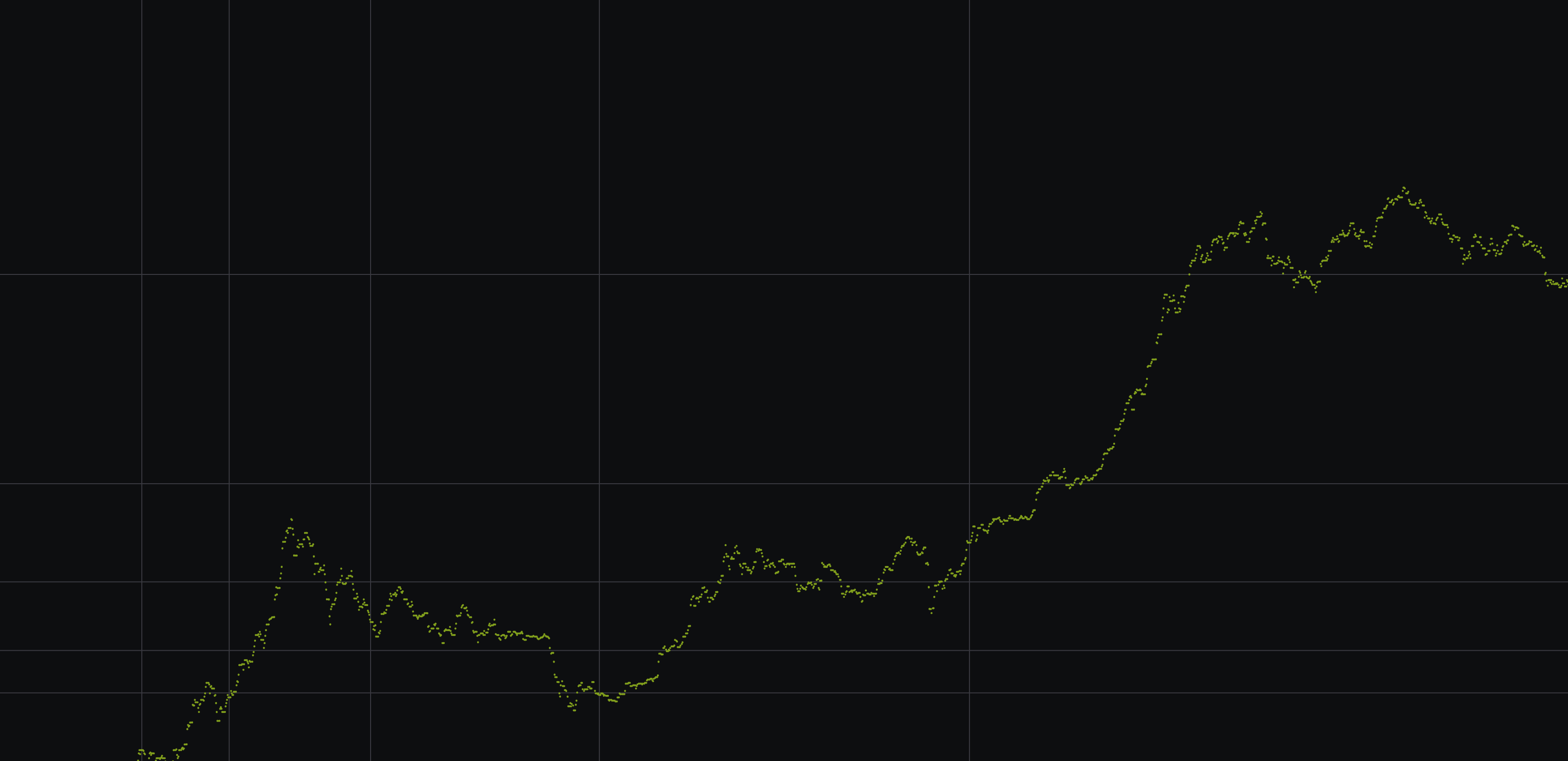
Long term holders selling (RHS) into bitcoin price run-ups (LHS)The US dollar is the largest, most liquid currency in the world, and it is in the process of eating away at the total global monetary demand through its new technological wrapper, the stablecoin. I do think the dollar will come to an ugly demise sometime this century, but these things tend to take decades to play out and I am certainly not holding my breath. In the meantime, with the bitcoin price rising steadily, and long time holders selling slowly into new demand during every price runup, there looks to be plenty of coins to go around at whatever price is prevailing.

Published onNov 3rd, 2025

Writer
Led Bitcoin Research since 2017.

related articles

Welcome to CoinShares

Personal Data

0102

When you visit CoinShares website, cookies enhance your experience. They help us to show you more relevant content. Some cookies are necessary for the site to work and will always be active. Blocking some types of cookies may impact your experience of the website and the services which we offer on our website.

We use cookies on our site to optimize our services. Learn more about our EU cookie policy or US cookie policy.

  • Necessary
    Question circle icon
  • Preferences
    Question circle icon
  • Statistical
    Question circle icon
  • Marketing
    Question circle icon
Necessary cookies help make a website usable by enabling basic functions like page navigation and access to secure areas of the website. The website cannot function properly without these cookies.
Preference cookies enable a website to remember information that changes the way the website behaves or looks, like your preferred language or the region that you are in.
Statistic cookies help website owners to understand how visitors interact with websites by collecting and reporting information anonymously.
Marketing cookies are used to track visitors across websites. The intention is to display ads that are relevant and engaging for the individual user and thereby more valuable for publishers and third party advertisers.