


BitRiver’s bust and the emerging Russian crypto order
 13 min read
BitRiver was Russia's largest crypto miner, with a Stanford-educated founder and clients worldwide. Then the oligarchs and the tax authorities came calling.
In just a few years, Western sanctions over the war in Ukraine have brought crypto from the periphery of Russia’s economy to centre stage. Crypto has given the Kremlin a way to keep energy revenues flowing, settle trades outside the dollar system, and build a parallel financial architecture the West can’t easily reach. It’s too early to tell whether the Russian crypto industry will undergo an asset redistribution1 similar to that happening in the broader Russian economy, but it’s clear the industry has become too strategically vital to leave to independent players.
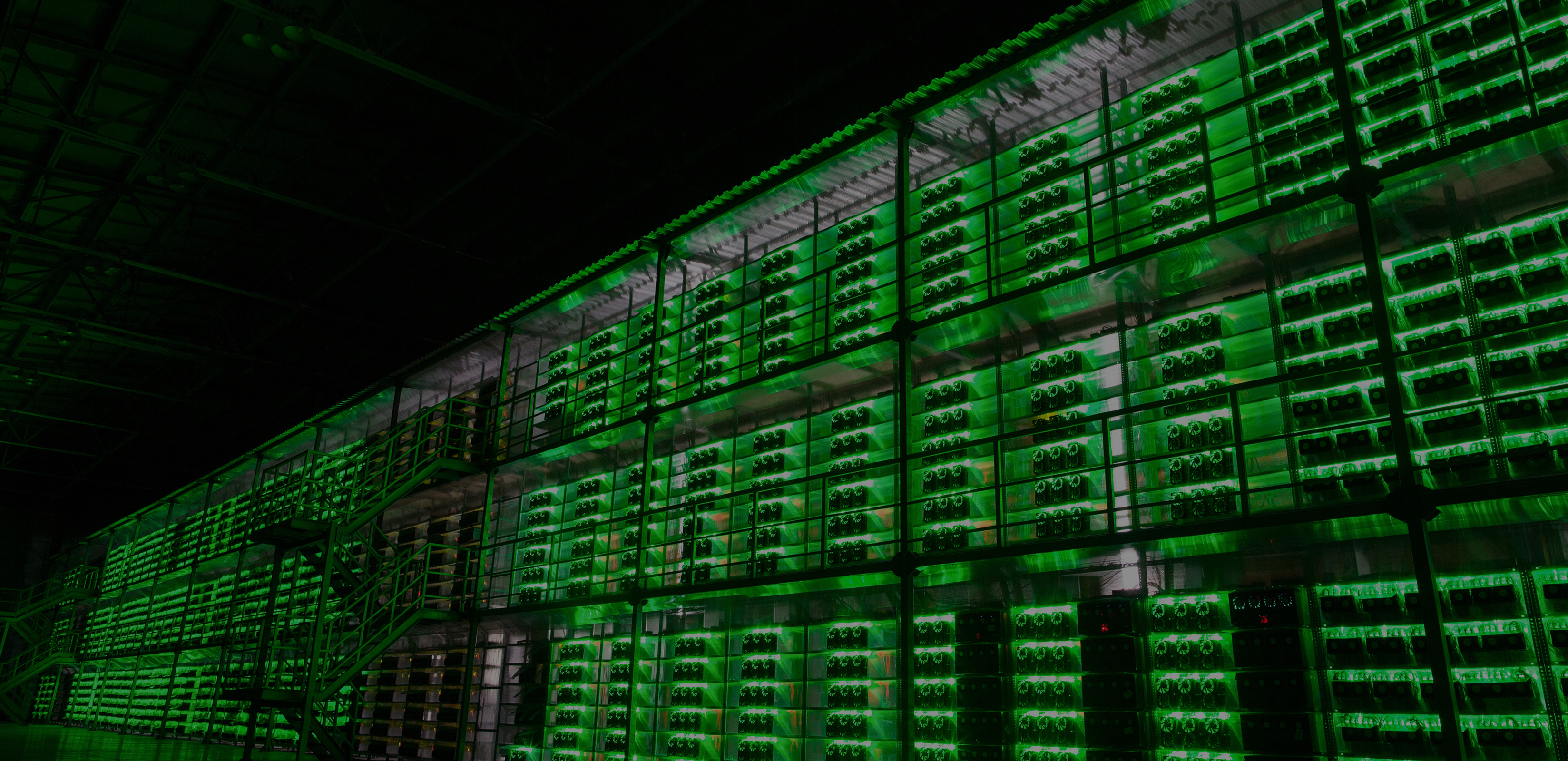
The fate of BitRiver, until recently the country’s largest crypto mining company, offers one window into that future. When, in 2019, I first visited BitRiver’s buzzing server farm on the outskirts of the Siberian city of Bratsk, the growing crypto-mining business had hundreds of shelves of roaring ASIC2 machines working for investors in Russia, the US, Japan, Brazil, Lithuania, India, Poland, and China.
BitRiver had a global clientele, powerful partners, and a seat at the table with regulators and legislators. According to some estimates, it accounted for up to 50% of all crypto mining in Russia. Its young founder, Igor Runets, had an estimated net worth of around $230 million in 20243.
Now, its servers are silent. The company is under US sanctions, is going through bankruptcy, and the Stanford-educated Runets, 39, is under house arrest with a criminal case looming. While BitRiver's fall can be traced to real business and legal problems, it also signals something larger: the end of Russia's era of crypto independence.
This fits a familiar pattern in post-Soviet Russia – an independent player pushed aside as the government and state-linked firms move to assert control over a previously neglected sector.
The Yukos of mining?
The most striking historical example is Yukos: the oil major was dismantled through a targeted tax case in 2003-2004, its assets absorbed by state-controlled Rosneft. Its CEO, Mikhail Khodorkovsky, was imprisoned for a decade. More recently, Yandex – Russia's dominant tech platform, often referred to as “Russia’s Google”4 – completed a restructuring after years of Kremlin pressure, with its Russian operations sold to a consortium of state-aligned investors. BitRiver built its business in a strategic partnership with En+, an energy conglomerate with deep ties to the Russian state. The group’s owner, Oleg Deripaska, is one of Russia’s original post-Soviet oligarchs who emerged as a victor in the so-called “aluminium wars” over control of that sector of the 1990s5. Leaked US diplomatic cables from 2006 described Deripaska as "among the 2–3 oligarchs Putin turns to on a regular basis."6
In 2025, En+ turned against its partner. En+ and its subsidiary, Infrastruktura Sibiri, filed and won several lawsuits against BitRiver and its subsidiaries for breach of contract and unpaid electricity bills. BitRiver was essentially pushed into bankruptcy after Infrastruktura Sibiri disputed its claim that it could have used frozen assets to pay off its debts.
A subsidiary of another Russian industrial giant, Nornickel, also sued BitRiver for unpaid power bills. Nornickel is led by Vladimir Potanin, another oligarch with long and close ties to Putin.
BitRiver’s cash troubles were in part a result of new policies for crypto mining Russia adopted in 2024, when a new law regulating the industry was passed. In December 2024, the government prohibited or severely limited crypto mining in some regions. A 100-megawatt facility that BitRiver had built in Buryatia, a region of southern Siberia bordering Mongolia, never opened, turning the investment into an irreversible loss.
BitRiver then ran into another kind of trouble: tax authorities discovered that the company’s clients were using crypto mining to evade taxes, prompting an investigation into BitRiver’s affairs that led to Runets being placed under house arrest. He is now facing tax evasion charges himself.
The tax evasion pattern was not unique to BitRiver, experts say: before the dedicated law was passed in late 2024, the industry had been operating in the gray zone, and not everyone rushed to adapt to the new regulations once they were in place.
BitRiver got into trouble because it was the largest and most well-known miner, but it won’t be the last, said Alexander Kalmykov, former head of blockchain initiatives at the state oil and gas company Gazpromneft and currently the head of the Gas Energy Mining consultancy firm.
“I’m sure it won't be just BitRiver. The law has started working, and the tax authorities are studying who has done what,” Kalmykov says.
Denis Slabakov, the New York-based head of the New Mining Company, which previously operated in Russia, sees the same trend.
“Everyone is being asked questions now. Everyone I talk to feels additional attention [from the tax authorities],” he said.The electricity restrictions sweeping Russia's mining regions are compounding the pressure. They have pushed miners out of regions with the cheapest power, thereby raising the average cost of the most crucial component of their businesses. As electricity from the grid has become unaffordable, only those with their own energy sources will be viable, says Kalmykov. That means, in practice, oil and gas companies – all the largest ones in Russia already have their own gas-powered mining operations. "Power generation on natural gas is the only viable option with the current electricity prices," Kalmykov says.
Michael Jerlis, founder and CEO of the Hong Kong-based mining firm EMCD, agrees that the restrictions are encouraging concentration around state-affiliated players. "New big institutional players are emerging: oil and gas companies, even banks are rumored to have mining capacities," Jerlis says. "The ASIC hosting business is dying," he added, noting that retail miners are being driven out of business.
The new regulations, combined with the higher energy costs, will likely lead to a consolidation of mining power in the hands of big institutional players, pushing independent founders aside.
From the fringe to essential infrastructure
Since 2024, Russia has moved systematically to bring the sector under state control. It passed mining laws that mandate registration with federal authorities and a taxation regime for miners7. Crypto has been legalised for cross-border trade under the central bank’s oversight8. State-owned energy and financial giants have taken the cue. Gazprom has launched a dedicated mining subsidiary with a reported $500 million commitment9. Nuclear energy firm Rosatom, aluminium producer Rusal, and other state-linked institutions have also turned to mining as an additional source of income.
In the first half of 2025, Russia conducted crypto exports and imports worth over $12.5 billion10, according to Boris Titov, Putin’s special representative for relations with international organisations. Russia’s total foreign trade turnover in 2025 was $697 billion.11
The government has backed A7A5, a ruble-backed digital token launched jointly by Russian firm A7, Kyrgyzstan-based Old Vector, and Russian PromStroyBank, and structured to enable cross-border transactions outside the Western financial system.
Despite being sanctioned by the US in August 2025, the coin has grown rapidly, reaching a market capitalisation of over $535 million and processing $100 billion in total transaction volume between February 2025 and February 2026, according to Oleg Ogienko, A7A5's director for regulatory and overseas affairs.
The new crypto bill, introduced in the national parliament in April, states that cryptocurrency will remain an asset people can buy and sell, but not legal tender. Non-qualified investors will be allowed to buy a limited amount of “the most liquid” cryptocurrencies each year via a licensed broker. The bill also fully legalises and regulates cryptocurrency payments in export and import operations.
The new law, which is expected to be passed and signed by this summer, will make it tough for smaller crypto businesses to survive, says Yuriy Brisov, a Europe-based partner at Russia’s Digital & Analog Partners law firm.
It will require crypto exchanges to get a local licence, which Brisov expects that only major Russian banks and stock exchanges will be able to obtain. But these platforms will be cut off from the global market, as any official Russian crypto exchange will be sanctioned. The industry will be legalised but “completely frozen,” Brisov says.
“It’s a deliberate approach,” he says. “The central bank’s policy is not dictated by the needs of the market; it’s dictated by the needs of the government, which realised that it can use crypto for sanctions evasion – so it needs to take it under its control.”
Political involvement in Russia’s crypto mining sector has expanded in recent years. In 2023, for example, the company of the former minister of communications, Nikolay Nikiforov, purchased a power plant with the goal of opening a mining facility nearby.12
Verstka and Novaya Gazeta Europe, independent news sites produced by exiled Russian journalists, found that a number of mining firms in Russia had indirect ties to members of parliament and former public officials, which include the relatives of two Russian parliament members, Andrey Lugovoy and Valery Seleznev, and people affiliated with Putin’s friend, banker Yury Kovalchuk.13 14
The Russian state itself might soon become a significant crypto holder: new amendments to the penal code, signed by Putin in February this year, allow the confiscation of cryptocurrency as part of criminal prosecution, along with other property.15
Along with the upcoming crypto regulation, the Bank of Russia is developing the digital ruble – it’s scheduled for the roll-out in September.16 Meanwhile, the Ministry of Finance has developed a roadmap for real-world asset tokenisation, which it expects to facilitate investment in Russian assets.17
The Kremlin’s direction is clear – the crypto industry is now being treated as strategic national infrastructure. The question is: who will be allowed to build it, and profit from it?
Anna Baydakova
1Burkhardt, Fabian, et al. 2026. From Original Sin to War Expropriation: Asset Redistribution in Russia. Cedar, January 2026
2ASIC: dedicated crypto mining chip
3Bloomberg News. 2024. “Stanford Grad Igor Runets Builds Fortune as Putin Reverses Crypto Stance.” September 27, 2024.
4Oi, Mariko. 2024. “Yandex: Owner of 'Russia's Google' pulls out of home country.” BBC News, February 5, 2024.
5Harding, Luke. 2008. “Oleg Deripaska: The Rise of the Russian Oligarch.” The Guardian, October 22, 2008.
6Kheel, Rebecca. 2018. “Five Things to Know About Oleg Deripaska.” The Hill, April 10, 2018.
7Singh, Amitoj. 2024. “Russia Legalizes Crypto Mining and Brings an Experimental Regime.” CoinDesk, July 30, 2024.
8Grigera Naón, Camila. 2025. “Russia Is Creating a Legal System for Crypto to Avoid Western Sanctions.” BeInCrypto, October 21, 2025.
9Ustinova, Anna. 2024. “Gazprom Will Build a Large Data Center in Veliky Novgorod.” Vedomosti, September 9, 2024. (In Russian)
10Alekseevskikh, Anastasiya. 2025. “Crypto Has Been Compared to Gold in Russia.” Gazeta.ru, September 25, 2025. (In Russian)
11Kommersant. 2026. “Exports in 2025 Fell Alongside Imports.” Kommersant, February 11, 2026. (In Russian)
12CNews. 2026. “Ex–Russian Communications Minister Is Buying Power Plants for Cryptocurrency Mining.” CNews, January 5, 2026. (In Russian)
13Verstka. 2023. “Who Are Russian Industrial Crypto Mining Companies Connected To?” Verstka, October 11, 2023. (In Russian).
14Basmanov, Alexey. 2025. “Crypto for the Chosen: Who Russia’s Largest Mining Companies Are Connected To.” Novaya Gazeta Europe, September 26, 2025. (In Russian)
15Garant.ru. 2026. “President Has Signed a Law Recognising Cryptocurrency as Property within the Context of the Criminal Code.” Garant.ru, February 24, 2026. (In Russian)
16Bank of Russia. 2026. “Digital Ruble.” Bank of Russia, accessed April 21, 2026. (In Russian).
17Ministry of Finance of the Russian Federation. 2025. “Tokenization of the Financial Market and International Settlements.” Ministry of Finance of the Russian Federation, September 4, 2025. (In Russian).
Published onJul 17th, 2026
