



Hyperliquid et Solana : une exposition indirecte à l'essor des marchés prédictifs
 7 min de lecture
Les marchés prédictifs ont quitté le statut de curiosité de niche pour s'imposer comme l'un des compartiments les plus dynamiques de la finance. Le volume notionnel mensuel cumulé des transactions de Kalshi et Polymarket, les deux plus grandes plateformes, est passé de 4,5 milliards de dollars en septembre 2025 à 43,7 milliards en juin 2026, ce dernier chiffre ayant été porté par les premières semaines de la Coupe du monde de la FIFA 2026.1 L'analyse indépendante du Pew Research Center, fondée sur les données de The Block, situe ce même agrégat autour de 24 milliards de dollars en avril 2026, ce qui confirme la tendance.2 Kalshi a depuis levé 1 milliard de dollars sur une valorisation de 22 milliards et discutait en juin, selon certaines informations, d'un nouveau tour de table à 40 milliards, tandis qu'Intercontinental Exchange a engagé 2 milliards de dollars dans Polymarket, principalement pour accéder à ses données.3
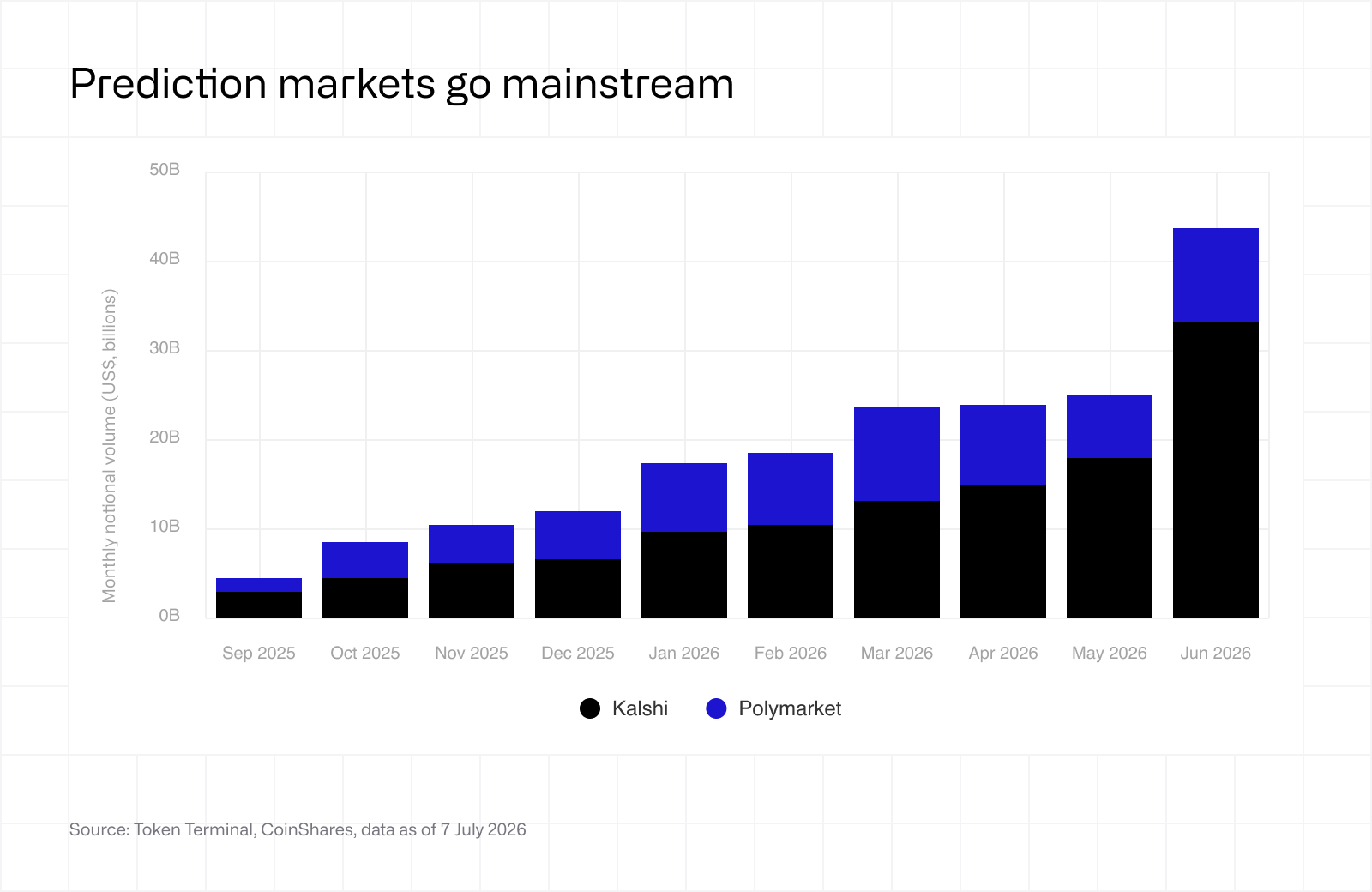 Aucune des deux sociétés n'est cotée en Bourse et aucun token ne confère de participation directe dans l'une ou l'autre plateforme. Mais deux réseaux blockchain, Hyperliquid et Solana, s'imposent peu à peu comme l'infrastructure sur laquelle repose cette croissance, et leurs tokens natifs, HYPE et SOL, offrent aux investisseurs un moyen de s'exposer indirectement à cette tendance.
Hyperliquid a intégré les marchés prédictifs à son propre exchange
Hyperliquid a lancé HIP-4, sa propre fonctionnalité de marchés d'événements, le 2 mai 2026. Il s'agit d'une place de marché de taille modeste, entièrement sur la blockchain, dédiée aux mêmes contrats binaires de type oui/non que ceux négociés sur Kalshi et Polymarket, et exploitée directement au sein de l'exchange de contrats perpétuels d'Hyperliquid, déjà en activité. Au cours de ses neuf premières semaines, HIP-4 a traité 331,1 millions de dollars de volume notionnel cumulé, passant de moins de 3 millions lors de sa semaine de lancement à un pic hebdomadaire supérieur à 75 millions fin juin, et a généré 5 906 dollars de revenus de protocole sur le volume au comptant sous-jacent, ce qui reste une erreur d'arrondi au regard des 15,4 milliards de dollars de capitalisation de marché du HYPE.4
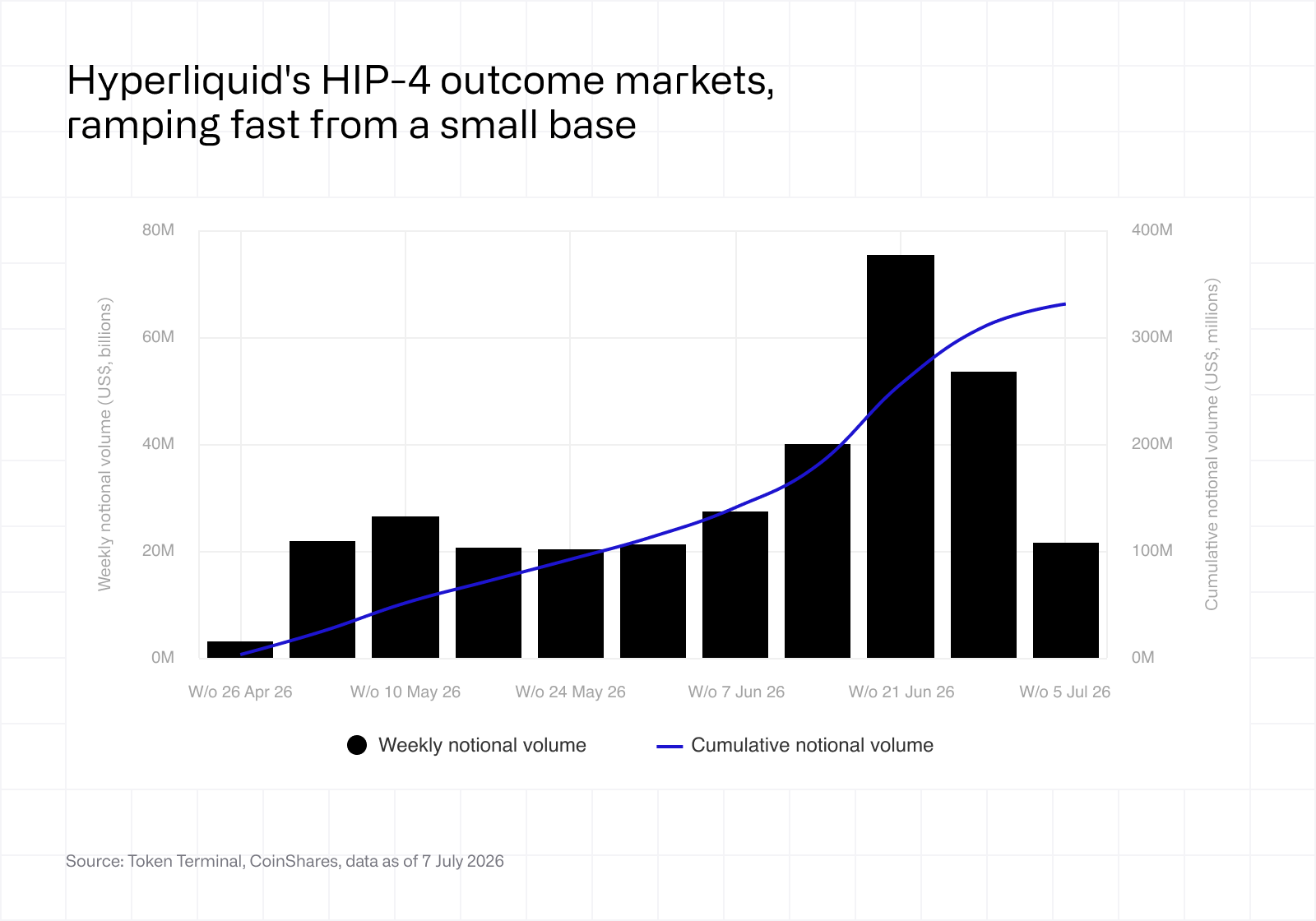 Le lien avec le HYPE passe par l'Assistance Fund d'Hyperliquid, qui mobilise les revenus de commissions du protocole, complétés par des contributions telles que les 50 % de revenus bruts versés par l'émetteur de stablecoins Circle, pour racheter du HYPE sur le marché.5 Chaque dollar généré par HIP-4 vient alimenter cette pression acheteuse, aussi marginale soit-elle aujourd'hui.
Solana s'est imposé comme le canal de distribution des marchés prédictifs
Le rôle de Solana est d'une autre nature : le réseau tient moins du lieu de négociation que de la couche de distribution. Phantom, portefeuille dominant de l'écosystème Solana avec quelque 20 millions d'utilisateurs, a commencé à proposer des marchés prédictifs adossés à Kalshi en décembre 2025, permettant à ses utilisateurs de négocier avec des tokens Solana sans quitter l'application.6 Ce dispositif a pris fin le 1er juin 2026, lorsque Phantom lui a substitué World, un marché prédictif développé nativement sur Solana, dont le règlement s'effectue automatiquement via les oracles Chainlink et qui matérialise chaque position sous forme de token détenu directement par l'utilisateur dans son propre portefeuille.7 Parallèlement, Jupiter, la principale application de trading de Solana, a lancé en juin sa propre place de marché native, Forecast, qui apparie les traders à des teneurs de marché concurrents plutôt qu'à un pool de liquidité commun, et a fait savoir qu'elle entendait compléter Polymarket plutôt que le concurrencer.8
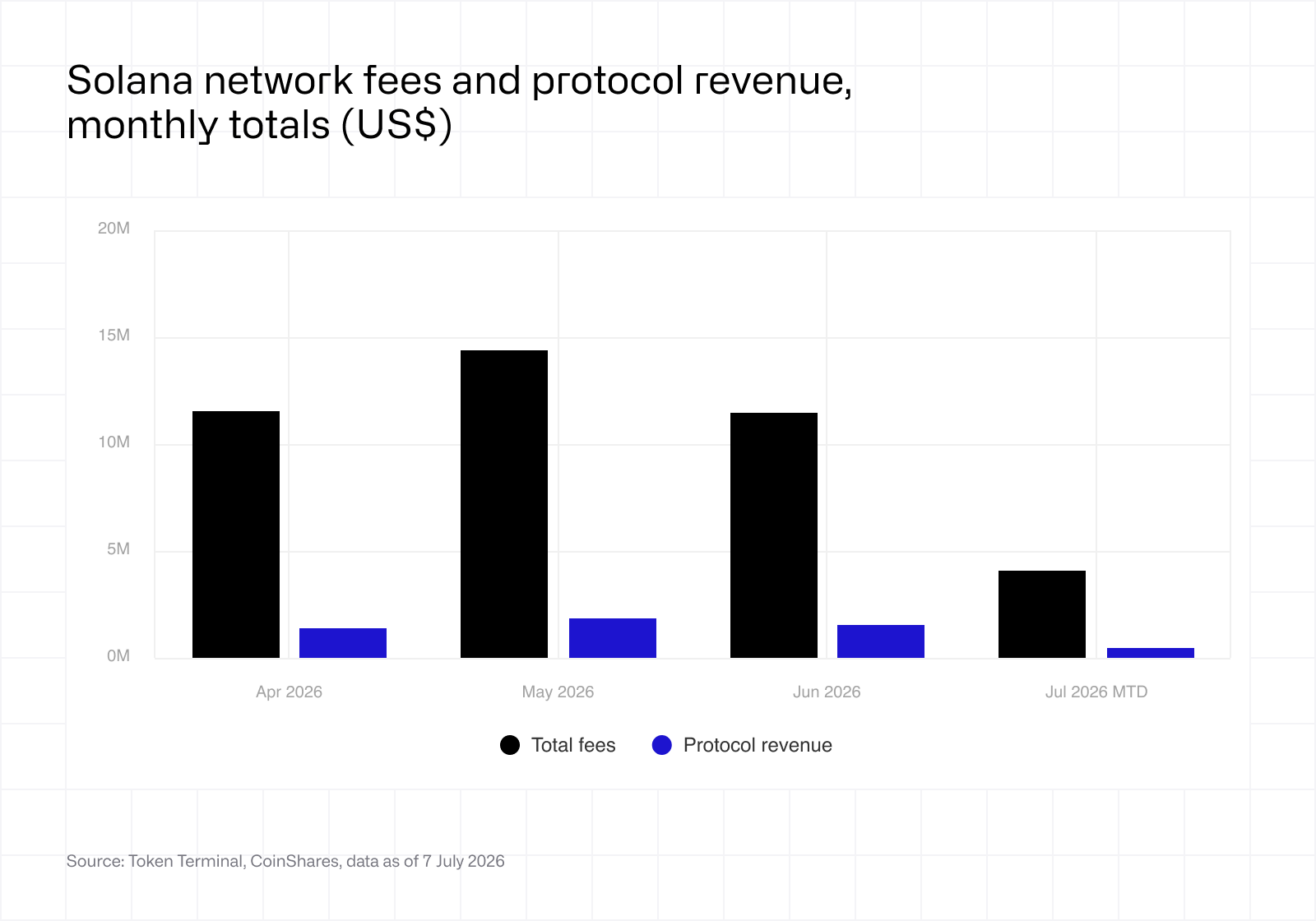
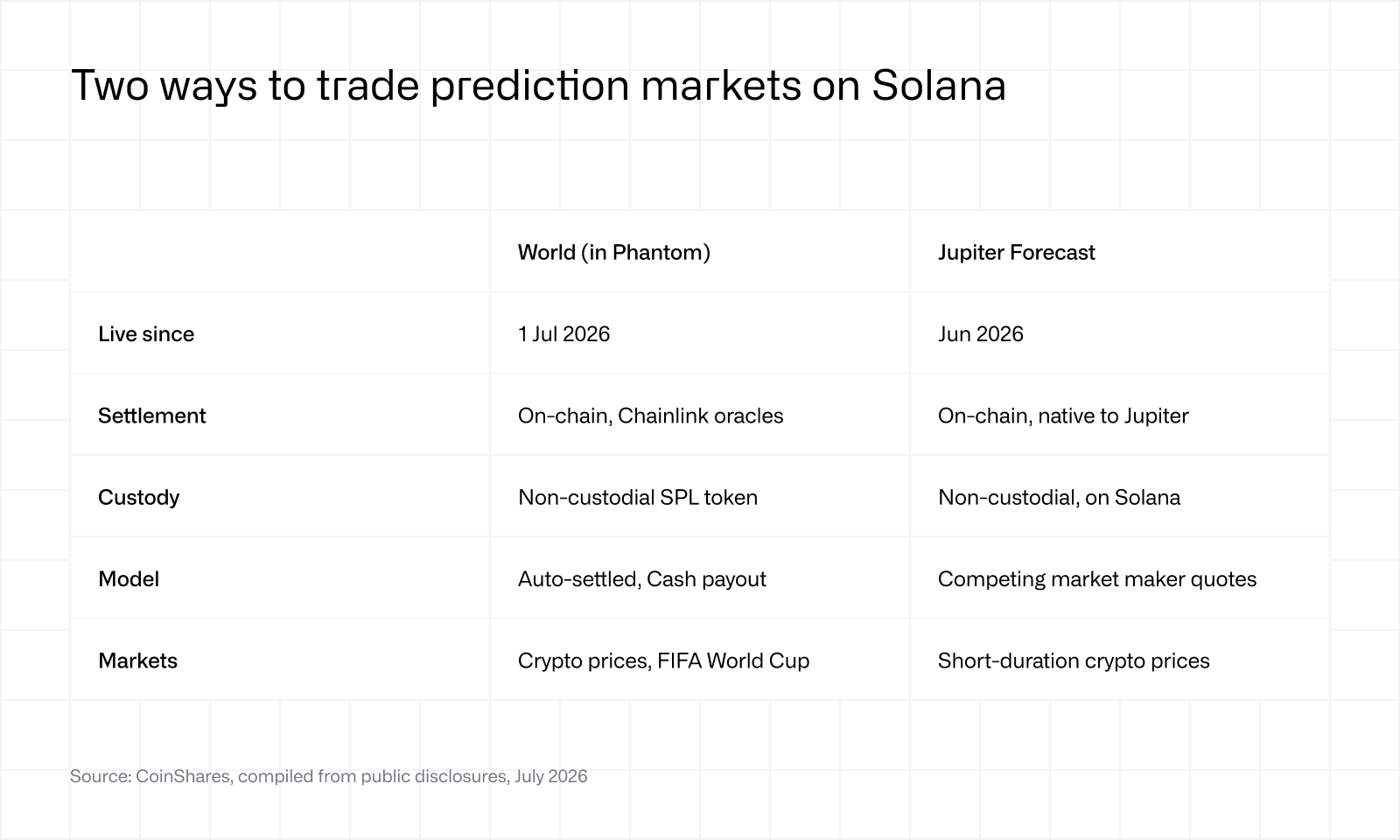 Rien de tout cela n'apparaît nécessairement dans les revenus de Kalshi ou de Polymarket. Cette activité se répercute en revanche sur le réseau Solana lui-même, dont les revenus de protocole, soit les quelque 50 % de frais de transaction que le réseau conserve, se sont établis en moyenne autour de 1,4 million de dollars par mois entre avril et juin 2026, face à une capitalisation de marché de 47 milliards de dollars pour le SOL.9
Une base de revenus étroite et instable
Dans les deux cas, la disproportion des ordres de grandeur constitue, en toute honnêteté, la réserve à formuler. Les revenus à cinq chiffres de HIP-4 comme les modestes recettes mensuelles de Solana sont dérisoires au regard de la valeur de marché des tokens : la thèse relève donc de l'optionalité et du positionnement, et non d'un moteur de résultats à court terme. La rotation des plateformes sur Solana, de Kalshi à World en l'espace de sept mois, rappelle par ailleurs que les accords de distribution dans ce secteur peuvent évoluer rapidement et que le canal dominant d'aujourd'hui ne sera pas nécessairement celui de demain.
Pour les investisseurs qui souhaitent cette exposition sans intervenir directement sur les protocoles sous-jacents, CoinShares propose le CoinShares Hyperliquid Staking ETP et le CoinShares Solana Staking ETP, soit une voie réglementée pour détenir du HYPE et du SOL sans avoir à accéder directement aux réseaux.10
Sources
Token Terminal, volume de transactions notionnel mensuel de Kalshi et Polymarket, données au 7 juillet 2026.
Pew Research Center, « Trading volume on prediction markets has soared in recent months », analyse des données de The Block, 27 mai 2026.
Bloomberg / TechCrunch, « Kalshi doubles valuation in 5 months, hitting $22 billion », 7 mai 2026 ; Coindesk, « Kalshi targets a massive $40 billion valuation, widening lead over rival Polymarket », 24 juin 2026 ; relations investisseurs d'Intercontinental Exchange, « $600 million investment in Polymarket », 27 mars 2026.
Token Terminal, données hebdomadaires et cumulées de volume notionnel et au comptant ainsi que de revenus des Hyperliquid Outcome Markets (HIP-4), au 7 juillet 2026 ; Token Terminal, cours et capitalisation de marché du HYPE, au 7 juillet 2026.
Données du protocole Hyperliquid via Token Terminal, conditions de l'Assistance Fund et du partage de revenus avec Circle, au 7 juillet 2026.
Coindesk, « Phantom adds Kalshi to wallet, lets users trade prediction markets with Solana tokens », 12 décembre 2025.
Coindesk, « Mysterious Solana project World unveiled as fully onchain prediction market », 1er juillet 2026 ; TechTimes, « Prediction market World launches in Phantom: Chainlink oracles auto-settle Solana trades », 2 juillet 2026.
Cryptopolitan, « Jupiter launches Forecast, Solana's first native prediction market », juin 2026.
Token Terminal, frais et revenus du réseau Solana, avril-juillet 2026 ; Token Terminal, cours et capitalisation de marché du SOL, au 7 juillet 2026.
Pages produits CoinShares, coinshares.com/etp/physical-hype/ et coinshares.com/etp/physical-solana/ ; noms de produits et codes ISIN issus du registre produit interne (Notion, « Website Data :: HYPE and SOL on SIX »).
Publié leJuil 16th, 2026